Boyfriend Wakes From Coma and Blames Girlfriend for Deadly Accident
Facts 07/12/2025 17:40
Gray wolves (Canis lupus) are renowned for their strong, enduring pair bonds, a behavior commonly characterized as "mating for life." This social structure plays a crucial role in the stability and survival of the wolf pack, which typically functions as a family unit consisting of the breeding pair and their offspring. The pairing system in wolves is not merely a romantic connection; it is deeply tied to the success of the pack, with both parents actively involved in raising their pups.
The bond between a male and female wolf is particularly important for the survival of their litter. Wolves require constant cooperation from both parents to successfully raise their young, especially during the months following birth when pups are most vulnerable. This partnership is not simply an emotional one; it is a functional relationship that ensures the pack's ability to nurture and protect its young.
The male wolf's role in this family unit is vital. His behavior is often described as caring and protective, particularly toward his female partner and their pups. Male wolves engage in several key parental duties, including provisioning food for the female during her confinement in the den. He shares food with the pups after they are born, ensuring they have the nutrition needed to grow and develop. Furthermore, the male plays a crucial role in defending the den from external threats, helping protect both the pups and the female from predators or rival packs. This cooperative parenting strategy significantly enhances the survival chances of the pups, as the dual effort of both parents provides a secure environment for raising young wolves.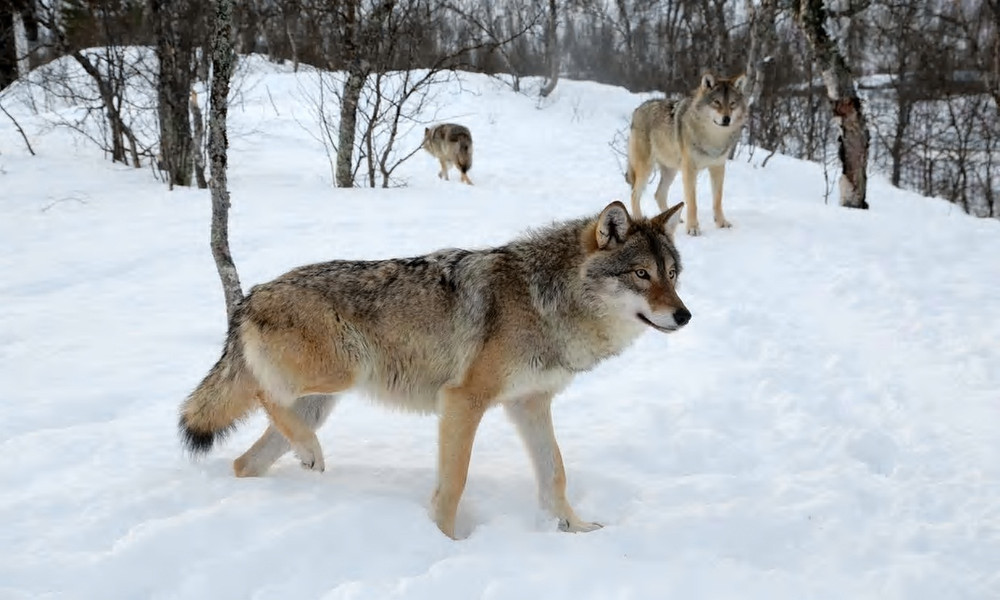
The male wolf's participation in these activities exemplifies the level of social cooperation that is central to wolf behavior. This cooperation not only strengthens the pair bond but also increases the pack’s overall stability and success. By working together to care for and protect the pack’s young, gray wolves exhibit an evolutionary advantage. The strong pair bond between the male and female contributes to the efficient functioning of the pack, as it ensures that the young are given the best chance to survive and thrive.
While the term "mate for life" accurately describes the wolf pair bond in general, it should be understood within the context of animal ecology. The bond typically lasts until the death of one of the partners. When this occurs, the surviving wolf will often seek a new mate to re-establish the breeding pair, which is necessary for the continuity of the pack structure. This behavior underscores the importance of the breeding pair in maintaining the pack’s stability and cohesion. The dissolution of the pair bond or the occurrence of mating outside the primary pair is rare, which is consistent with the scientific understanding that gray wolves demonstrate high levels of social and sexual monogamy over extended periods of time.
This strong and lasting bond is a fascinating example of dedication in the animal kingdom. While gray wolves' social behaviors are sometimes viewed through the lens of human relationships, it’s important to recognize that these bonds are driven by the ecological needs of the pack. The “mate for life” concept in wolves goes beyond mere affection or emotional attachment; it is a pragmatic and evolutionary strategy that plays a crucial role in the survival of the species.
In conclusion, gray wolves provide a remarkable example of social monogamy, with a pair bond that ensures the success of their offspring and the stability of the pack. Their cooperative parenting style and the enduring bond between the male and female highlight the complexities of animal relationships, offering a powerful illustration of how evolutionary pressures shape the behavior and social structure of species.
Sources:
"Gray Wolves: Social Structure and Behavior" – National Wildlife Federation. https://www.nwf.org
"The Role of Monogamy in Wolves" – The Nature Conservancy. https://www.nature.org
"Gray Wolves and Family Dynamics" – Smithsonian Conservation Biology Institute. https://www.si.edu
"Ecology and Behavior of Gray Wolves" – Journal of Wildlife Management. https://www.wildlife.org