Choose A Grandma And See What Kind Of Old Lady You Will Be.
Facts 28/05/2026 20:48
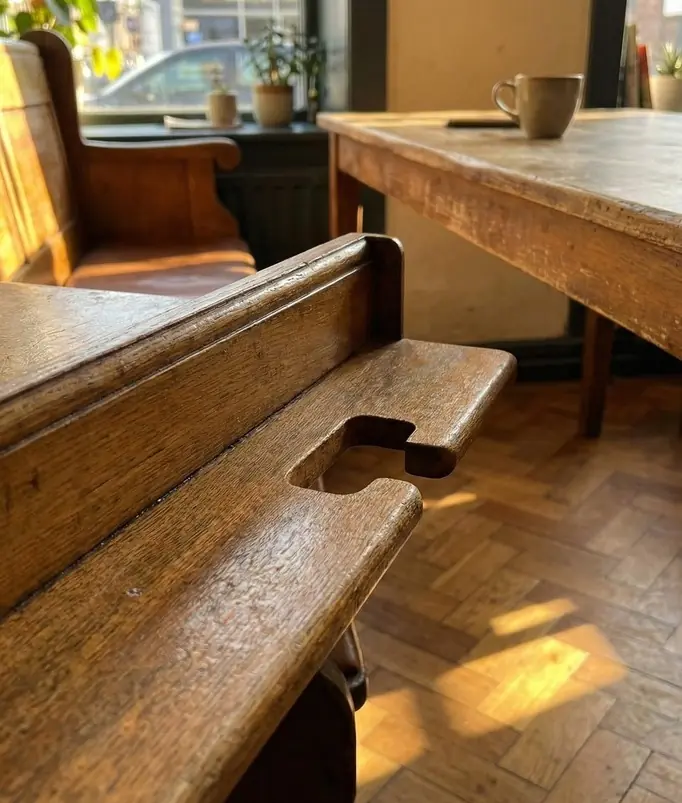
When a picture of this object appeared online, it quickly sparked curiosity. It’s not uncommon to come across strange items on the internet that leave many people puzzled. After some research, it turned out that the object was an old vacuum cleaner. Vacuum cleaners have truly evolved over the years and look completely different today, thanks to advances in science and technology.
The history of the vacuum cleaner began in the 19th century, when growing awareness of hygiene, combined with technological progress, made household cleanliness an increasing priority.
Although modern vacuum cleaners did not yet exist, significant innovations in cleaning tools took place during this period. Metal vacuum cleaners, which may seem very outdated by today’s standards, paved the way for more efficient and practical cleaning solutions.

The History Behind the Vacuum Cleaner
During the 19th century, cleanliness became an important concern, and people constantly sought new and more convenient ways to keep their homes clean.
The Industrial Revolution, which affected many aspects of daily life, also influenced household chores. Early vacuum-like devices were often bulky, inefficient, and far from the convenience offered by today’s machines, according to the London Science Museum.
At that time, metal began to be used in the design and construction of cleaning tools.
These early metal vacuum cleaners, like the one in the picture, were manually operated and required physical effort.
Suction was created by continuously pumping a handle, allowing dirt and debris to be collected from floors and carpets—but it was far from easy to use.
The First Vacuum Cleaners
One of the most well-known examples is the Whirlwind, a metal vacuum cleaner patented by Ives W. McGaffey in 1869, according to Popular Mechanics.
The Whirlwind was a hand-cranked device that used bellows to generate suction.
Although it was a significant step forward, it had limited practical use and was far from the electric models that would appear later.
These early metal vacuum cleaners reflect the innovative spirit of the 19th century. They laid the foundation for future developments and inspired inventors and engineers to improve and refine cleaning technology.

Toward the end of the 19th century, the electrical era began, and in the early 20th century, vacuum cleaner technology made major advances.
The introduction of electric motors and more practical designs led to Hubert Cecil Booth creating the first commercially successful electric vacuum cleaner in 1901.
The development of the vacuum cleaner is a fascinating journey that reflects both technological progress and changing lifestyles.
After the early manual models like the “Whirlwind,” inventors continued experimenting with different ways to improve suction and usability.
In the late 19th century, some vacuum devices were so large that they had to be transported by horse-drawn carriages and operated outside buildings, with long hoses extended through windows to clean interiors.
These machines were powerful for their time but extremely inconvenient for everyday household use.
A major turning point came in the early 20th century with the introduction of electric motors. This allowed vacuum cleaners to become more compact and practical.
Early electric models were still quite heavy and expensive, meaning they were mostly used by wealthy households or professional cleaning services.
However, as technology improved and production costs decreased, vacuum cleaners gradually became more accessible to the general public.
Another important innovation was the introduction of disposable dust bags, which made cleaning more hygienic and efficient.
Before this, users had to manually empty and clean the machines, which could be messy and time-consuming.
Later advancements included improved filtration systems, which helped trap finer dust particles and allergens, making vacuum cleaners not just cleaning tools but also devices that contributed to better indoor air quality.
By the mid-20th century, vacuum cleaners had become a common household appliance. Designs continued to evolve, with upright and canister models becoming popular in different regions.
In recent decades, technological advancements have taken vacuum cleaners even further.
Modern versions now include cordless designs, robotic vacuum cleaners that can clean automatically, and smart features that allow users to control them through mobile apps.
Overall, the evolution of the vacuum cleaner shows how a simple idea—keeping homes clean—can drive continuous innovation.
From bulky, hand-powered metal devices to sleek, intelligent machines, vacuum cleaners have transformed into essential tools that save time, improve hygiene, and make everyday life more convenient.