Miriam Rodríguez: The Mother Who Refused to Stop Searching for Her Daughter
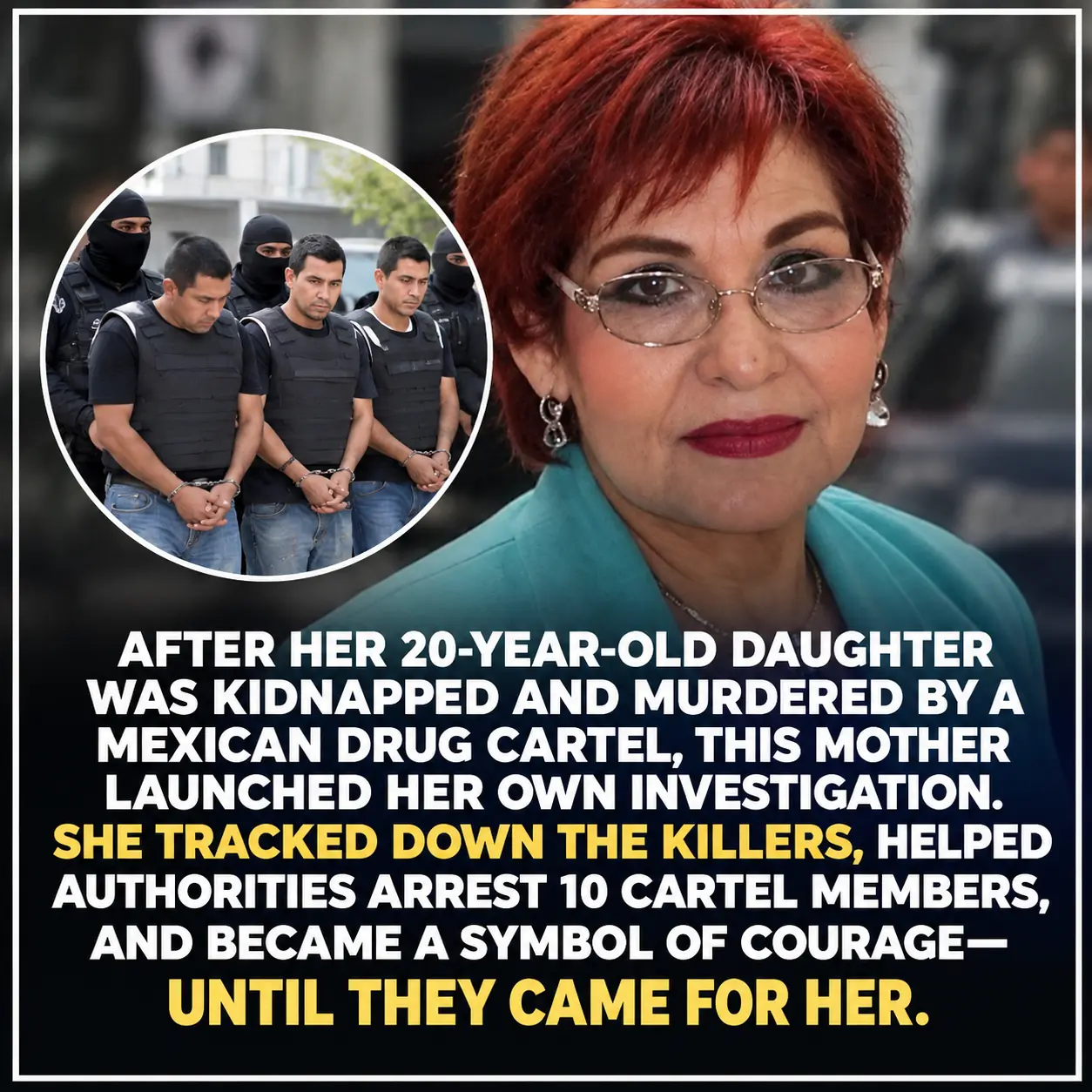
The story of Miriam Rodríguez Martínez is one of the most extraordinary and tragic accounts to emerge from Mexico’s long struggle with organized crime and the disappearance of thousands of people. After her daughter, Karen Alejandra Salinas Rodríguez, was kidnapped, Miriam found herself confronting a reality familiar to many families in Tamaulipas: fear, silence, bureaucracy and an investigation that seemed unable to deliver answers.
Rather than accepting that her daughter’s disappearance would become another unsolved case, Miriam began searching on her own. She followed leads, collected information, studied the people connected to the kidnapping and adopted disguises to get closer to suspects. Her efforts eventually helped authorities identify and arrest around ten people connected to the criminal group involved in Karen’s kidnapping and murder. (GDPR Support)
Her story became even more remarkable because Miriam did not simply disappear from public life after finding answers about her daughter. She went on to become an advocate for other families of missing people. But her determination also placed her directly in the path of the criminals she had spent years pursuing.
On May 10, 2017—Mother’s Day in Mexico—Miriam Rodríguez was shot and killed in San Fernando, Tamaulipas.
Her life has since become a powerful symbol of the courage of families searching for missing loved ones, while also raising painful questions about impunity, institutional failure and the dangers faced by those who challenge organized crime.
Part 1: The Disappearance That Changed Miriam Rodríguez's Life
Miriam Rodríguez lived in San Fernando, a municipality in the northern Mexican state of Tamaulipas. The region sits relatively close to the United States border and has long been affected by conflicts between organized-crime groups competing for territory and lucrative smuggling routes.
For Miriam, however, organized crime was not initially an abstract national-security problem. It became painfully personal when her daughter Karen disappeared.
According to reporting and human-rights documentation, Karen Alejandra Salinas Rodríguez was kidnapped in 2012. The Inter-American Commission on Human Rights later described Karen as having been disappeared by a criminal group that year. The Guardian likewise reported that Karen was abducted in 2012. (Refworld)
Some later popular accounts give different dates for the kidnapping, which is one reason versions of Miriam's story circulating online do not always agree on the chronology. What is consistent across the more substantial reporting is that Karen was a young woman, that her family received demands for ransom, and that she was ultimately killed.
The kidnapping initially placed Miriam in the position that many families of missing people find themselves in: desperately trying to obtain information while dealing with authorities who appear unable—or unwilling—to provide meaningful answers.
The family paid money in an attempt to secure Karen’s release, but she did not come home. Miriam eventually discovered that the kidnapping had ended in murder rather than ransom and release. Her daughter's remains were later found in a clandestine grave. (Wikipedia)
For Miriam, finding Karen’s remains did not bring the kind of closure people might imagine.
Instead, it created another question.
Who had done this to her daughter—and why had they been allowed to get away with it?
The answer would lead Miriam into an increasingly dangerous confrontation with one of Mexico’s most notorious criminal organizations: Los Zetas.
Los Zetas had emerged from a group of former Mexican special-forces soldiers who became associated with the Gulf Cartel before eventually becoming a powerful criminal organization in their own right. The group became notorious for extreme violence, kidnappings and territorial control.
The Guardian reported that Miriam’s investigation eventually uncovered information implicating members of Los Zetas in Karen’s disappearance and murder. (The Guardian)
But Miriam was not satisfied with simply knowing that a cartel was involved.
She wanted names.
She wanted locations.
She wanted the people responsible to face justice.
And when she believed the official investigation was not moving quickly enough, she decided to begin investigating herself.
Part 2: The Mother Who Became an Investigator
Miriam Rodríguez had no formal background as a police detective or intelligence officer.
What she had was something far more personal: knowledge of her daughter, determination, patience and an unwillingness to accept that the case would disappear into a pile of unsolved files.
She began reconstructing the chain of people involved in Karen’s kidnapping.
That meant learning everything she could about the suspects—not only their names, but also their relatives, friends, former occupations, habits and movements.
A detailed New York Times investigation by journalist Azam Ahmed later reconstructed Miriam’s pursuit and described how she followed suspects across Mexico. According to the reporting, she searched online, questioned people connected to the criminal network and even developed relationships with relatives who could provide information about the suspects’ whereabouts. (GDPR Support)
Her approach was painstaking rather than impulsive.