A camera positioned above or below the subjects can alter the visual relationship between them.
The resulting photograph is therefore a two-dimensional representation of a three-dimensional scene.
What we see isn't necessarily an exact record of physical proportions.
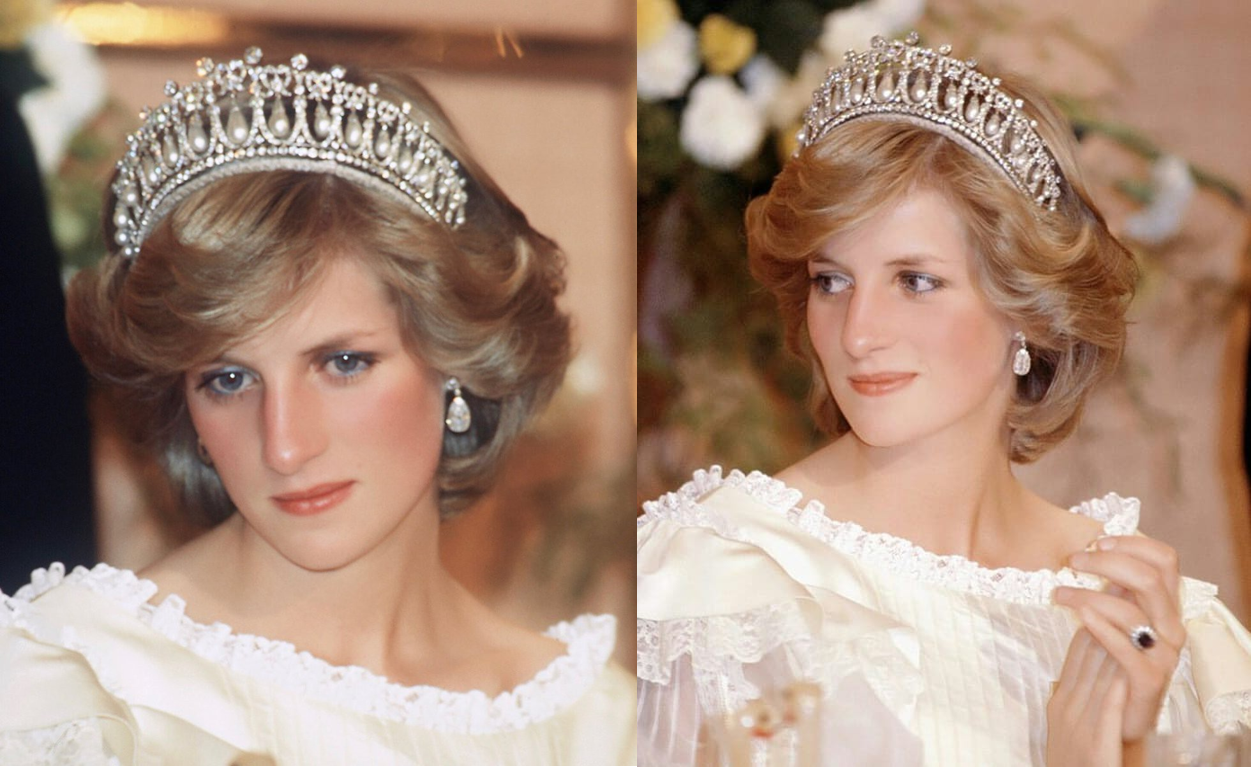
The Bigger Question: Were They Ever Deliberately Positioned Differently?
This is where the story becomes more complicated.
Sociologist Lisa Wade has examined photographs of Charles and Diana in the context of traditional cultural expectations surrounding male and female height.
In an essay titled “Prince Charles and the Manufacture of Men’s Superior Height,” Wade argued that the couple were often arranged in ways that could make Charles appear taller—or at least obscure the fact that their reported heights were relatively similar.
Her argument goes beyond Charles and Diana themselves.
Wade examined the broader cultural expectation that men should generally be taller than their female partners.
In many societies, height has historically been associated with masculinity, attractiveness, authority, and social expectations surrounding relationships.
From this perspective, the way couples are photographed can sometimes reinforce an existing cultural preference even when the people themselves don't consciously intend to make a statement.
Height and Traditional Ideas About Couples
For generations, popular culture has frequently presented an image of the ideal heterosexual couple in which the man is taller than the woman.
You can see this convention in films, advertising, fashion photography, romance novels, celebrity photography, and even wedding portraits.
A taller man and shorter woman can be presented as visually “balanced” according to traditional expectations.
But real people don't always fit those proportions.
Couples come in every possible combination of heights.
Some women are taller than their partners.
Some couples are almost exactly the same height.
Others have a large natural difference.
Photography can either reveal those differences or minimize them.
That's why Wade's analysis of Charles and Diana is interesting: it treats royal photographs not merely as snapshots, but as images created within a particular social and cultural environment.
The Importance of Royal Image-Making
The British royal family has historically paid close attention to public presentation.
Official portraits, public appearances, ceremonies, and major events are highly visible.
Photographers and media organizations are constantly capturing images of members of the royal family.
That doesn't necessarily mean every photograph is carefully manipulated or that every pose has a hidden message.
Many photographs are simply spontaneous moments.
But in formal settings, positioning is naturally part of photography.
People are placed where they need to stand.
They may use stairs or platforms.
They may sit while others stand.
They may arrange themselves according to protocol, available space, or the requirements of the photographer.
These ordinary choices can have an enormous effect on the final image.
A Photograph Can Tell the Truth—And Still Mislead the Eye
This is perhaps the most interesting lesson from the Charles and Diana height mystery.
The photograph itself isn't necessarily false.
Charles really was standing.
Diana really was beside him.
The camera genuinely captured the scene.
Yet the resulting image can still create a misleading impression.
That's because photographs freeze only one moment from one perspective.
Imagine taking a picture of two people on a staircase.
One person stands two steps higher.
The other stands below.
The resulting photograph could make their height difference appear enormous.
Move them onto level ground, and suddenly they might look almost identical in height.
Nothing about either person's body has changed.
Only their position has changed.
The Same Principle Applies to the Younger Generation
The comparison becomes particularly interesting when looking at photographs of the next generation of the royal family.
Prince William is commonly reported to be around 6 feet 3 inches, while Catherine, Princess of Wales, is often reported at approximately 5 feet 9 inches.
Unlike Charles and Diana, they have a genuine height difference.
Yet even that difference can appear larger or smaller depending on their shoes, posture, positioning, and surroundings.
A photograph can make two people who have a clear height difference appear surprisingly close in height.
Another image can make the difference look much more dramatic.
Again, the camera isn't changing their actual height.
It's changing our perception of it.