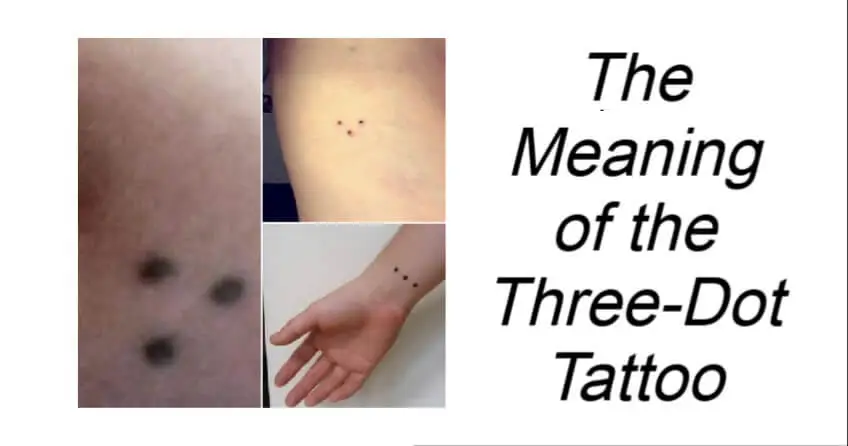
Have you ever been intrigued by the hidden language of prison tattoos—especially those worn by Russian inmates? Among the many mysterious and symbolic designs, one of the most commonly seen and misunderstood is the three-dot tattoo. Though deceptively simple, this tattoo carries multiple layers of meaning, each one rooted deeply in the culture of criminal brotherhoods, prison life, and personal codes of honor.
In this article, we’ll take a closer look at the origins, interpretations, and societal implications of this enigmatic tattoo.
The Symbolism Behind the Three Dots
The three-dot tattoo—often placed between the thumb and forefinger or on the hand near the knuckles—holds a range of meanings, depending on the wearer’s background, affiliations, and personal experiences.
One of the most widespread interpretations draws inspiration from the Buddhist concept of the “Three Wise Monkeys”:
-
See no evil
-
Hear no evil
-
Speak no evil
In this context, the tattoo signifies a code of silence, especially within criminal or prison environments. It's a visual statement that the bearer refuses to report crimes or betray fellow inmates—essentially, a vow to live by the unspoken rules of the underworld.
A Symbol of Loyalty and Brotherhood
Beyond its philosophical or spiritual overtones, the three-dot tattoo also functions as a marker of loyalty within the criminal world. It’s a quiet badge of honor, signaling allegiance to a certain code of conduct and respect for the hierarchies and traditions of prison life.
For many, this tattoo represents a lifetime commitment to secrecy and solidarity. Inmates may use it as a way to identify like-minded individuals—those who can be trusted, who have "earned" their place, and who live by the code of silence that governs the criminal underclass.
Counting the Cost: Dots as a Measure of Time
Another, more literal interpretation relates to the number of dots themselves. While three dots is the most common design, some individuals add more dots over time, with each one representing a completed prison sentence or the number of years served.
In this variation, the tattoo serves as a personal diary etched into the skin, marking the harsh experiences and survival within the prison system. It becomes both a badge of endurance and a reminder of time lost behind bars.
Cultural Origins and Global Spread
Though widely associated with Russian prisons, the three-dot tattoo is not unique to Russia. Variants of the symbol have appeared in Latin American gang cultures, European prison systems, and even among some Western youth subcultures. In many Spanish-speaking regions, for instance, the same symbol often stands for “Mi Vida Loca” or “My Crazy Life,” denoting a reckless, often gang-related lifestyle.
However, in the context of Russian criminal traditions, the tattoo is far more structured and symbolic. Russia’s prison tattoo culture is an intricate system of rank, reputation, and resistance, where every mark carries deep meaning—and the three dots are no exception.
Stigma Beyond the Prison Walls
While the tattoo may carry honor or meaning within the prison community, outside of prison it often leads to negative consequences. Former inmates with visible tattoos, especially those associated with criminal life, may face:
-
Workplace discrimination
-
Social isolation
-
Suspicion from law enforcement
-
Difficulty reintegrating into society
To the general public, a tattoo like this may signal a dangerous or untrustworthy individual, regardless of the wearer’s current behavior or intentions. For some, the tattoo becomes a permanent barrier to moving on from a troubled past.
The Tattoo as a Warning Sign
It’s important to acknowledge that the three-dot tattoo can also have darker connotations. In certain cases, it is used by organized crime groups to mark their members, often involuntarily. It may denote rank, role, or loyalty to a specific criminal syndicate.
In this context, the tattoo can serve as a warning to outsiders, indicating that the bearer is part of a violent or dangerous group. In some situations, simply wearing the tattoo—without having earned it—can lead to severe consequences, including punishment or even death, especially within the rigid hierarchy of Russian prison culture.
Conclusion: More Than Just Ink
The three-dot tattoo may appear small and unassuming, but it carries a weight of history, symbolism, and identity. Whether it reflects a vow of silence, a symbol of brotherhood, a marker of prison time, or an indication of gang affiliation, the tattoo functions as a silent message—one that speaks volumes to those who understand its meaning.
But in the outside world, that same tattoo can be a double-edged sword: a source of pride for some, and a source of prejudice and suspicion from others. It’s a reminder that tattoos are more than just body art—they are cultural artifacts, with stories etched in skin and meaning shaped by context.