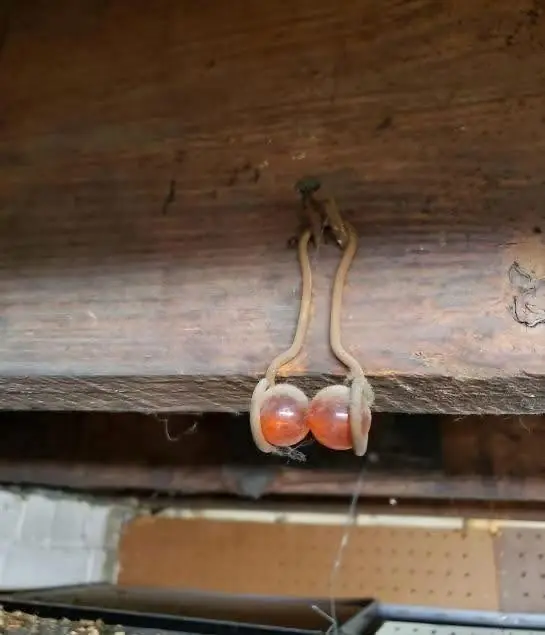
The Vintage Marble Razor Knife Sharpener: Unlocking the Artistry of a Bygone Craft
Facts 21/07/2026 17:47
🔥 2,000 Years Later… and Still Solid as Stone! 🧱🌊
While modern concrete structures often face degradation over time, ancient Roman harbors continue to stand strong, submerged beneath the waves for over two millennia. Remarkably, these structures not only endure but actively "heal" themselves, demonstrating a level of resilience that modern materials often lack. 💪
💡 The secret behind this incredible durability lies in the composition of Roman concrete. This material, which was used to construct some of the most enduring structures of the ancient world, is a unique blend of volcanic ash, lime (calcium oxide), and seawater. When seawater infiltrates the concrete, it triggers a chemical reaction that leads to the formation of special crystals, such as tobermorite and phillipsite. These crystals fill in the cracks and reinforce the concrete from the inside out, preventing further damage and ensuring the longevity of the structures.
This self-healing process is a remarkable feature of Roman concrete, a technology that was developed over 2,000 years ago. It is in stark contrast to modern concrete, which tends to deteriorate and require extensive maintenance or replacement. Roman harbors and other marine structures built around the 1st century BCE have withstood the test of time, with some still in use today. Their resilience has become a subject of fascination for scientists and engineers, who are exploring how to replicate this ancient material’s ability to repair itself in modern construction.
🏛️ Roman concrete, known as opus caementicium, has been a marvel for researchers who have uncovered its self-healing properties through recent studies. Modern concrete, typically made of cement, sand, and aggregates, is much more susceptible to cracks and damage, which can lead to corrosion of steel reinforcements and eventual structural failure. In contrast, Roman concrete, particularly that used in marine environments, was designed to be more durable and resilient to the harsh effects of seawater and time.
Scientists believe that the key to its durability lies in the chemical reaction that occurs between volcanic ash and seawater. Over time, this reaction leads to the formation of minerals such as calcium-aluminum-silicate-hydrate (C-A-S-H) and tobermorite, both of which contribute to the material’s ability to self-repair. This process is a natural "healing" mechanism that prevents water and other damaging elements from further compromising the structure. The result is that Roman concrete is not just strong, but it actively improves over time.
🌍 As we face the challenges of climate change and the increasing need for sustainable construction materials, Roman concrete is once again inspiring the field of modern architecture and engineering. Researchers are looking to ancient practices to guide the development of more sustainable and resilient building materials for the future. Today, we are seeing renewed interest in volcanic ash as a component of modern concrete, with efforts underway to develop eco-friendly alternatives that can reduce carbon emissions, improve durability, and even self-heal.
The long-term success of Roman concrete, particularly in harsh environments like the Mediterranean Sea, serves as a reminder that sometimes, the most advanced technology is not the latest invention but ancient wisdom that has stood the test of time. This rediscovery of Roman engineering practices is part of a broader trend where modern innovations are inspired by age-old solutions that have been forgotten or overlooked.
👉 This proves that sometimes the smartest technology is not the newest, but the ancient wisdom that has been reborn. As we continue to face environmental and engineering challenges, learning from the past may be the key to building more sustainable, resilient structures for the future.
Sources:
Jackson, M. D., & Jones, S. A. (2016). Roman Concrete: Materials, Structure, and Sustainability. Journal of Engineering and Architecture.
Pavía, S. (2014). Roman Marine Concrete: Innovations and Challenges for Modern Engineering. Nature Materials.
United States Geological Survey (USGS). (2019). Volcanic Ash and its Role in Ancient Roman Concrete. USGS Report.