The Puzzle of Counting Squares That Challenges Everyone (And How to Solve It)
Facts 22/05/2026 22:22
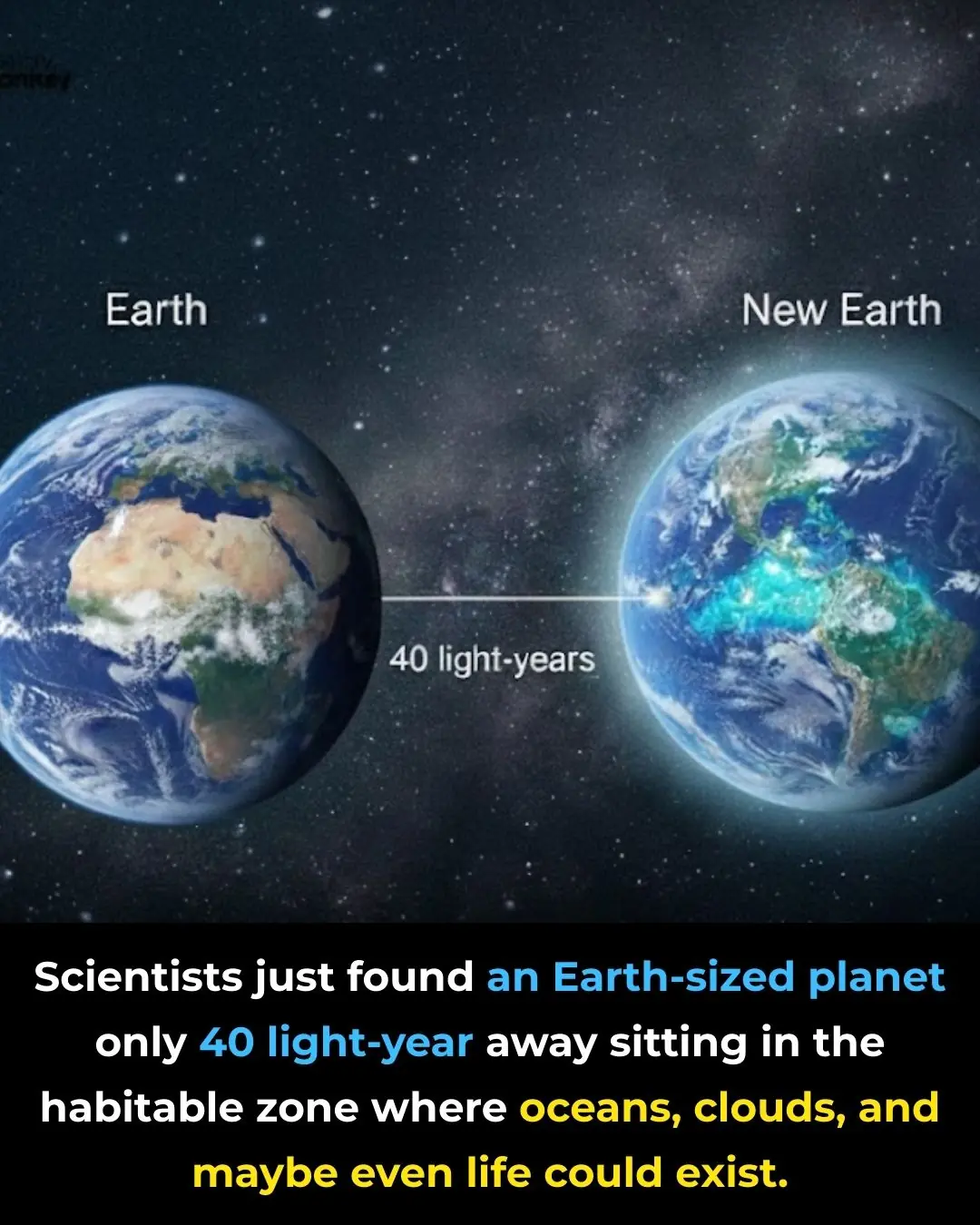
Astronomers have recently identified a promising Earth-sized exoplanet located just 40 light years away from our solar system, raising new hopes in the search for potentially habitable worlds beyond Earth. The planet, named Gliese 12 b, was discovered in May 2024 using data from NASA’s Transiting Exoplanet Survey Satellite (TESS), a mission designed to detect planets orbiting nearby stars. Because of its size, location, and stellar environment, Gliese 12 b is now considered one of the most intriguing candidates for further study in the quest to understand whether life could exist elsewhere in the universe.
According to ScienceAlert, Gliese 12 b has a radius very close to that of Earth, strongly suggesting that it is a rocky planet rather than a gas giant. It orbits a cool red dwarf star known as Gliese 12, which is significantly smaller and cooler than our Sun, measuring only about 27 percent of the Sun’s size. Despite the star’s lower energy output, the planet completes a full orbit in just 12.8 days, placing it at an optimal distance where surface temperatures could be moderate enough to allow liquid water to exist.
What makes Gliese 12 b particularly exciting is its location within the star’s habitable zone, often referred to as the “Goldilocks zone.” As explained by UCL News, this region is defined as the range of distances from a star where conditions are neither too hot nor too cold, allowing water oceans and cloud systems to potentially form. Since liquid water is considered a fundamental requirement for life as we know it, planets within this zone are prime targets for astrobiological research.
Another crucial factor enhancing Gliese 12 b’s habitability potential is the relatively calm nature of its host star. Many red dwarf stars are known for intense stellar flares that can emit harmful radiation, which may strip away planetary atmospheres over time. However, observations indicate that Gliese 12 is less active than many stars of its type, reducing the likelihood that strong radiation has eroded the planet’s atmosphere. This increases the chances that Gliese 12 b could retain an atmosphere capable of regulating climate and supporting stable surface conditions.
Scientists are now preparing for more detailed observations using the James Webb Space Telescope (JWST). According to NBC News, Webb’s advanced instruments will allow researchers to analyze the chemical composition of the planet’s atmosphere, if one exists. By examining how starlight filters through the atmosphere during transits, astronomers hope to detect water vapor, cloud formations, and possibly even early indicators of biological activity, known as biosignatures. Depending on its atmospheric composition, Gliese 12 b could resemble either a cooler, more temperate version of Venus or a planet with Earth-like conditions.
At a distance of only 40 light years, Gliese 12 b is relatively close by astronomical standards. This proximity makes it an ideal “cosmic laboratory” for testing theories about planetary habitability, atmospheric evolution, and the long-term stability of climates on rocky worlds. As noted by NASA scientists, studying nearby exoplanets like Gliese 12 b is essential for refining models that predict where life might arise and how common Earth-like planets may be throughout the Milky Way galaxy.
While it is still too early to determine whether Gliese 12 b actually hosts life, its discovery marks a significant step forward in exoplanet research. With upcoming observations from the James Webb Space Telescope and future missions, scientists hope that this nearby world will offer valuable insights into one of humanity’s most profound questions: whether we are alone in the universe.
NASA – Transiting Exoplanet Survey Satellite (TESS) mission
ScienceAlert – Coverage of the discovery of Gliese 12 b
UCL News – Analysis of habitable zones and exoplanet climates
NBC News – James Webb Space Telescope and atmospheric studies
European Space Agency (ESA) – Exoplanet habitability research
Nature Astronomy – Peer-reviewed research on rocky exoplanets and red dwarf stars