Mexico Ends Marine Animal Shows and Sparks a Health Centered Conservation Shift
News 07/01/2026 10:38
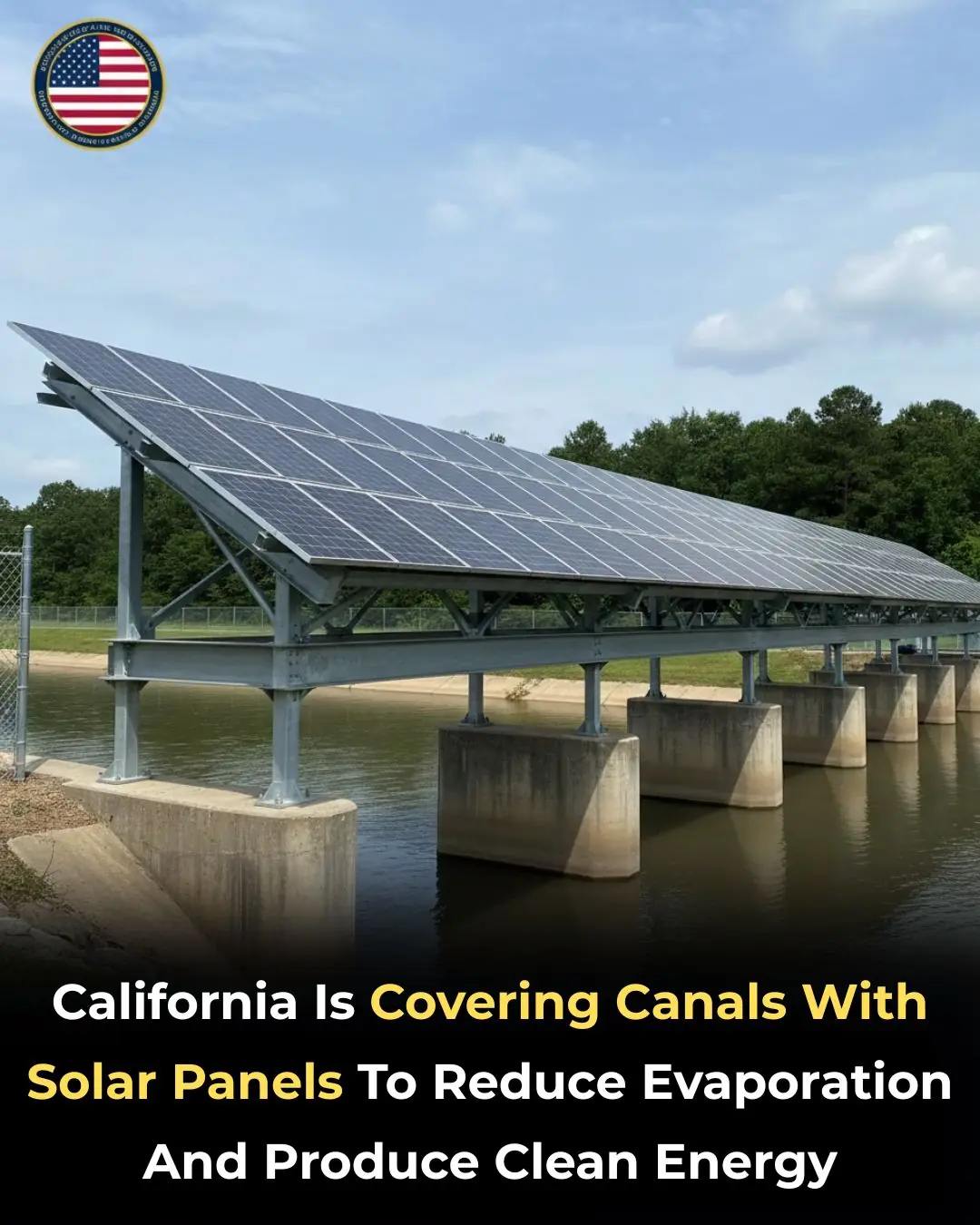
California is pioneering an innovative climate solution by transforming its vast irrigation canal network into renewable energy corridors. By installing solar panels above flowing water, the state is addressing two major challenges at once: water conservation and clean electricity generation. This dual-benefit approach is increasingly being recognized as a potential model for regions around the world facing climate stress.
One of the most immediate advantages of canal-top solar panels is their ability to significantly reduce water loss. Open canals in hot, dry climates lose enormous amounts of water each year through evaporation. Researchers estimate that covering California’s canals with solar panels could save billions of gallons of water annually, a critical benefit as droughts become more frequent and severe in the western United States. According to studies supported by the University of California, Merced, shading canals can cut evaporation by up to 80% in certain conditions.
At the same time, these installations generate large amounts of renewable electricity without occupying valuable land. Traditional solar farms often compete with agriculture, wildlife habitats, or urban development. Canal-top solar avoids this conflict entirely by using existing infrastructure. A statewide analysis published in Nature Sustainability suggests that if fully implemented, solar panels over California’s canals could generate enough electricity to power hundreds of thousands of homes while preserving land for food production and conservation.
There is also a technical advantage: solar panels installed above water stay cooler. High temperatures typically reduce the efficiency of photovoltaic panels, but the cooling effect from flowing water beneath them can improve performance and extend panel lifespan. The U.S. Department of Energy notes that lower operating temperatures can increase solar efficiency by several percentage points, which adds up significantly at scale.
Beyond water and energy savings, canal-top solar systems help reduce algae growth by limiting sunlight exposure. Algae buildup is a persistent problem in irrigation canals, increasing maintenance costs and disrupting water delivery. By shading the canals, solar panels naturally suppress algae, reducing the need for chemical treatments and mechanical cleaning. This benefit has been highlighted by water management agencies such as the California Department of Water Resources.
California’s experiment is already drawing international attention. Countries like India, Spain, and Australia—many of which face similar challenges related to heat, drought, and land scarcity—are closely watching the results. In fact, India has already piloted canal-top solar projects, with positive outcomes reported by the World Bank and International Energy Agency (IEA).
As climate change accelerates, solutions that deliver multiple environmental benefits at once are becoming increasingly valuable. By merging renewable energy production with water conservation and infrastructure efficiency, California’s canal-top solar initiative represents a rare “win-win” strategy. One smart idea, delivering two major climate victories—and potentially reshaping how the world thinks about clean energy deployment.
Building on this momentum, experts emphasize that canal-top solar projects also offer long-term economic advantages. While the initial installation costs may be higher than conventional ground-mounted solar farms, the combined savings from reduced water loss, lower land acquisition expenses, and decreased canal maintenance can offset those costs over time. A cost–benefit analysis referenced by researchers at the National Renewable Energy Laboratory (NREL) indicates that when water conservation benefits are factored in, canal-top solar systems can be financially competitive within their operational lifespan.
Moreover, these projects enhance grid resilience. Because irrigation canals often stretch across rural and agricultural regions, placing solar panels along them helps decentralize energy generation and brings clean power closer to areas that traditionally rely on distant power plants. This localized generation can reduce transmission losses and improve energy security, particularly during extreme heat events when electricity demand peaks and water resources are under the greatest strain.
Environmental groups also point out that canal-top solar can help protect biodiversity. By avoiding the conversion of open land into solar farms, the approach minimizes habitat fragmentation and reduces pressure on sensitive ecosystems. Organizations such as The Nature Conservancy have highlighted infrastructure-based renewable energy solutions as a key strategy for balancing climate action with conservation goals.
Looking ahead, policymakers in California are exploring ways to scale up pilot projects through public–private partnerships and targeted incentives. If successful, the model could be replicated across other water delivery systems, from aqueducts to reservoirs, both in the United States and globally. As the United Nations Environment Programme (UNEP) has noted, integrated solutions that link water, energy, and climate adaptation will be essential in meeting sustainability targets over the coming decades.
In a warming world where resources are increasingly strained, California’s decision to place solar panels over flowing water illustrates how innovative design can unlock hidden potential in existing infrastructure. By rethinking how canals are used, the state is not just producing clean electricity or saving water—it is offering a practical blueprint for climate-smart development that many regions may soon need to follow.