Robot 'Kidnaps' Fellow Machines at Shanghai Exhibition, Sparking Debate on AI Autonomy and Labor Rights
Facts 13/12/2025 00:19
China Powers Up the World’s Largest Solar Farm: A Game Changer in Global Renewable Energy
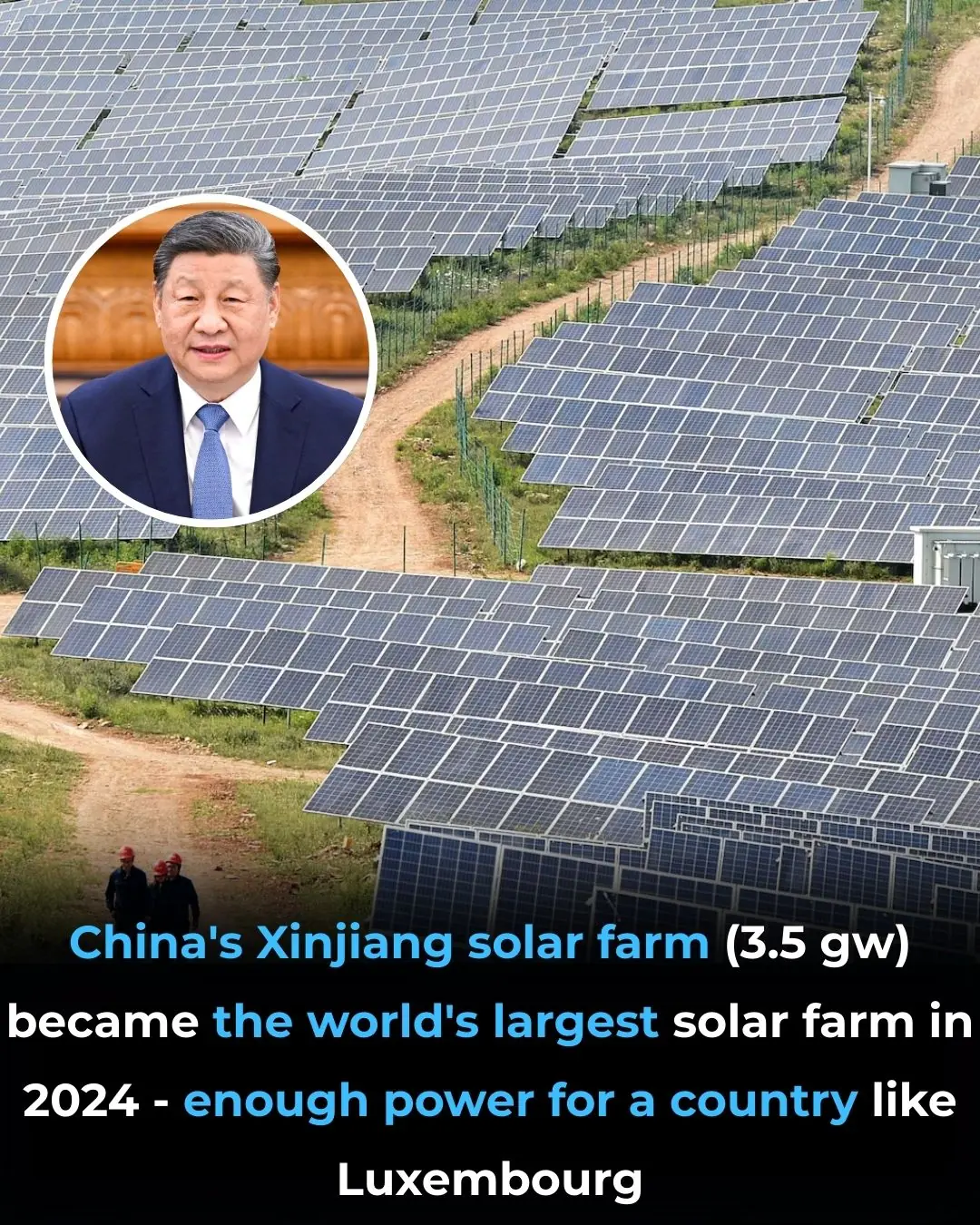
In June 2024, China unveiled the world’s largest operational solar power plant, a massive 3.5 gigawatt (GW) facility located in the arid expanse of the Xinjiang desert. This monumental project now holds the title of the largest solar farm on the planet, surpassing all previous records in both capacity and scale.
Spanning an area of more than 33,000 acres—approximately half the size of New York City—the solar farm generates a staggering 6 billion kilowatt-hours (kWh) of clean electricity every year. To put this into perspective, this amount of electricity could power entire nations for a year. For instance, countries like Luxembourg or Papua New Guinea, with populations of around 600,000, could be fully powered by this plant. This achievement highlights China's commitment to green energy while making a significant contribution to global efforts to reduce reliance on fossil fuels.
This development is not only a feat of engineering and renewable energy but also a clear indicator of China’s ongoing shift towards sustainability. The facility in Xinjiang symbolizes the country’s push to reduce carbon emissions and rely more on renewable energy sources. The electricity generated here is transported via ultra-high-voltage transmission lines that carry power from the sun-drenched western regions to the energy-hungry eastern cities, such as Beijing and Shanghai. This infrastructure is a crucial part of China’s broader energy strategy, which includes developing cleaner energy solutions and reducing its overall carbon footprint, in line with the country’s carbon neutrality goals set for 2060.
Although some reports initially suggested that the solar farm had a capacity of 5 GW, the confirmed 3.5 GW capacity still represents an extraordinary achievement in the global renewable energy landscape. It is a remarkable testament to China’s innovation and ambition, demonstrating that large-scale renewable projects are feasible and capable of meeting significant energy demands.
The Xinjiang solar farm is part of a larger trend in China, where solar power has been rapidly growing as a critical component of the country’s energy matrix. According to the International Energy Agency (IEA), China has consistently been the world leader in solar energy installations, accounting for more than one-third of the world’s total solar capacity in recent years. In fact, China’s solar energy industry has undergone a transformation, from a niche sector to a key driver of global energy transition. This shift is not only driven by environmental goals but also by the growing need to secure energy independence and reduce dependence on coal and other fossil fuels, which still dominate China’s energy sector.
While the immediate benefits of the Xinjiang solar farm are clear—providing clean, renewable energy and reducing carbon emissions—the long-term implications for global energy markets are even more profound. As more countries follow China’s lead in embracing renewable energy, we may witness a faster global transition to clean energy sources, accelerating efforts to combat climate change.
The Xinjiang solar project’s scale and capacity demonstrate that it is possible to meet large-scale energy demands with renewable sources. It also sets a new benchmark for other nations aiming to achieve similar goals. As the world faces the challenges of global warming and the depletion of fossil fuels, projects like this provide hope and a tangible path toward a sustainable future.
This achievement also underscores the importance of technological innovation in the energy sector. Advances in solar technology, coupled with improvements in energy storage and transmission infrastructure, are key to ensuring the continued success of large-scale renewable energy projects. The Xinjiang solar farm, for instance, relies on cutting-edge solar panel technology and an extensive network of transmission lines that are capable of delivering energy over long distances with minimal loss.
In conclusion, the activation of the Xinjiang solar farm is a historic milestone in the journey toward a greener, more sustainable global energy landscape. With its immense scale, innovative technologies, and profound environmental benefits, it is an exemplary model for future renewable energy projects worldwide. As China continues to invest in renewable energy, its solar capacity is expected to grow even further, reinforcing the country’s leadership role in the global transition to clean energy.
Sources:
International Energy Agency (IEA) – "Global Solar Power Growth and China’s Role."
Reuters – "China’s Xinjiang Solar Farm: A Record-Setting Powerhouse."
China Daily – "China’s Solar Capacity Reaches New Heights with 3.5 GW Plant in Xinjiang."