Correct vs Wrong Sitting Posture: How Poor Wrist Position Can Damage Your Nerves
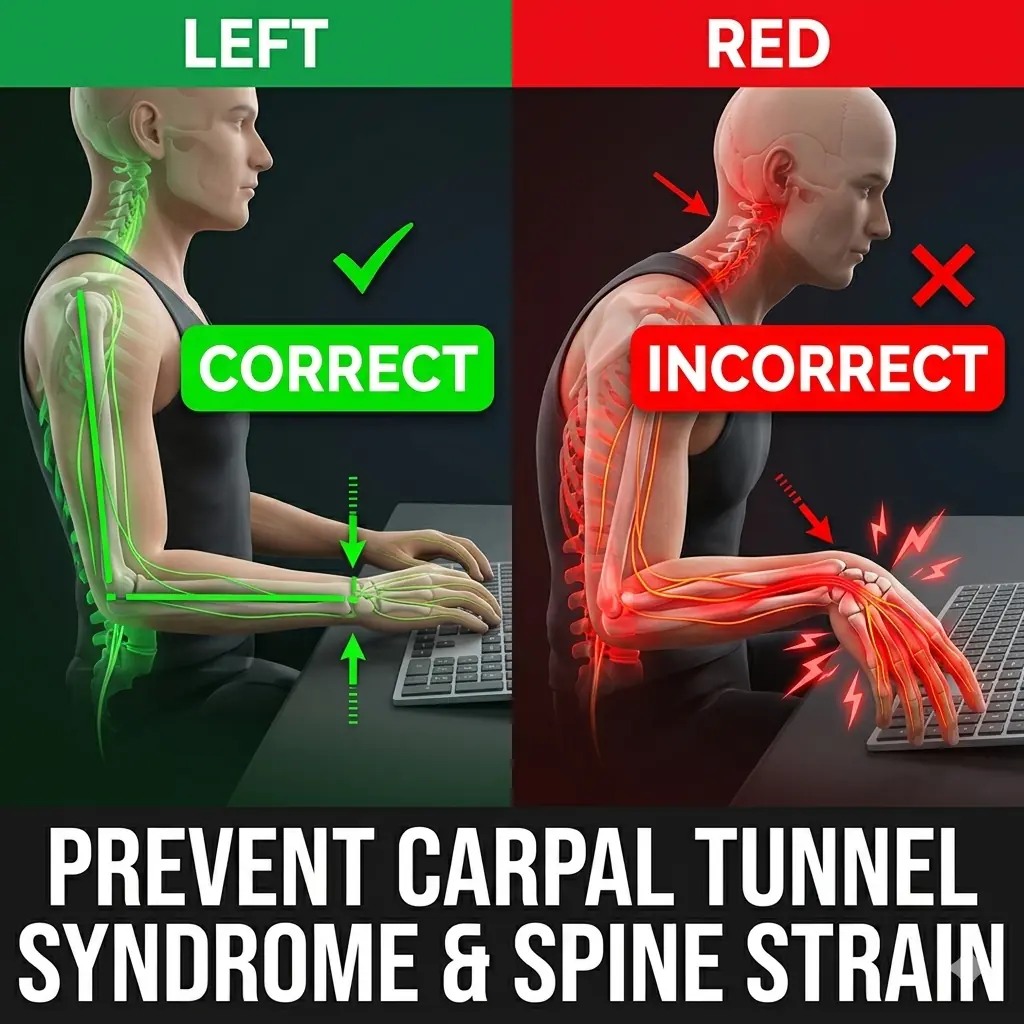
In today’s digital world, many people spend hours typing on keyboards without realizing that their posture could be silently damaging their health. The difference between a correct and incorrect sitting position may seem small, but over time, it can have a serious impact on your muscles, joints, and even your nerves.
On one side, proper posture keeps your body aligned. When your back is straight, shoulders relaxed, and wrists positioned in a neutral line with the keyboard, your muscles work efficiently without unnecessary strain. This “correct” posture helps maintain healthy blood circulation and reduces pressure on the nerves that run through your arms and hands.
However, the opposite posture tells a different story.
When you sit with a hunched back, your shoulders roll forward, and your wrists bend awkwardly while typing, you create tension in your entire upper body. This “wrong” posture can compress important nerves, especially around the wrist area. Over time, this pressure may lead to numbness, tingling, weakness, or even conditions like repetitive strain injury (RSI) or carpal tunnel syndrome.
One of the most overlooked factors is wrist alignment. Many people unknowingly bend their wrists upward or downward while typing, which increases pressure inside the carpal tunnel — a narrow passageway that houses critical nerves and tendons. When this space becomes compressed, it can cause pain that radiates from the wrist to the fingers, and sometimes even up the arm.
Another key issue is prolonged sitting without breaks. Even if your posture is mostly correct, staying in the same position for too long can still lead to stiffness and reduced blood flow. That’s why experts recommend taking short breaks every 30–60 minutes, stretching your arms, and resetting your posture.
To maintain a healthy posture, keep your screen at eye level, sit with your back supported, and ensure your wrists remain straight while typing. Your elbows should rest comfortably at your sides, forming a natural 90-degree angle.
Small adjustments can make a big difference.
By simply correcting your posture today, you can prevent long-term discomfort and protect your nerves from unnecessary damage. Your body is constantly sending signals — the question is, are you paying attention?