Put a few ice cubes in the washing machine with your wrinkled clothes and do this, and you'll see an unexpected miracle.
Tips 16/12/2025 19:44
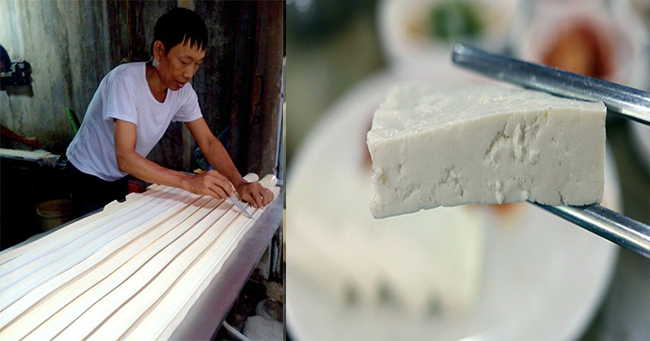
Tofu that contains gypsum (calcium sulfate) is often firmer and noticeably heavier than traditionally made tofu. Consuming large amounts of this type of tofu over a long period may pose potential health risks.
Tofu is a highly nutritious, affordable food that is widely sold in markets and supermarkets. Made from simple ingredients, tofu can be transformed into a wide variety of popular dishes such as fried tofu, tofu in tomato sauce, or stuffed tofu, making it a staple in many households.
The main ingredient used to produce tofu is soybeans, combined with coagulants that help the soy milk solidify. According to Associate Professor Dr. Nguyen Van Suc, Head of the Department of Chemical and Food Technology at Ho Chi Minh City University of Technology and Education, gypsum is commonly used in tofu production because it accelerates coagulation and increases yield. Traditional tofu-making methods, on the other hand, rely on vinegar or naturally fermented sour liquid from previous batches to create coagulation. While this traditional process is safer, it produces a relatively small amount of tofu. When gypsum is used, the soy curds form more quickly, and the amount of tofu produced can be more than double.
Dr. Suc explains that food-grade gypsum can be safely used in food processing if it is highly purified and applied in appropriate amounts. In controlled doses, it may even help supplement calcium in the diet. However, food-grade gypsum is significantly more expensive than industrial gypsum. Industrial gypsum mainly consists of impure calcium sulfate and may contain harmful heavy metals such as lead and cadmium, which are dangerous to human health.
Regular consumption of tofu containing excessive amounts of industrial gypsum can negatively affect the digestive system. Over time, it may increase the risk of kidney-related diseases and other health problems. This is especially concerning when consumers are unaware of the source and quality of the gypsum used in production.
A long-time tofu maker in Hanoi shared with VietNamNet that tofu can be made entirely without gypsum by using traditional methods such as vinegar or naturally fermented sour liquid. However, driven by profit and the desire to increase output, some producers still choose to use gypsum during processing, despite potential health risks.
High-quality tofu typically has an off-white or ivory color and a soft, smooth texture. Safe tofu carries a mild, natural soybean aroma and a rich, creamy taste, similar to freshly made hot soy milk skin.
When buying tofu, consumers should carefully examine its color, smell, weight, and elasticity.
Color:
Observe the surface of the tofu closely. If the outer layer becomes hard and turns yellow when exposed to air, it may indicate the presence of gypsum (except in cases where turmeric is used for coloring). The deeper the yellow color, the higher the likelihood that gypsum was added.
Taste and smell:
Tofu containing a large amount of gypsum often has a slightly astringent or chalky taste. If it feels unusually firm and heavy to the touch, this may also be a warning sign. Avoid tofu that has an unnaturally strong fragrance or an odd greasy taste, as this could indicate the use of additives.
Weight and texture:
Gypsum-laced tofu is typically heavier and less elastic than traditionally made tofu. The more gypsum used, the harder and denser the tofu becomes, making it noticeably different from natural tofu.
Consumers are also advised to avoid buying pre-fried tofu sold at open markets, as it is difficult to determine whether the tofu contains gypsum. In addition, pre-fried tofu is often cooked in reused or low-quality oil, which may further increase health risks.