Why Some People Put Water Bottles Outside Their Homes
Tips 23/01/2026 17:31

Vietnamese Pork Sausage (Giò Chả) and How to Identify Products Containing Borax
Giò chả, a traditional Vietnamese pork sausage, is an essential dish on the Lunar New Year (Tết) feast table and appears frequently in everyday meals. Despite its popularity, many consumers remain concerned about food safety, as some products sold on the market may contain borax—a banned chemical that poses serious health risks.
Borax, also known as sodium borate, has been used illegally in food processing to create an unnaturally firm, crunchy texture and to extend shelf life. However, due to its harmful effects on human health—especially on the digestive system, liver, and kidneys—borax has been strictly prohibited in food production for many years.
One of the challenges for consumers is that borax has no distinct color, taste, or smell, making it difficult to detect with the naked eye. As a result, buyers need to rely on a combination of visual cues, texture, smell, and basic testing methods to reduce the risk of purchasing unsafe giò chả.
Traditional giò chả is made from freshly ground pork that is finely pounded. Its texture is moderately chewy yet soft, with a natural elasticity that feels tender when bitten. In contrast, giò chả containing borax often has an abnormally firm and rubbery texture. When eaten, it feels overly crunchy and tough, and prolonged chewing does not make it break down easily.
Many people believe that a smooth, dense cross-section that does not crumble is a clear sign of borax use. However, it should be noted that high-quality meat and skilled preparation techniques can also produce a firm texture. Therefore, this sign alone is not sufficient to draw a definite conclusion.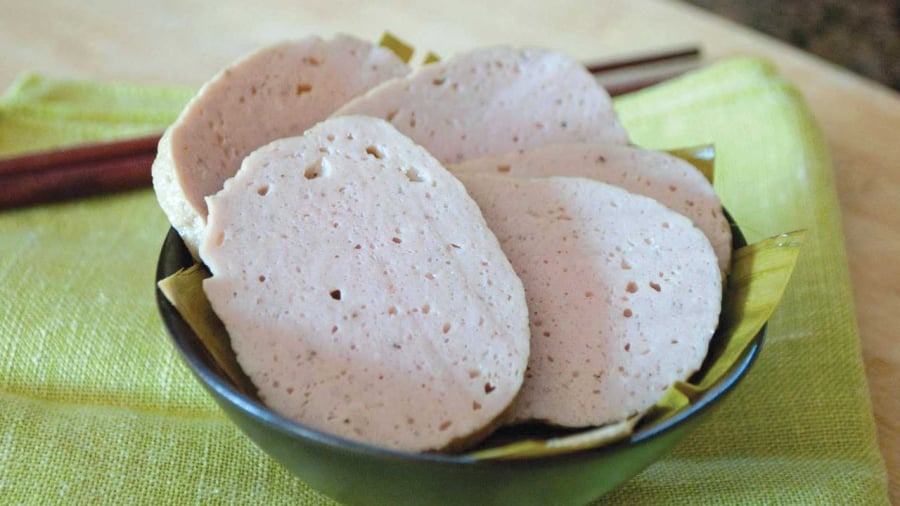
Giò chả made from fresh pork without chemical additives usually has a natural off-white or light pink color. When left at room temperature for a short period, its surface may dry slightly and the color may darken. On the other hand, giò chả containing borax often appears unusually bright white, glossy, and visually appealing. Even after being left out for a long time, it shows little change in color or moisture because borax acts as a preservative.
If giò chả remains fresh-looking and intact after being kept at room temperature overnight, consumers should be cautious, as this may indicate the presence of banned additives.
Clean, traditionally made giò chả emits a mild, pleasant aroma of pork combined with seasonings such as fish sauce and black pepper. In contrast, giò chả mixed with borax often has very little smell, or may carry a faint chemical or musty odor. Its flavor can feel bland, lacking the natural sweetness of meat.
That said, smell and taste are subjective and can be masked by strong spices, so this indicator should be considered alongside other signs.
Giò chả produced without preservatives spoils relatively quickly if not refrigerated, especially in hot weather. If a product can be kept at room temperature for an extended period without turning sour, slimy, or developing an unpleasant odor, it is best to avoid purchasing it. This unusual durability strongly suggests the use of chemical preservatives such as borax.
Toward the end of the year, pork prices often rise, increasing the cost of producing quality giò chả. Therefore, it is unrealistic for genuinely high-quality products to be sold at extremely low prices. While a cheap price does not automatically mean the presence of borax, unusually low-priced giò chả that looks and tastes “too perfect” should raise suspicion.
Consumers can use simple testing methods at home to detect borax. According to Associate Professor Dr. Nguyễn Duy Thịnh, former lecturer at the Institute of Food Technology, Hanoi University of Science and Technology, borax has alkaline properties. When purple litmus paper comes into contact with borax, it will turn blue.
Another traditional method involves turmeric paper, which can be made by soaking paper in fresh turmeric juice and letting it dry. When pressed onto the surface of the giò chả, the paper will change from yellow to orange-red if borax is present.
To protect their health, consumers should purchase giò chả from reputable vendors, check product labels carefully, and avoid items with suspicious characteristics. Combining multiple signs—rather than relying on a single indicator—offers the best chance of identifying unsafe products and ensuring a safe and enjoyable meal, especially during important family occasions like Tết.