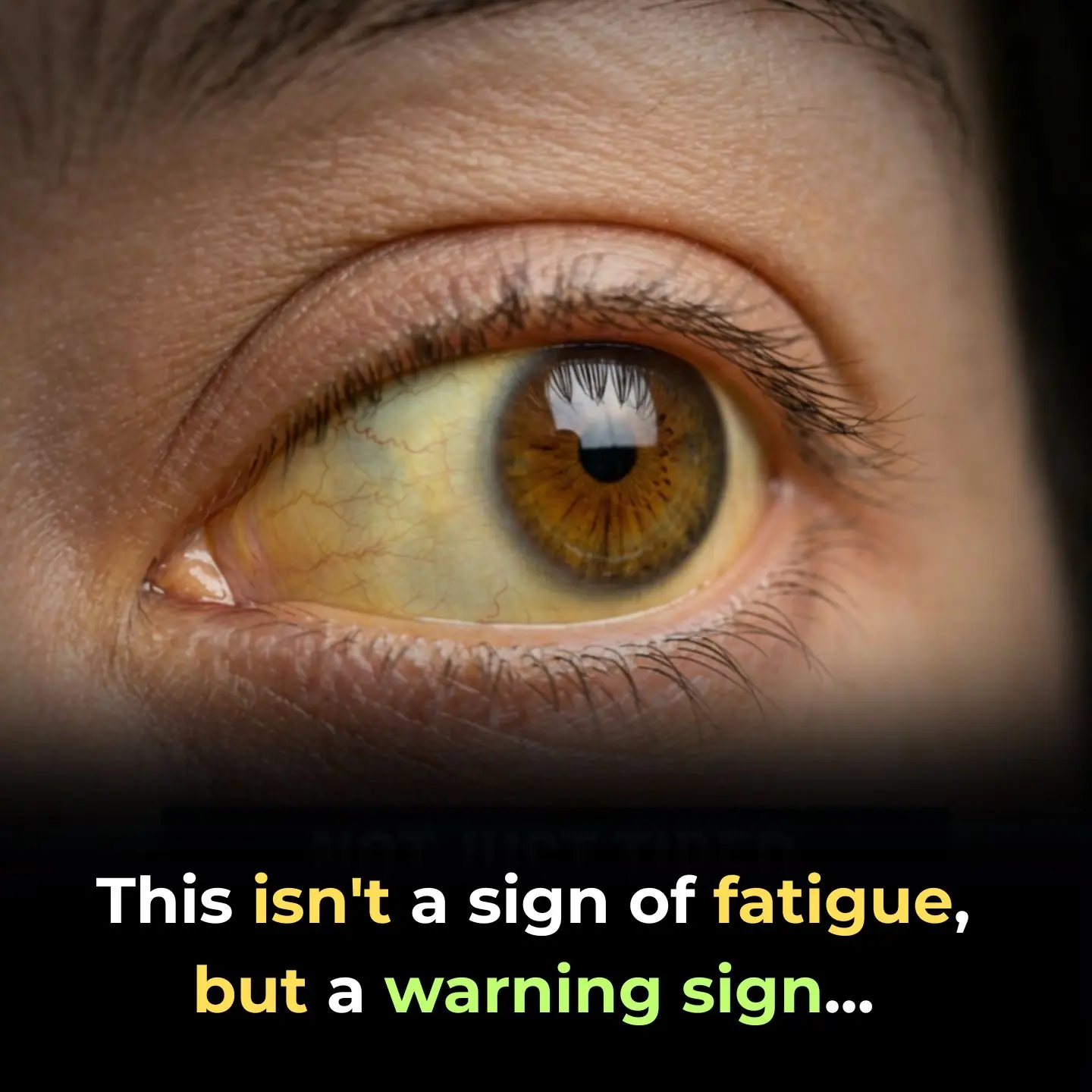
NOT JUST TIRED: A Silent Liver Signal Your Eyes Might Be Showing
Health 23/03/2026 00:33
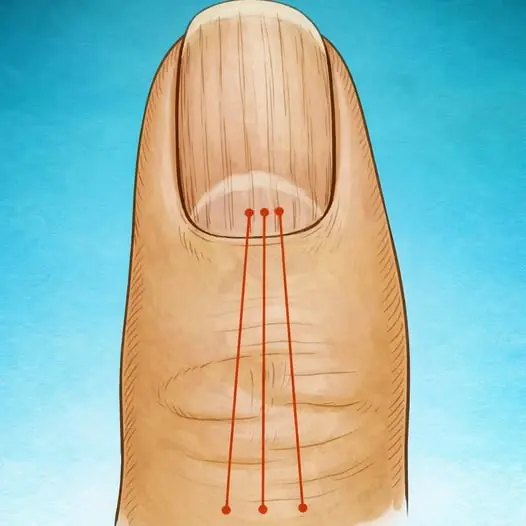
Have you ever looked down at your hands and noticed a strange, dark vertical line running down your fingernail? Most people’s first instinct is to assume they simply slammed their finger in a door or pinched it while working. We call it a bruise and wait for it to grow out.
But what if that line doesn’t move? What if it starts to get wider?
In the world of dermatology, a vertical dark streak on the nail is known as Longitudinal Melanonychia. While often harmless, it can also be the only early warning sign of a rare but deadly form of skin cancer: Subungual Melanoma.
In this comprehensive guide, we will break down everything you need to know about nail pigment, when to worry, and why your nails might be the "silent messengers" of your internal health.
To understand why a black line appears, we first need to understand how our nails get their color. Underneath your nail fold lies the nail matrix—the area responsible for producing the nail plate.
Occasionally, the pigment-producing cells in the matrix (melanocytes) become active. When they deposit melanin into the nail as it grows, a brown or black streak appears. This is called Melanonychia.
Melanocytic Activation: The cells are awake and producing pigment, but they aren't cancerous. This can be caused by pregnancy, certain medications, or even simple friction.
Melanocytic Hyperplasia: There is an actual increase in the number of pigment cells. This can be a benign mole (lentigo) or, in the worst-case scenario, a malignant melanoma.
In the United States, dermatologists use a specific "ABCDEF" mnemonic to help patients and doctors identify potential Subungual Melanoma. If your nail streak meets these criteria, it is time to schedule a professional biopsy.
Subungual melanoma is most commonly diagnosed in people between the ages of 50 and 70. While it accounts for only about 1% to 3% of all melanomas in Caucasians, it makes up nearly 20% to 30% of melanomas in people of African, Asian, and Native American descent.
Look closely at the line. Is it wider than 3 millimeters? Is the color variegated (meaning it has different shades of brown, black, or grey)? Malignant bands often have blurred borders rather than a crisp, sharp line.
This is perhaps the most important factor. A benign streak usually stays the same width. If you notice the band is widening over time, or if the color is becoming darker or more irregular, this is a major red flag.
While melanoma can happen on any finger, it most frequently occurs on the "Power Digits": the thumb, the big toe, or the index finger.
Look at the skin around the nail (the cuticle and the proximal nail fold). If the dark pigment spills over from the nail plate onto the surrounding skin, it is called Hutchinson’s Sign. In clinical dermatology, this is considered a very strong indicator of malignancy.
As with all forms of skin cancer, having a personal or family history of melanoma increases your risk profile.
It is easy to spiral into anxiety when you see a dark mark on your body. However, many "scary-looking" nail lines are actually benign.
These look like tiny, vertical reddish-brown lines. They are actually small blood clots under the nail. Unlike melanoma, these will eventually grow out with the nail and disappear. They are often caused by minor trauma or, in some cases, heart valve infections (endocarditis).
Certain types of fungi produce black or brown pigment. Usually, a fungal infection will also cause the nail to become brittle, thick, or lift away from the nail bed.
Chemotherapy drugs, antimalarials, and even some common antibiotics can cause "Muehrcke's lines" or general nail discoloration. Usually, if it’s medication-related, you will see streaks on multiple fingers at once.
Subungual melanoma is often referred to as "The Silent Killer" because it is frequently misdiagnosed as a fungal infection or a bruise for months—or even years.
Because the cancer is hidden under the hard nail plate, it can grow deep into the bone before it is ever noticed. When caught early (Stage 0 or Stage 1), the survival rate is incredibly high. However, once it metastasizes (spreads to other parts of the body), the prognosis becomes much more difficult.
If a dermatologist is concerned, they will perform a Nail Matrix Biopsy. They will numb the finger, remove a small circular piece of the tissue producing the pigment, and send it to a lab. This is the only definitive way to know if the cells are cancerous.
Beyond checking for dark lines, your nails are a window into your general nutrition and wellness. To keep your "Power Digits" healthy:
Keep them dry and clean: This prevents bacteria and fungi from growing under the nail.
Moisturize the cuticles: Use almond oil or petroleum-based creams to prevent cracking.
Avoid harsh chemicals: Constant use of gel manicures and acetone can thin the nail plate, making it harder to spot underlying issues.
Supplement wisely: Biotin and protein-rich diets help strengthen the keratin in your nails.
Your body has a unique way of communicating. A small black line might seem like a cosmetic nuisance, but it could be your body's way of asking for help.