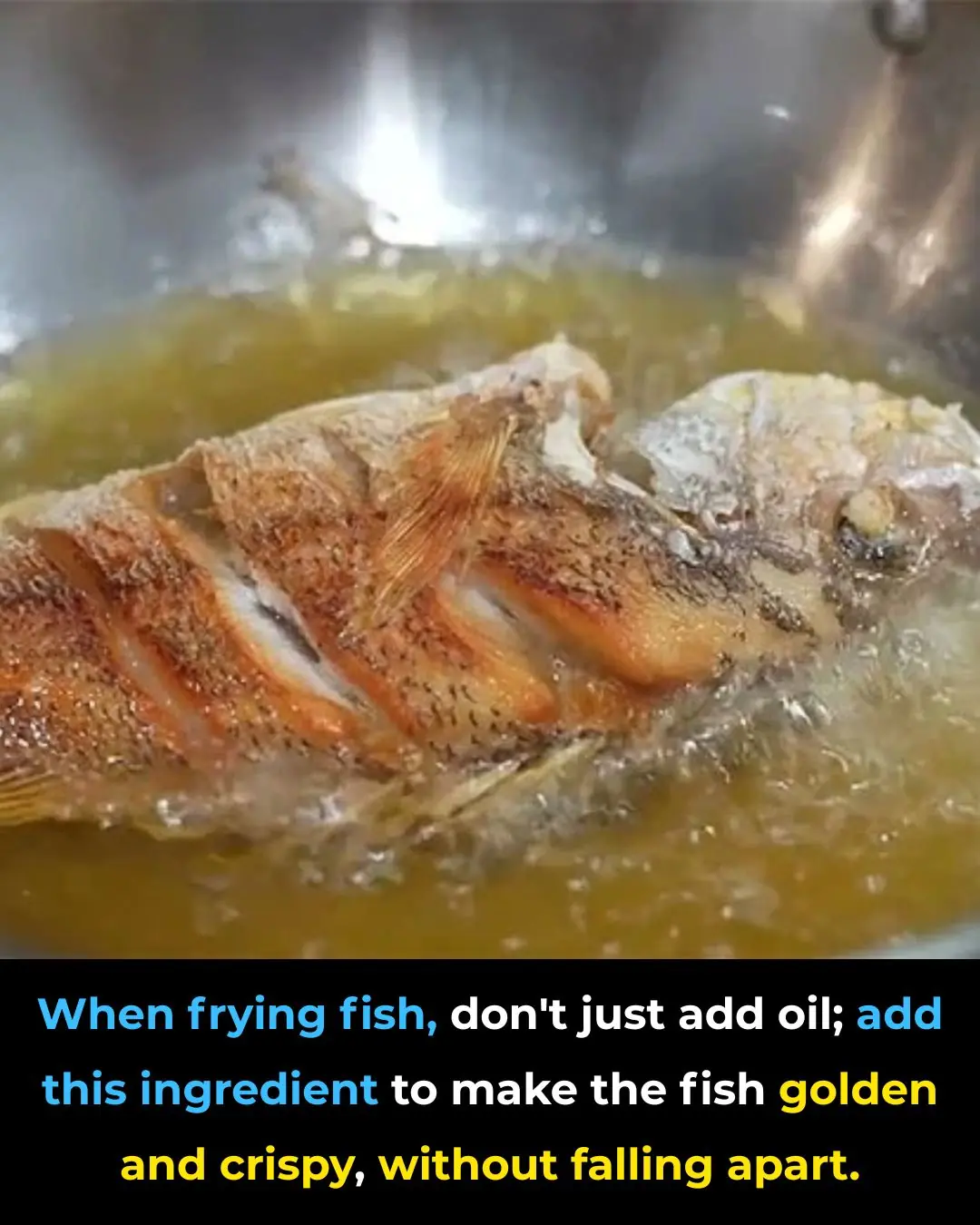
When frying fish, don't just add oil; add this ingredient to make the fish golden and crispy, without falling apart.
Tips 11/01/2026 11:07
In recent years, a popular claim has circulated online suggesting that pouring hot water over an apple will clearly reveal harmful chemicals, helping consumers identify so-called “poisoned apples.” While this method may produce visible changes on the apple’s surface, it is important to understand what is actually happening—and what it does not prove.
When hot water is poured over an apple, a white or cloudy film may appear on the skin. This reaction often leads people to believe that dangerous chemicals or toxins are being exposed. In reality, this film is usually caused by natural waxes present on the apple’s surface. Apples naturally produce wax to protect themselves from moisture loss. In addition, food-grade wax is often applied after harvesting to preserve freshness and improve appearance. Heat can melt this wax, making it more visible.
This visual change does not indicate the presence of toxic chemicals or pesticides. Most pesticides used in modern agriculture are applied in regulated amounts and are not revealed simply by pouring hot water over fruit. Many pesticide residues are odorless, colorless, and present in extremely small quantities that cannot be detected with household methods.
Relying on this hot-water test to determine whether apples are “poisoned” can be misleading and may cause unnecessary fear. There is currently no scientific evidence supporting the claim that this method can identify unsafe apples or chemical contamination.
To reduce potential pesticide exposure, experts recommend proven methods such as washing apples thoroughly under running water, gently scrubbing the skin, peeling the fruit when appropriate, or choosing produce from trusted sources. For those concerned about chemical residues, buying certified organic apples may offer additional reassurance.
In conclusion, pouring hot water over an apple does not reveal hidden poisons or harmful chemicals. The method only highlights natural or food-safe waxes and should not be used as a measure of food safety. Understanding the science behind food handling helps consumers make informed decisions without falling victim to misleading claims.