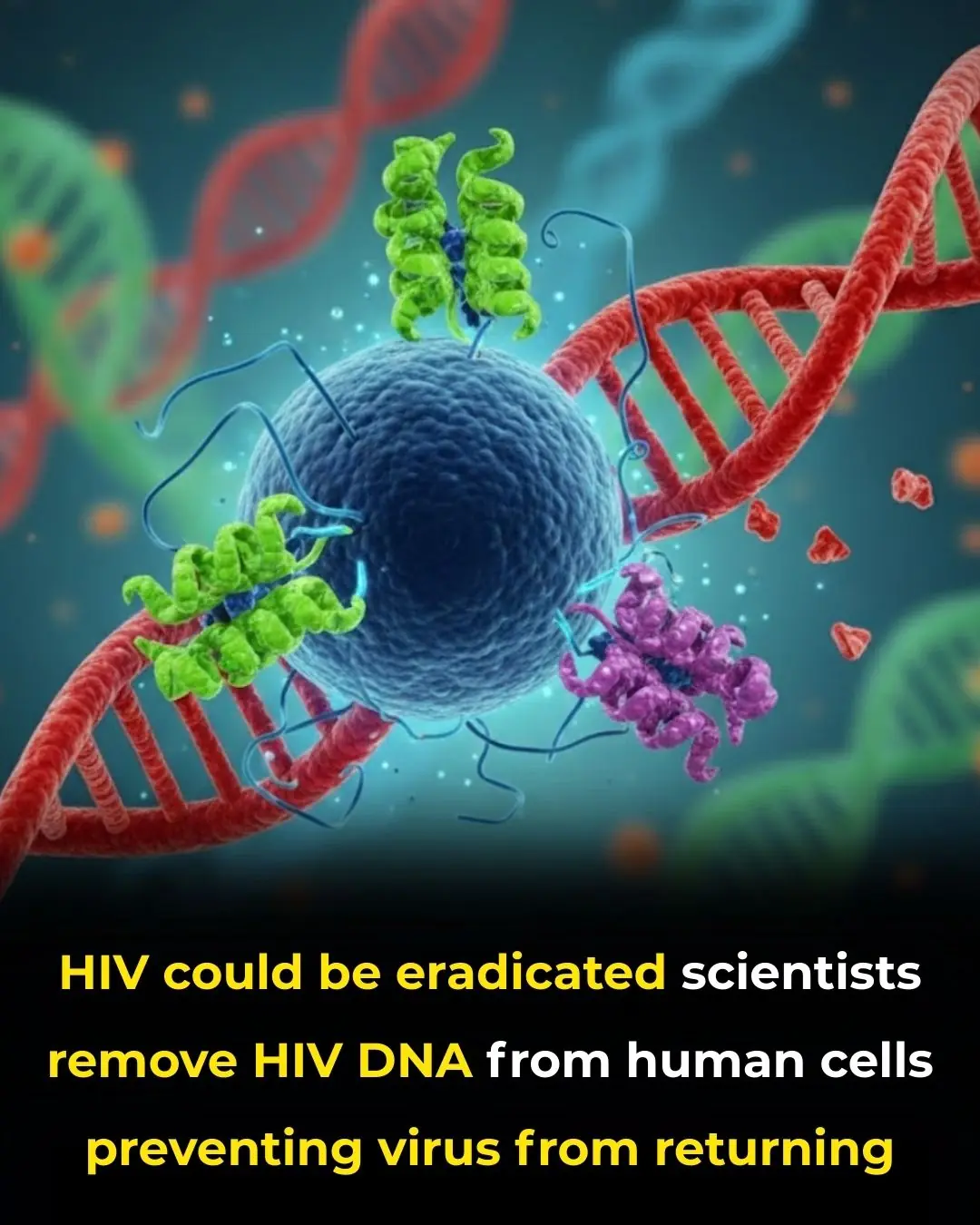
In a historic and groundbreaking medical achievement, scientists have successfully removed HIV DNA from human cells for the first time, marking a significant milestone in the fight against the virus. This breakthrough prevents HIV from ever returning, offering new hope for a potential cure for a disease that has plagued millions of people worldwide for decades.
HIV, or Human Immunodeficiency Virus, is the virus responsible for AIDS (Acquired Immunodeficiency Syndrome). It integrates its genetic material into the DNA of human cells, which makes it extraordinarily difficult to completely eradicate from the body. Despite advances in treatment, such as antiretroviral therapy (ART), which helps control the virus and manage the disease, HIV remains dormant in certain cells, requiring lifelong medication. This is because ART only suppresses the virus, but does not remove it from the body entirely.
The new technique, developed by a team of researchers, has demonstrated the possibility of eliminating HIV directly at its source—by precisely removing the viral DNA from infected cells. Using cutting-edge gene-editing tools, the scientists were able to locate and excise HIV’s genetic material. The results from laboratory experiments have been promising: once the HIV DNA was removed from the human cells, the virus could no longer replicate or reinfect the body, effectively halting the progression of the disease and preventing any future outbreaks. This marks a dramatic shift in HIV treatment and opens the door to a world where a cure might be within reach.
The potential impact of this discovery is immense. If proven successful in human clinical trials, this technique could revolutionize how HIV is treated, possibly eliminating the need for lifelong ART. The elimination of the virus at its genetic source would offer patients a permanent solution to the disease, rather than just managing its symptoms. The removal of HIV DNA from infected cells offers the first glimpse into a future where the virus is no longer a lifelong condition but a disease that can be permanently eradicated. This discovery holds promise not only for HIV but also for other viral infections that integrate into human DNA, such as hepatitis B and certain herpesviruses, providing a new avenue for curing a range of viral diseases.
Though this research is still in its early stages, with clinical trials to assess safety, effectiveness, and scalability still necessary, the results thus far have been encouraging. Experts stress the need for further studies to determine the long-term effects of this approach in human patients, particularly concerning potential risks and the broader applicability of the technique.
The success of this groundbreaking research underscores the power of gene editing in modern medicine. Scientists are now able to target diseases at the molecular level, showcasing the potential to overcome even the most persistent viruses with precision technology. As the field of gene editing continues to evolve, this milestone serves as a beacon of hope for millions living with HIV and offers new possibilities for eradicating other viral infections that have long remained incurable.
This breakthrough is a remarkable example of how far medical science has come in recent years. It represents a critical turning point in the ongoing battle against HIV and offers renewed hope that the virus, which has caused so much suffering for over four decades, could one day be completely wiped out.
Sources:
-
National Institutes of Health (NIH) – www.nih.gov
-
World Health Organization (WHO) – www.who.int
-
Nature Medicine – www.nature.com
-
The Lancet – www.thelancet.com