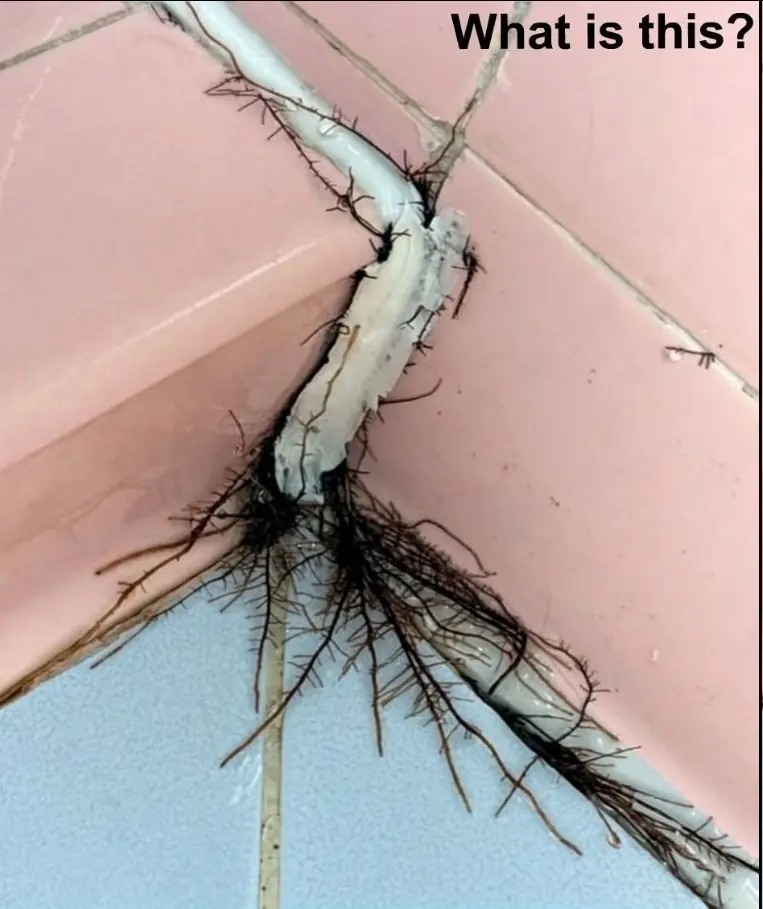
The Strange “Roots” Growing Out of Bathroom Tiles
Facts 21/05/2026 17:16

Deep beneath one of Italy’s most crowded metropolitan regions, an ancient force appears to be awakening. For months, scientists have been tracking signals that suggest one of the planet’s most dangerous geological systems is stirring after centuries of relative calm. The warnings defy the quiet lives of the suburban neighborhoods and busy ports that lie unsuspectingly above. Recent data has shaken the global volcanology community, pointing to activity levels unseen in decades—earthquakes rattling the ground, extraordinary volumes of gas venting from fissures, and visible changes to the landscape that suggest mounting underground pressure.
Experts warn that this could be the early stage of a geological event with the potential to reshape not only southern Italy but global systems. What makes these concerns so unsettling is the knowledge that such events have already occurred in Earth’s history and, given enough time, will inevitably happen again.
When most people think of Naples and volcanic danger, Mount Vesuvius immediately comes to mind. Yet just to the west, beneath the coastal town of Pozzuoli, lies a far greater threat: the Campi Flegrei caldera, or the Phlegraean Fields. Unlike Vesuvius, this isn’t a traditional cone-shaped volcano but a sprawling 13-kilometer-wide depression formed by catastrophic eruptions in prehistory. Roughly 360,000 people live directly on top of this giant scar in the Earth’s crust.
Campi Flegrei is classified as a “supervolcano candidate,” one of the few sites in the world capable of unleashing eruptions large enough to alter global climate. Recent monitoring has recorded rapid changes, far more dramatic than the gradual shifts normally associated with geology. These signs suggest a system entering a volatile new phase.

In May 2024, the region experienced its strongest earthquake in 40 years—a magnitude 4.4 tremor that rattled residents and sent hundreds fleeing into the streets. This event was not isolated. In the preceding six months, more than 3,000 smaller quakes were detected, forming a persistent swarm that indicates major underground pressure changes.
Meanwhile, the land itself has been steadily rising. Since the 1950s, the ground has lifted nearly 4 meters, an astonishing transformation visible even to ordinary residents. The process, known as bradyseism, occurs when magma or gases accumulate belowground, inflating the crust like a balloon. Each centimeter of uplift increases stress on the crust, making fractures more likely.

Equally concerning are the vast amounts of carbon dioxide escaping the caldera. Current emissions exceed 4,000–5,000 metric tons per day—figures linked primarily to rising magma. Scientists report that as much as 80% of this gas comes directly from molten rock moving toward the surface. Detection of magma just a few kilometers down has further amplified fears.
Professor Christopher Kilburn of University College London explains: “If the ground keeps rising, eventually the crust has to break. The only unknown is when.”
History offers chilling reminders of what Campi Flegrei can do. Around 36,000 years ago, it produced Europe’s largest eruption in 200,000 years, spreading ash across the Mediterranean and deep into Eurasia. This eruption cooled eastern Europe by as much as 9°C, possibly hastening the decline of Neanderthals.
Even its more recent eruption in 1538, which formed Monte Nuovo in just a few days, showed how quickly landscapes can change when subterranean pressures find release.
Today, more than four million people live within the volcano’s potential impact zone, including all of Naples. An eruption here would present an evacuation challenge unlike any in history, with dense populations, complex infrastructure, and economic hubs all in harm’s way.
The risks extend beyond lava flows. Pyroclastic surges could annihilate entire neighborhoods within minutes, while ash clouds would ground flights, destroy crops, and endanger respiratory health. Italian officials have already raised the alert level to “yellow,” indicating heightened caution.
The aftermath of a major eruption would not remain confined to Italy. Volcanic ash could spread across Europe, disrupting agriculture and choking air travel. Sulfur gases injected into the stratosphere might cool the planet, echoing past “volcanic winters” like that which followed Indonesia’s Tambora eruption in 1815.
Scientists point to Earth’s most infamous eruption—the Toba event 74,000 years ago—as a grim parallel. That eruption plunged the world into years of cooling and caused ecological upheaval on a scale humanity has never witnessed.

To prepare, researchers are applying engineering failure models to forecast when rock beneath Campi Flegrei might fracture under stress. Sophisticated tools such as GPS, satellite radar, and seismic networks feed real-time data into predictive systems. Yet even with these advances, volcanologists admit that eruption timing remains nearly impossible to pinpoint with confidence.
The risk is compounded by evidence from other supervolcanoes, such as Yellowstone and California’s Long Valley, which suggest that catastrophic eruptions may build up in less than a year—far too little time for comprehensive global preparations.
Statistical models estimate a roughly 1 in 1,400 chance of a super-eruption occurring somewhere on Earth during a human lifetime. While the odds may seem slim, they are far higher than many lottery jackpots—and unlike gambling, the “jackpot” in this case would mean global disaster.
Supervolcano eruptions are not hypothetical. They are inevitabilities written into the planet’s geological clock. The only uncertainties are where and when they will occur—and whether human civilization will be ready to withstand the shock when the Earth decides to remind us who is really in control.