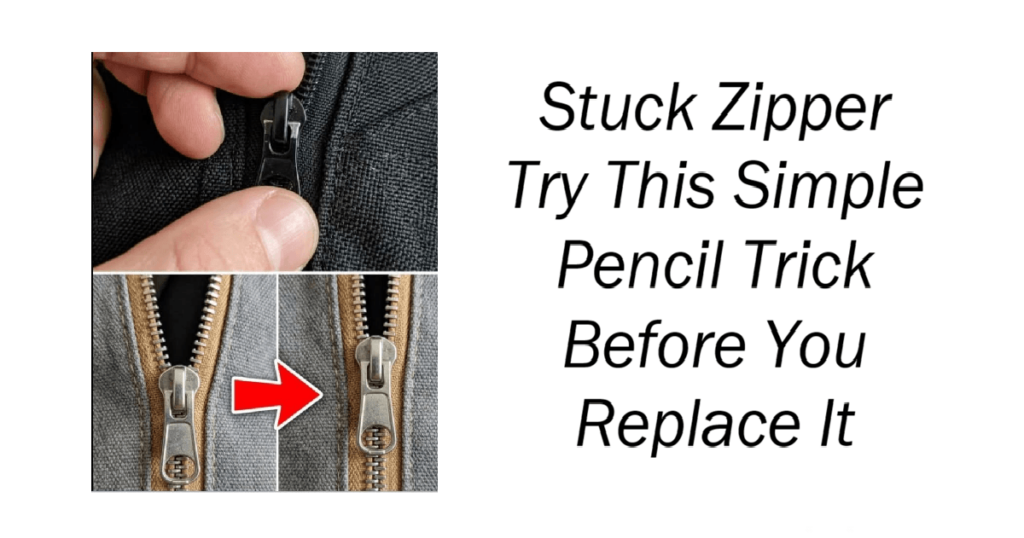
There are few things more annoying than rushing to get dressed only to discover your zipper won’t budge. Whether it’s your favorite pair of jeans, a winter jacket, a backpack, a suitcase, or even a pair of boots, a stuck zipper can turn an ordinary moment into an unexpected headache.
The good news? A stubborn zipper doesn’t usually mean it’s broken. In most cases, the problem is surprisingly simple to fix, often with items you already have at home. Before you tug harder and risk damaging the zipper for good, take a minute to identify what’s causing the problem. A little patience and the right technique can have it sliding smoothly again in no time.
Why Do Zippers Get Stuck?
Although zippers are built to handle years of daily use, they’re still mechanical devices with small moving parts. When dirt builds up, fabric gets caught, or components become misaligned, even the best zipper can stop working properly.
Here are the most common causes.
1. Dirt, Dust, and Lint Build Up
Over time, tiny particles collect between the zipper teeth, including:
Dust
Lint
Fabric fibers
Laundry detergent residue
Body oils
These deposits create extra friction, making the zipper increasingly difficult to move. This is especially common on jackets, backpacks, sports bags, and frequently washed jeans.
2. Misaligned Zipper Teeth
Zipper teeth are designed to fit together perfectly. Pulling the zipper too quickly, forcing it while the fabric is under tension, or twisting it awkwardly can cause the teeth to shift slightly out of alignment.
Fortunately, minor misalignment is often easy to correct without replacing the zipper.
3. Fabric Caught in the Slider
This is one of the most common—and easiest—zipper problems to fix.
A small piece of fabric, loose thread, or jacket lining can become trapped inside the slider. If you continue pulling, you could tear the fabric or bend the slider permanently.
Instead, stop and inspect the zipper carefully before trying again.
4. Everyday Wear and Tear
Like any moving mechanism, zippers eventually wear out. Years of use can cause the slider to loosen, reducing the pressure needed to keep the teeth properly aligned.
Common symptoms include:
The zipper separating after closing
Sticking halfway
Requiring several attempts before it closes properly
Older jackets and frequently used luggage often develop this issue.
The Pencil Trick That Actually Works
One of the simplest zipper repair tricks has been around for decades, and it only requires an ordinary graphite pencil.
It sounds almost too simple, but graphite acts as an excellent dry lubricant, helping the slider glide more easily across the zipper teeth.
What You’ll Need
An HB pencil
Or a soft 2B graphite pencil
Avoid colored pencils or mechanical pencils with very fine leads, as they don’t leave enough graphite behind.
How to Do It
Step 1
Locate the section where the zipper sticks.
Step 2
Rub the graphite directly over both sides of the zipper teeth, covering the problem area and a little beyond it.
Step 3
Gently move the zipper up and down several times. Don’t force it—let the graphite work its way inside the slider.
Step 4
Repeat if necessary.
Many stubborn zippers begin working smoothly after just two or three passes.
Why Does Graphite Work?
Graphite is naturally slippery, making it an excellent dry lubricant.
Unlike oil-based products, graphite:
Reduces friction without leaving greasy residue
Doesn’t attract dust or lint
Won’t stain most fabrics
Is safe for clothing, bags, and luggage
That’s why it’s often considered one of the safest first fixes for a stuck zipper.
Other Easy Fixes to Try
If graphite doesn’t completely solve the problem, a few other household items may help.
Dry Bar Soap
Lightly rub a dry bar of soap along both sides of the zipper teeth. The thin coating helps the slider move more freely.
Avoid using wet soap, which can leave unwanted residue.
Candle Wax
A white candle works in much the same way. Apply a small amount of wax to the zipper teeth, then move the zipper back and forth until it loosens.
Use only a light coating to prevent buildup.
Petroleum Jelly
For heavily worn or slightly corroded zippers, apply a tiny amount of petroleum jelly with a cotton swab.
Once the zipper moves freely again, wipe away any excess to prevent dirt from sticking.
Mineral or Sewing Machine Oil
A single drop of mineral oil or sewing machine oil can restore movement, but use it sparingly. Too much oil may stain fabrics, especially cotton or denim.
Tweezers for Trapped Fabric
If fabric is caught inside the slider:
Hold the zipper steady.
Use fine-point tweezers.
Gently remove the trapped material one thread at a time.
Patience is far better than force.
Never Force a Stuck Zipper
One of the biggest mistakes people make is simply pulling harder.
Doing so can:
Bend the slider
Break zipper teeth
Tear the surrounding fabric
Permanently damage the zipper
Taking an extra minute to identify the cause can save you from an expensive repair—or replacing your favorite item altogether.
Simple Maintenance Tips to Prevent Future Problems
Keeping your zippers in good condition only takes a few minutes.
Clean Them Regularly
Use an old toothbrush to remove:
Dust
Sand
Dirt
Lint
Outdoor jackets, backpacks, camping gear, and suitcases especially benefit from occasional cleaning.
Zip Smoothly
Always pull the zipper in a straight, steady motion rather than jerking it quickly.
Avoid Overstuffing Bags
Overfilled backpacks, handbags, and suitcases place tremendous stress on zipper teeth and sliders. Leaving a little extra room helps prevent distortion and premature wear.
Lubricate Occasionally
Even if your zipper works perfectly, applying a little graphite or dry soap every few months helps keep it moving smoothly and reduces long-term wear.
When Is It Time to Replace the Zipper?
Unfortunately, not every zipper can be repaired.
Replacement is usually the best option if:
Several teeth are missing
The zipper tape is torn
The slider is cracked
The teeth are badly bent
The zipper repeatedly separates even after repairs
In these situations, installing a new zipper is usually more reliable than trying temporary fixes.
Final Thoughts
A stuck zipper doesn’t have to mean the end of your favorite jeans, jacket, backpack, or suitcase. Most zipper problems are caused by dirt, trapped fabric, slight misalignment, or normal wear—all issues that can often be fixed in just a few minutes at home.
Before assuming the zipper is beyond repair, try the simple pencil trick. If needed, follow up with dry soap, candle wax, or another gentle lubricant. Keeping a graphite pencil, an old toothbrush, and a pair of tweezers in your home repair kit can save you time, money, and frustration.
With a little routine maintenance and careful handling, your zippers can continue working smoothly for years to come.