Iran 'still has thousands of ballistic missiles' after more than a month of conflict
News 12/04/2026 17:48
The U.S. is sending warships through the Strait of Hormuz to pave the way for a mine-clearing operation, while Iran threatens to "deal severely" with military vessels in the area.
The Central Command (CENTCOM), the agency responsible for U.S. military operations in the Middle East, announced on April 11 that it had begun the process of "facilitating mine-clearing in the Strait of Hormuz," after two destroyers transited the area.
"The USS Frank E. Peterson and USS Michael Murphy transited the Strait of Hormuz, operating in the Arabian Gulf, as part of a mission to ensure this waterway is free of mines," CENTCOM stated, adding that additional forces, including unmanned submersibles, may join the operation in the coming days.
Admiral Brad Cooper, commander of CENTCOM, announced on the same day that the U.S. military had begun the process of establishing a new waterway. "We will soon share this safe route with the maritime industry to encourage free trade," he said.
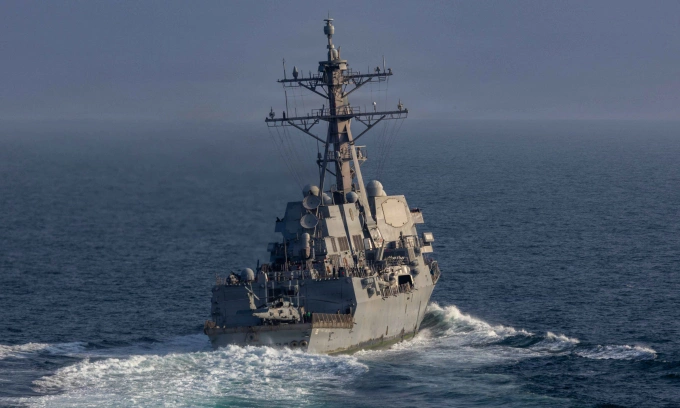
The USS Frank E. Peterson sailed in the Arabian Sea on April 2nd. Photo: US Navy
This information was released after President Donald Trump stated that the US Navy was "cleaning up" the Strait of Hormuz, and declared that all Iranian mine-laying vessels had been sunk.
Lieutenant Colonel Ebrahim Zolfaghari, spokesman for the Iranian military, later said Tehran "firmly denies" reports of US warships passing through the Strait of Hormuz. "The Iranian armed forces still have the right to decide which ships are allowed to pass through the area," Zolfaghari said.
The Iranian Islamic Revolutionary Guard Corps Navy subsequently declared that any military vessel attempting to pass through the Strait of Hormuz "will be severely dealt with," stating that passage through the strait is only "authorized for civilian vessels under specific conditions."
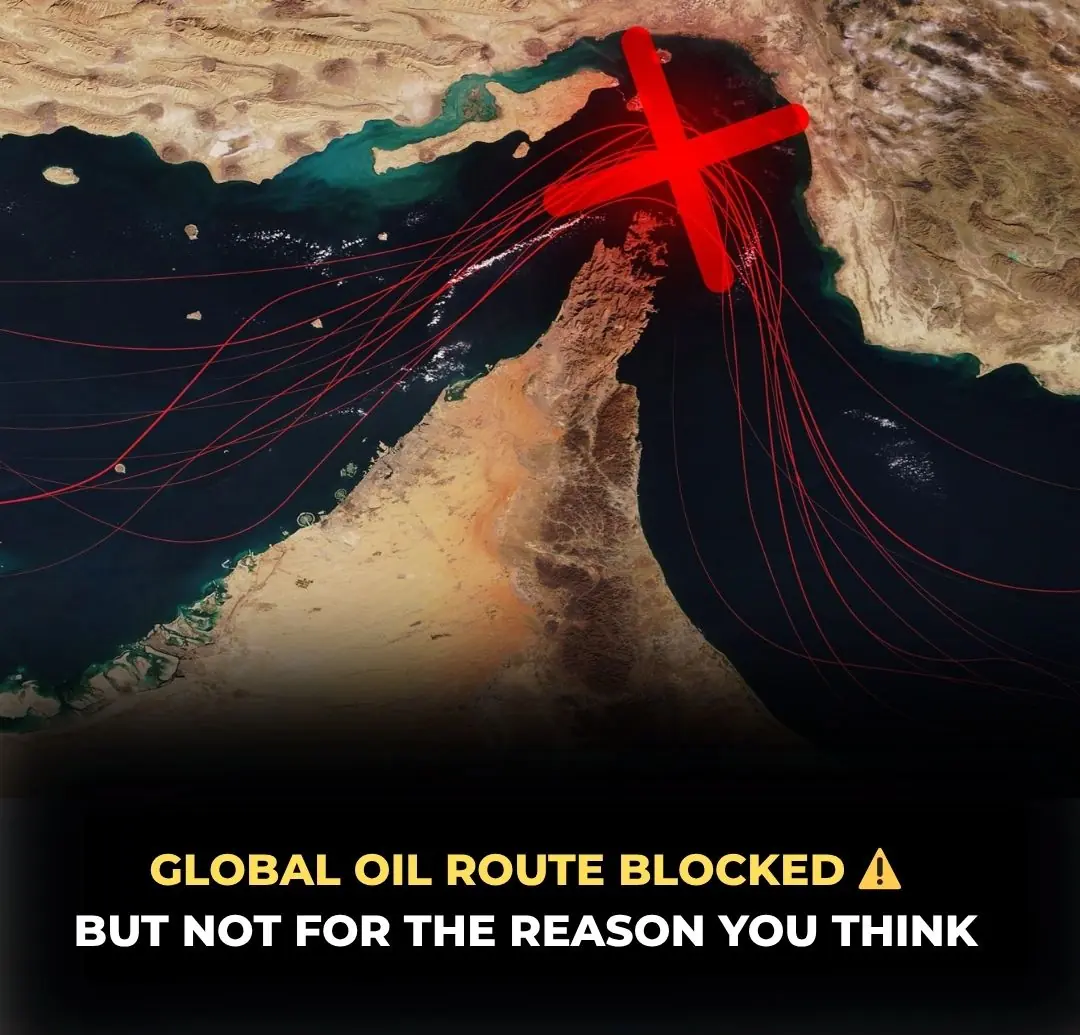
The Strait of Hormuz is a vital oil shipping route, accounting for approximately 20% of the global oil supply. Immediately after the US and Israel launched their attack on Iran on February 28, Tehran deployed numerous speedboats to lay mines in the Strait of Hormuz.
These mines, along with the threat from drones and missiles, have drastically reduced the number of cargo ships traversing this waterway, driving up energy prices and giving Iran its greatest leverage in the conflict.
Reopening this route is one of the key topics in the recent ceasefire agreement between the parties, although the number of ships passing through remains limited.
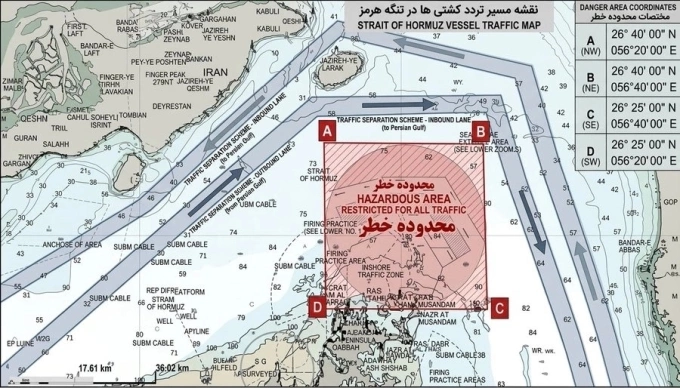
Route (gray) and dangerous area suspected of containing mines (red) in the Strait of Hormuz, as announced by the IRGC on April 9. Photo: IRGC
Following a ceasefire agreement, the Iranian Islamic Revolutionary Guard Corps (IRGC) announced on April 9 an alternative route for ships to avoid the risk of hitting mines in the Strait of Hormuz. However, US officials believe this route is significantly restricted, mainly due to Iran's unsystematic mine laying.