Chicken Eggs with Mugwort: Highly Beneficial but Certain People Should Avoid Them
News 03/12/2025 16:21
The Hidden Climb of Thyroid Cancer in Younger Women (Expanded Edition)
This post may contain affiliate links. As an Amazon Associate, I earn from qualifying purchases. Read my disclosure policy here.
Thyroid cancer has quietly become one of the most unsettling medical trends of the past several decades. Even as healthcare advances and diagnostic tools become more refined, the number of cases continues to climb—and the most notable shift is occurring in a demographic few expected. Increasingly, younger women are facing a disease historically associated with older adults. Many receive their diagnosis only after months or even years of unexplained fatigue, subtle voice changes or a small neck lump they attributed to stress, thyroid imbalance or the demands of daily life.
This rise has perplexed researchers, oncologists and public health experts worldwide. On one hand, the outlook for most thyroid cancer patients remains highly favorable: survival rates are among the highest of all cancers. On the other hand, the reasons behind the growing number of cases are far more complex than simple overdiagnosis or improved screening. A combination of environmental exposures, metabolic shifts, lifestyle patterns, hormonal influences and advances in imaging all appear to contribute to this trend (National Cancer Institute).
Behind the statistics lies a deeper reflection on modern health—and how our bodies adapt, sometimes painfully, to the pressures of contemporary life. Understanding why this is happening requires more than a scan of symptoms or numbers. It asks us to consider the intersections between environment, physiology and behavior while recognizing that early symptoms are often subtle enough to blend invisibly into the routines of work, family and stress.
Thyroid cancer is increasing more rapidly than many other major cancers. In the United States, incidence rates tripled between 1980 and 2016 (American Cancer Society). This trend is mirrored across numerous countries, including those without widespread ultrasound screening programs—indicating that the rise cannot be explained solely by increased detection.
The thyroid, located at the base of the neck, regulates metabolism, energy, temperature and heart rate. When its cells grow uncontrollably, tumors form. Papillary thyroid carcinoma, the most common type, generally grows slowly and is highly treatable. Less common forms—follicular, medullary and the rare anaplastic type—behave more aggressively and may spread earlier (Mayo Clinic).
For years, improved detection was considered the primary cause of rising diagnoses. Ultrasound technology and fine-needle aspiration biopsy, introduced widely in the 1980s and 1990s, made it possible to detect tiny tumors that previously went unnoticed. Many of these small papillary cancers grow so slowly that they would never have caused symptoms or affected lifespan.
However, more recent data show that this explanation is incomplete. Larger and more advanced tumors are also increasing, and mortality rates have not declined as much as experts once predicted. Even regions with limited imaging capabilities report similar trends. This points to underlying forces beyond better detection (Journal of Clinical Oncology).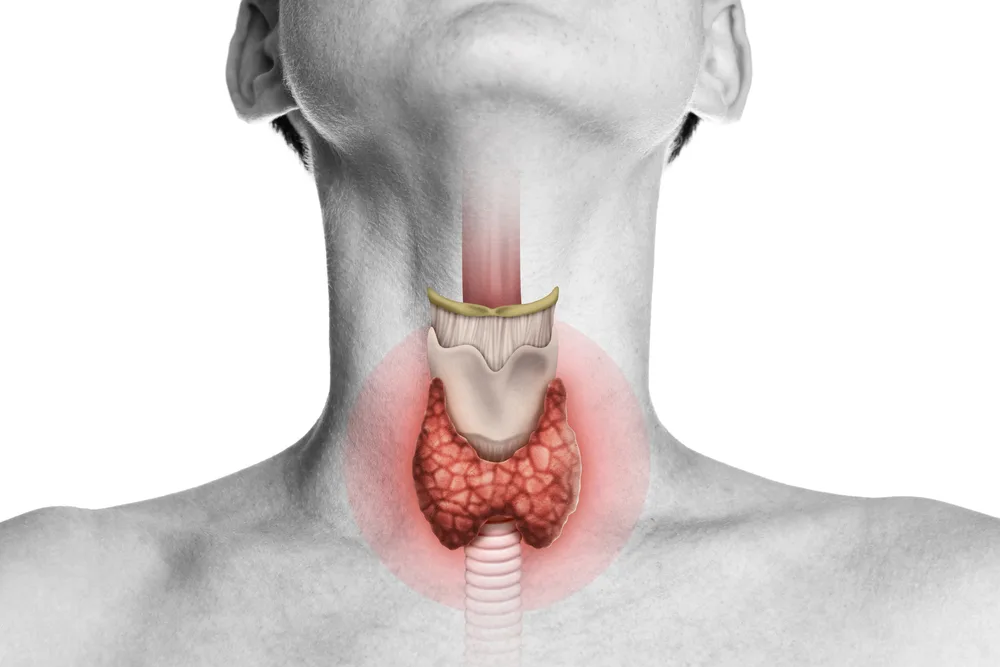
The gender gap in thyroid cancer is striking:
Women develop thyroid cancer three times more often than men, and the highest risk group includes women in their 30s, 40s and 50s (Endocrine Society).
Several factors may explain this pattern:
The thyroid is intimately connected to the endocrine system. Women experience ongoing hormonal shifts—monthly cycles, pregnancy, postpartum changes and perimenopause—all of which create additional stress on thyroid regulation. Estrogen may also influence thyroid cell growth and immune function (Journal of Endocrinology).
Up to 80% of women develop thyroid nodules in their lifetime. Most are benign, but a larger population with nodules increases the number of cancers detected (American Thyroid Association).
Neck lumps, fatigue and mild throat pressure often get misattributed to stress, viral illness or hormonal imbalance—especially among busy younger women. By the time symptoms escalate, tumors may have grown or begun spreading.
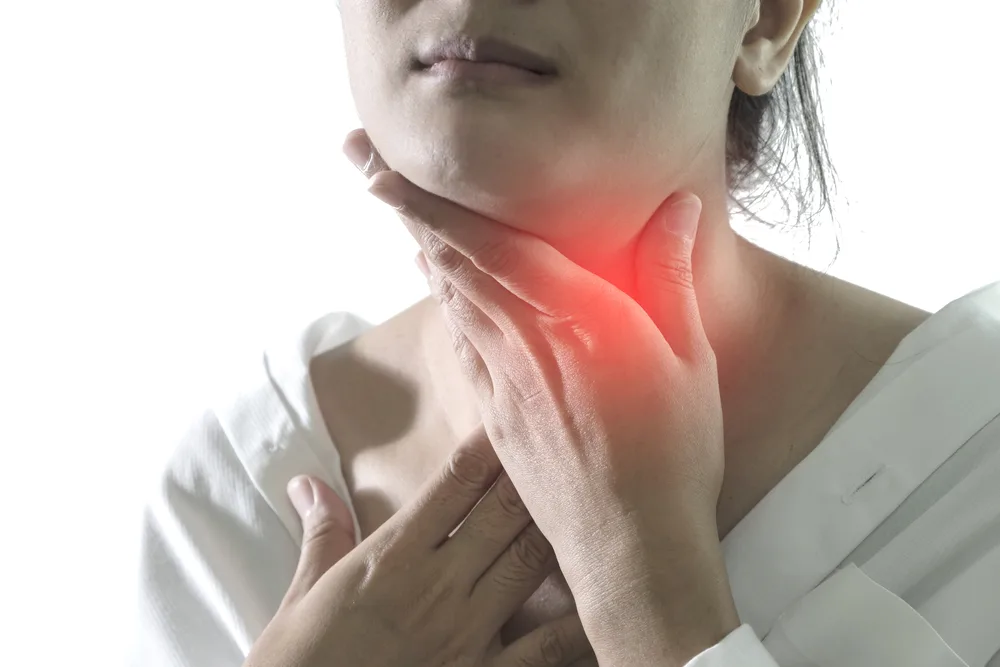
Early signs of thyroid cancer often blend into the background of everyday life. Common symptoms include:
A lump or swelling in the neck
Persistent hoarseness or voice changes
Difficulty swallowing or a sensation of throat pressure
Chronic fatigue not explained by lifestyle
Unexplained weight loss
Swollen lymph nodes near the collarbone
Fatigue—one of the earliest symptoms—is easy to dismiss in women managing careers, families and social pressure. Because thyroid cancer is usually slow growing, symptoms can remain subtle for long periods, delaying diagnosis.
Initially, experts believed the surge in thyroid cancer stemmed primarily from overdiagnosis—the detection of small cancers unlikely to affect health or longevity. Indeed, ultrasound and biopsy identified countless tiny papillary tumors that historically would have gone unnoticed.
But the picture has shifted. Aggressive and metastatic cases are also rising, suggesting that a genuine increase is occurring. Mortality rates have slightly increased in several regions despite improved treatments (International Journal of Cancer).
Medical practice has responded. Instead of immediately treating all small tumors, many physicians now use:
Active surveillance rather than surgery
Partial thyroidectomy instead of full removal
Selective use of radioactive iodine
These changes reduce overtreatment but do not explain the continued rise in large or advanced tumors.
A significant body of research now links high body mass index (BMI) with increased thyroid cancer risk. Individuals with obesity are more likely not only to develop thyroid cancer but also to present with more aggressive disease (The Lancet Diabetes & Endocrinology).
Potential mechanisms include:
Elevated levels of thyroid-stimulating hormone (TSH)
Chronic inflammation
Insulin resistance
Altered cellular metabolism
These metabolic conditions create an environment that may encourage abnormal thyroid cell growth. Notably, obesity rates began rising globally around the same time thyroid cancer rates climbed—a parallel that continues to draw scientific attention.
Thyroid function is extremely sensitive to environmental chemicals. Endocrine-disrupting chemicals (EDCs)—including those found in plastics, cookware, receipts, cosmetics, carpeting and pesticides—can mimic hormones or interfere with natural hormonal messaging.
Substances of concern include:
PFAS chemicals (PFOA, PFOS)
Flame retardants
Pesticides
Phthalates
Bisphenol-A (BPA)
Although the evidence remains mixed, long-term exposure—even at low levels—may impact thyroid function and potentially increase cancer susceptibility (Environmental Health Perspectives).
Another emerging theory links thyroid cancer prevalence to volcanic regions. Volcanic soils can contain trace elements such as vanadium or boron that may influence thyroid behavior. Research is ongoing and remains inconclusive.
Exposure to medical radiation during childhood—especially repeated CT scans of the head, neck or chest—has been associated with a higher risk of developing thyroid cancer later in life (British Medical Journal). The thyroid gland is particularly sensitive to ionizing radiation during growth phases.
While modern imaging is safer than earlier technologies, cumulative exposure remains an important consideration, particularly for younger patients.
Diagnosis typically involves:
Physical examination and medical history
Thyroid function blood tests
High-resolution ultrasound (the gold standard for nodule evaluation)
Fine-needle aspiration biopsy for suspicious nodules
Molecular testing for unclear biopsy results
CT, MRI or PET scans in rare or advanced cases
Advances in imaging and pathology interpretation have significantly improved accuracy. In some cases, second opinions or repeat imaging prevent missed or delayed diagnoses.
Thyroid cancer treatment is increasingly personalized.
Surgery (partial or total thyroidectomy)
Radioactive iodine therapy
Hormone replacement therapy
External radiation or chemotherapy (for aggressive or recurrent disease)
Targeted therapies for tumors with specific genetic mutations
Radiofrequency ablation (RFA) has emerged as a minimally invasive option for shrinking benign nodules or treating certain recurrent cancers. It requires minimal recovery time and avoids neck scarring, making it an attractive alternative for selected patients (Radiology Society of North America).
Molecular research has identified genetic signatures that influence prognosis and treatment choice. Targeted therapies based on tumor mutations are improving outcomes, especially for cancers resistant to standard treatments.
Although thyroid cancer is often slow growing, the emotional experience can be overwhelming. Women must navigate:
The shock of diagnosis
The frustration of years of subtle symptoms dismissed as stress
Recovery from surgery
Lifelong medication adjustments
Anxiety about recurrence
Many describe the journey as learning to understand a “new” body. Compassionate medical care, strong support systems and informed self-advocacy play crucial roles in emotional and physical healing.
Prevention remains challenging because thyroid cancer stems from a combination of genetic, hormonal, environmental and metabolic factors. However, increased awareness can lead to earlier diagnosis and improved outcomes.
Key steps include:
Paying attention to neck changes
Monitoring fatigue or voice alterations
Understanding personal risk factors
Advocating for appropriate imaging when symptoms persist
Managing metabolic health through diet, exercise and stress reduction
Reducing unnecessary radiation exposure
Women who trust their instincts often detect problems earlier than tests alone would reveal.
The rise of thyroid cancer in younger women reflects the interplay of modern lifestyle pressures, environmental exposures, hormonal patterns and evolving medical practices. While improved imaging uncovered many small and harmless nodules, a deeper shift is at work—one that mirrors the complexities of contemporary health.
The encouraging news: most thyroid cancers are highly treatable, and survival rates remain exceptional. The greater challenge lies in recognizing the quiet early signs, understanding the unseen stressors shaping thyroid health and empowering women to advocate for care even when symptoms seem small.
This rise is not a narrative of fear but a reminder that the body communicates continuously—even in whispers—and those whispers deserve attention.
American Cancer Society
National Cancer Institute
Mayo Clinic
Journal of Clinical Oncology
Endocrine Society
American Thyroid Association
Journal of Endocrinology
International Journal of Cancer
The Lancet Diabetes & Endocrinology
Environmental Health Perspectives
British Medical Journal
Radiology Society of North America
If you’d like, I can also shorten this into a blog-ready version, create a PDF, or format it for social media or newsletter publication.