Debate: Asking Babies for Consent Before Changing Their Diapers
Debate: Asking Babies for Consent Before Changing Their Diapers
News 12/06/2026 14:55
Alzheimer’s disease has long been one of the most devastating neurological conditions — slowly erasing memory, independence, and identity. For decades, treatments could only manage symptoms, offering limited relief while the disease progressed.
But today, science is pushing into a new frontier. In a groundbreaking leap forward, researchers have developed therapies that can actually remove harmful amyloid plaques, attacking Alzheimer’s at its biological roots.
A hallmark of Alzheimer’s is the accumulation of beta-amyloid plaques in the brain. These sticky protein fragments clump together between neurons, blocking communication and triggering inflammation. Over time, this damage leads to:
Memory loss
Confusion
Impaired reasoning
Decline in daily functioning
Clearing these plaques has been a primary goal in Alzheimer’s research for decades — but doing so safely and effectively remained out of reach until recently.
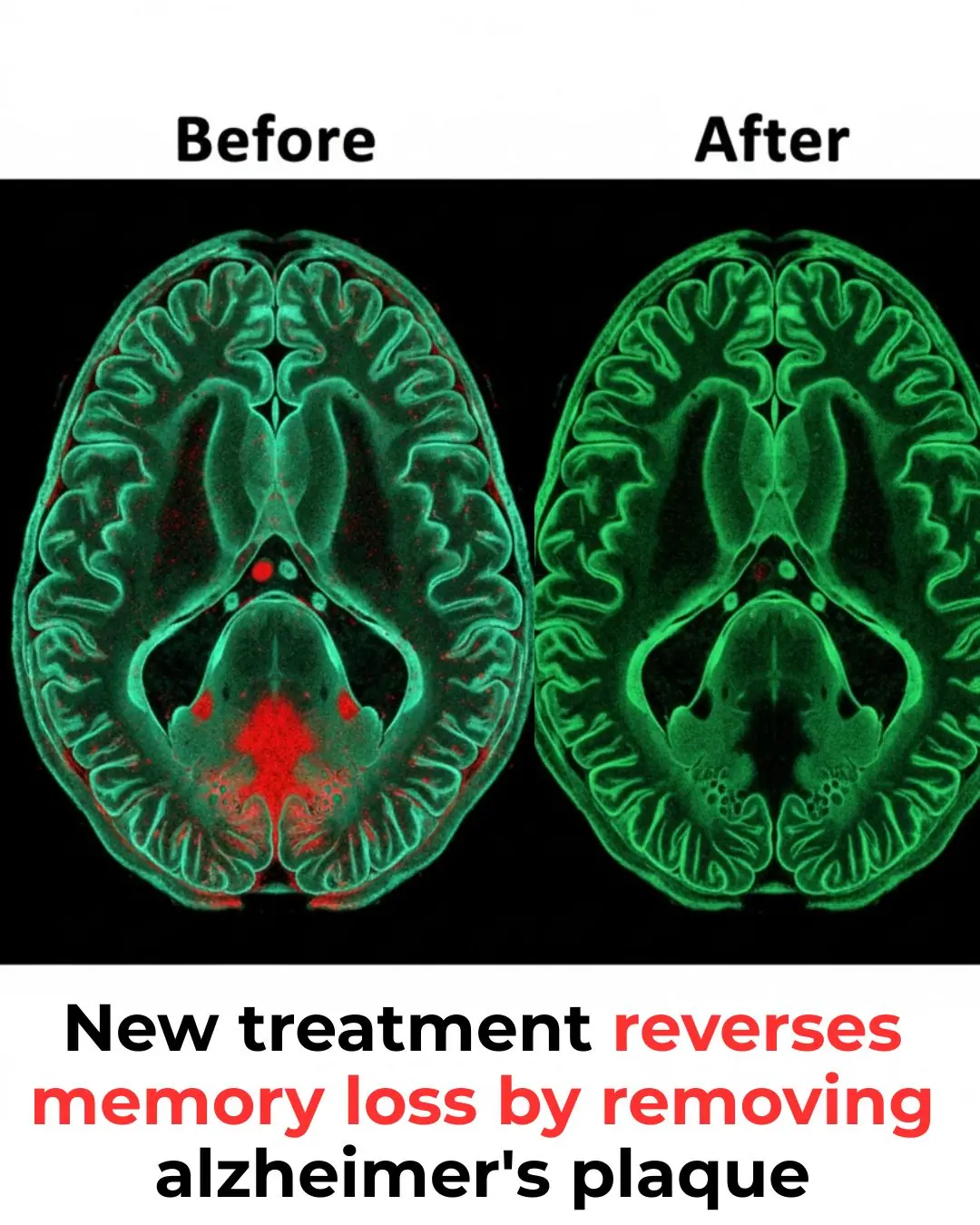
Using advanced imaging technology, scientists captured before-and-after brain scans showing significant reductions in amyloid plaque buildup after treatment.
These results are not theoretical — they are seen in real patients undergoing emerging therapies.
For the first time, researchers could visualize what had long been hoped for: the brain freeing itself from plaque deposits that disrupt healthy activity.
One of the most important breakthroughs comes from Leqembi (Lecanemab), a monoclonal antibody therapy that specifically targets beta-amyloid. It was recently approved by the FDA for early-stage Alzheimer’s.
Here’s what makes it groundbreaking:
It binds to beta-amyloid, marking it for removal.
It significantly reduces plaque levels in the brain.
It slows cognitive decline in patients with early Alzheimer’s.
It represents a shift from symptom management to disease-modifying treatment.
While not a cure, Leqembi proves that targeting the underlying pathology can truly alter the course of the disease.
Scientists are not stopping at one treatment. Several innovative methods are showing powerful potential in lab and early clinical trials:
Researchers are exploring ways to edit genes associated with beta-amyloid production, potentially reducing plaque formation before it even begins.
Low-intensity focused ultrasound has shown promise in:
Opening the blood-brain barrier
Enhancing plaque clearance
Stimulating immune cells in the brain
This method is noninvasive and may complement other therapies.
New generations of antibody treatments are being designed to more precisely target toxic amyloid forms, with fewer side effects and greater effectiveness.
Together, these approaches are signaling a new age in Alzheimer’s research — one where the disease’s root causes are being attacked directly.
Although none of these treatments offer a complete cure yet, they represent a monumental shift in scientific progress. We have moved beyond simply managing symptoms and entered the phase of modifying the disease itself.
The message from researchers is clear:
We now have proof that memory loss can be slowed, and its underlying triggers can be reduced.
Since these therapies work best during the early stages, early diagnosis is more crucial than ever. Tools like biomarker scans, blood tests, and cognitive assessments can identify Alzheimer’s long before severe symptoms appear.
With earlier detection and rapidly advancing science, the future holds realistic hope for:
Longer quality of life
Slower disease progression
More effective treatment combinations
One day, possibly preventing Alzheimer’s altogether
Debate: Asking Babies for Consent Before Changing Their Diapers