We think we know everything about Diana. We remember her legendary smile, her unforgettable fashion, her distinctive gaze, and the way she seemed to connect with people even when surrounded by cameras and ceremony.
But behind the public image was another Diana—quieter, warmer, and deeply human.
Photographs that have recently drawn attention offer a glimpse of the woman beyond the carefully observed royal life. They show moments of affection, motherhood, compassion, and ordinary happiness. Rather than focusing on formal appearances or glamorous events, these images capture Diana in situations where she appears relaxed and emotionally present.
Together, they tell a story of a woman who, despite living within one of the world's most closely watched institutions, often seemed determined to remain connected to ordinary human experiences.
The People’s Princess, More Real Than Ever
Diana Spencer was never simply a princess defined by protocol.
From an early stage of her public life, she became known for approaching people in a way that often felt unusually personal. She visited hospitals, spoke with patients, shook hands without hesitation, and spent time with people whom society could easily overlook.
Those gestures might appear simple today, but within the highly structured world of the British royal family, they represented a noticeable change in tone.
Diana had a natural ability to make people feel seen.
She did not always appear to approach humanitarian work as a distant royal duty. In many photographs, her expressions and body language suggest genuine attention toward the people around her. Whether she was speaking with patients, meeting children, or participating in charitable activities, she frequently appeared focused on the person in front of her rather than the cameras documenting the moment.
That quality became one of the most recognizable parts of her public image.
The photographs associated with her humanitarian work, including those showing her among children in Africa, offer another perspective on that side of her personality. Rather than presenting a perfectly controlled royal figure, they capture moments that feel spontaneous and emotionally direct.
Her influence was not simply connected to the title she carried. It was also connected to the way she interacted with people.
A Mother First and Foremost
Perhaps the most intimate side of Diana's life was her role as a mother.
Away from official ceremonies and state occasions, she wanted her sons, William and Harry, to experience as much normal childhood as possible. She wanted them to laugh, explore, play, and enjoy experiences that had little to do with royal protocol.
For a woman whose own life was surrounded by extraordinary public attention, creating ordinary moments for her children was especially meaningful.
Some of the photographs show Diana spending time with her sons in relaxed settings. There are scenes of amusement parks, meals, outdoor activities, and winter days filled with play. None of these moments necessarily appear extraordinary on their own.
That is precisely what makes them so touching.
They show a mother trying to give her children memories that felt normal.
There is something particularly powerful about seeing a famous family temporarily separated from the world of ceremonies and official duties. In these quieter moments, Diana appears less like an international celebrity and more like a mother enjoying time with her children.
She was also remembered for encouraging a close relationship between William and Harry. The idea that they should remain “best friends for life” has continued to resonate with people who look back on their childhood together.
Whatever complexities their lives would later bring, photographs from their younger years preserve a period when they were simply two brothers growing up under extraordinary circumstances.
The Woman Behind the Glamour
Diana's public image was often associated with elegance.
Her clothes were photographed around the world. Her hairstyles became widely recognized. Every public appearance could generate headlines, and her smallest gestures could attract enormous attention.
Yet glamour was only one part of her story.
Behind the carefully photographed dresses and formal appearances was a woman navigating an intensely complicated personal life.
Diana's marriage to Charles became increasingly difficult, eventually leading to separation and divorce. Those events marked painful turning points in her life and transformed the way the public understood her.
For someone constantly surrounded by cameras, finding genuine privacy was difficult.
There was a striking contrast between the public Diana and the private woman. In public, she could appear confident, graceful, and composed. Behind that image was someone trying to understand her place within a demanding institution and within a life that rarely allowed her to disappear from public view.
The newly highlighted photographs are meaningful partly because they provide glimpses of that less formal side.
They remind viewers that Diana's life cannot be reduced to royal ceremonies, fashion photographs, or newspaper headlines.
She was also a daughter, a sister, a friend, and most importantly, a mother.
Turning Personal Experience Into Compassion
One of the defining aspects of Diana's later public life was her involvement in humanitarian causes.
She became associated with efforts to raise awareness about HIV and AIDS at a time when misinformation and fear surrounding the disease were widespread. Her public interactions with people affected by HIV helped challenge some of the stigma surrounding them.
She also became involved in campaigns concerning landmines and supported causes involving vulnerable people around the world.
These efforts were significant because Diana often used her visibility to draw attention to people who otherwise received little public attention.
Her approach was frequently personal rather than purely ceremonial.
A photograph of Diana sitting beside someone, holding a hand, speaking to a patient, or interacting with a child could communicate something that a formal speech could not.
It showed that compassion did not always require complicated words.
Sometimes, simply being present mattered.
Her humanitarian work also contributed to a broader transformation in how members of the royal family could interact with the public. The emotional openness associated with Diana became an important part of her legacy.
Strength Behind the Smile
It can be tempting, when looking at photographs of Diana smiling, to imagine that her life was always filled with happiness.
But photographs capture only moments.
Behind the smiles were personal struggles, intense media attention, difficult relationships, and the enormous pressure of being one of the world's most recognizable women.
That contrast makes many of the quieter photographs even more poignant.
A smile does not necessarily mean a person has no difficulties. Sometimes, it simply represents a moment of happiness in the middle of a complicated life.
Diana seemed capable of finding those moments.
She could laugh with her children, interact warmly with strangers, participate in humanitarian work, and allow herself to enjoy ordinary experiences despite the extraordinary circumstances surrounding her.
That humanity was perhaps one of the reasons so many people felt connected to her.
A Legacy That Continues
Diana's legacy has survived far beyond the years of her public life.
Her sons, William and Harry, have each carried aspects of the values associated with their childhood and upbringing into their own lives. Generosity, empathy, public service, and attention to vulnerable communities remain themes frequently connected with Diana's memory.
The photographs also preserve something that words sometimes struggle to express.
They show moments.
A mother laughing with her children.
A woman listening to someone who needed attention.
A princess stepping outside the boundaries of ceremony.
A person choosing warmth in situations where formality might have been easier.
That is why previously overlooked or newly circulated photographs can feel so powerful. They do not necessarily reveal an entirely different Diana. Instead, they add another layer to the woman the public thought it already knew.
The Diana captured in these moments is not simply the fashion icon, the princess, or the international celebrity.
She is a human being.
More Than a Princess
Diana's story continues to attract attention because it contains a tension that many people can understand: the difference between the person the world sees and the person who exists behind the public image.
She lived a life of extraordinary privilege, but she also experienced pressures that came with extraordinary visibility.
She was constantly watched, photographed, discussed, and interpreted.
And yet, some of the photographs that remain most memorable are not necessarily the grandest ones.
They are the ordinary moments.
Diana with her children.
Diana laughing.
Diana listening.
Diana reaching out to people who needed compassion.
Those images offer a reminder that historical figures are not made memorable only by official titles or major events. Sometimes, their lasting impact comes from the small gestures that reveal character.
Diana became known as the People's Princess, but perhaps the enduring appeal of that description comes from how approachable she often appeared.
She could stand among crowds and still make people feel as though she was speaking directly to them.
She could enter a hospital room and make a patient feel noticed.
She could step away from the formal expectations of royal life and simply enjoy a day with her children.
And decades later, those moments still have the power to move people.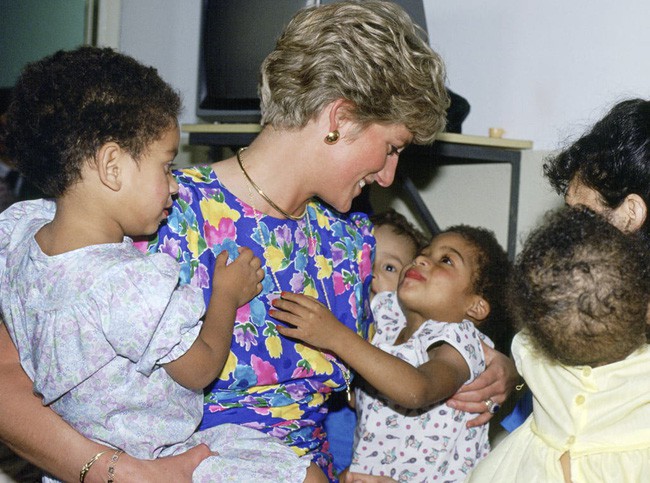
The photographs may be old, but the emotions they capture remain remarkably familiar: a mother's love, a desire for normality, compassion for others, and the simple human need to be understood.
Diana's life was far more complicated than any collection of photographs can fully explain. But these quieter images provide another way of remembering her—not only as a princess watched by millions, but as a woman who tried to find kindness, family, and humanity within an extraordinarily public life.
More than a princess, Diana remains a symbol of warmth and compassion for millions of people around the world. And perhaps that is why, even after all these years, photographs of her can still make us pause, remember, and feel.