What Your Lip Shape Reveals About Your Love Life: A Personality Guide
Tips 18/04/2026 10:34
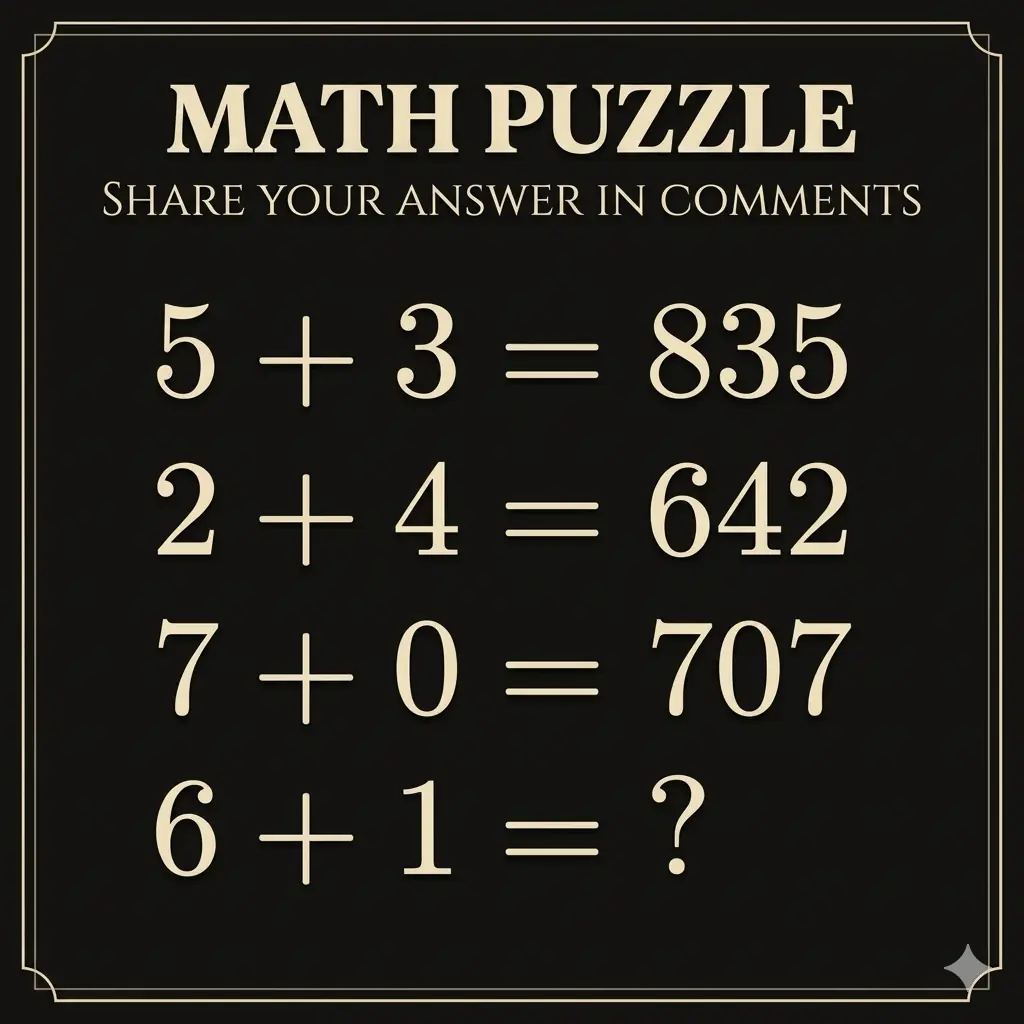
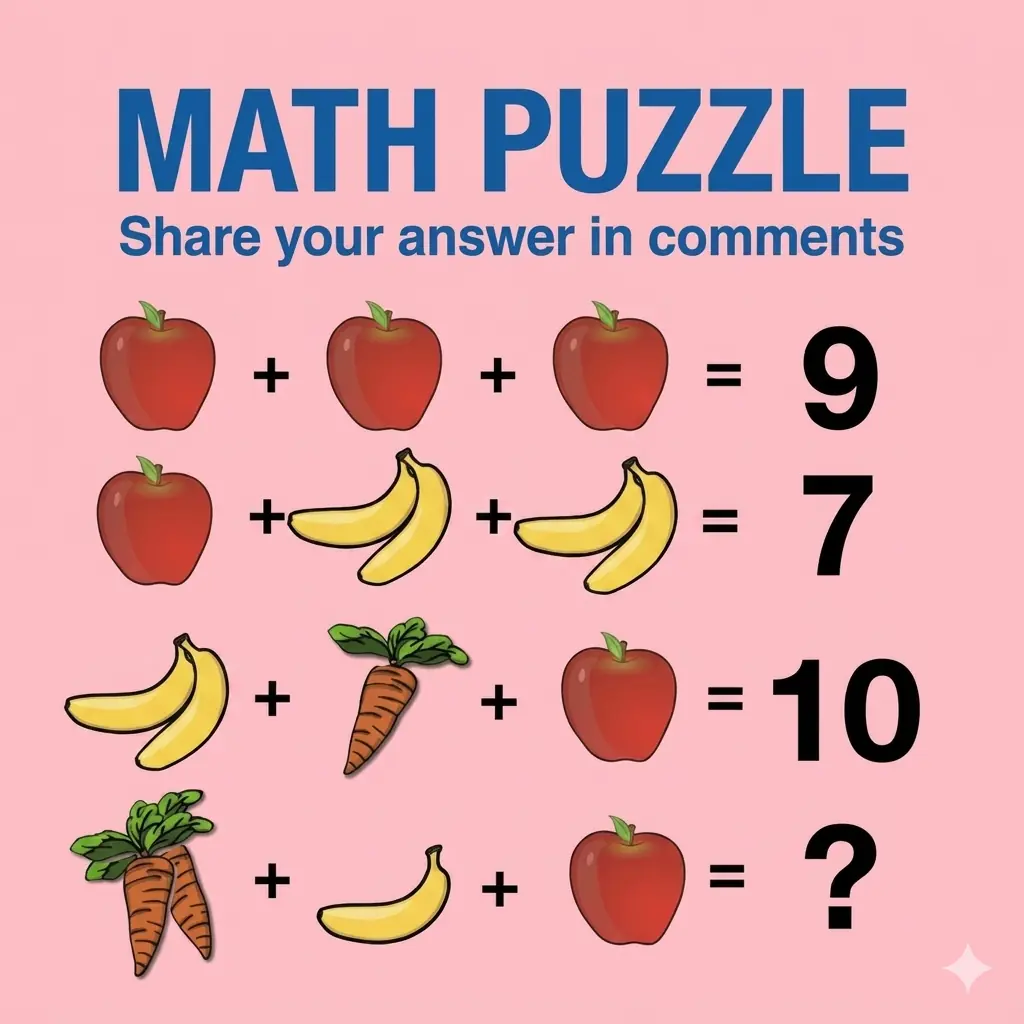
Social media is buzzing with a new "Math Puzzle" that is challenging users to think outside the box. At first glance, the equations look like simple addition gone wrong, but there is a clever logical pattern hidden beneath the surface.
If you’ve seen the image featuring equations like 5 + 3 = 835 and 2 + 4 = 642, you might be wondering how to reach the final answer for 6 + 1.
In this article, we’ll break down the logic step-by-step so you can impress your friends with the solution.
To solve this puzzle, you have to stop looking at it as a standard addition problem and start looking at it as a sequence of digits. Each "sum" is actually composed of three distinct parts joined together.
Let’s look at the first three examples provided in the puzzle:
Part 1 (The Sum): 5 + 3 = 8
Part 2 (The Second Digit): The second number in the equation is 3.
Part 3 (The First Digit): The first number in the equation is 5.
Result: Combine 8, 3, and 5 to get 835.
Part 1 (The Sum): 2 + 4 = 6
Part 2 (The Second Digit): The second number is 4.
Part 3 (The First Digit): The first number is 2.
Result: Combine 6, 4, and 2 to get 642.
Part 1 (The Sum): 7 + 0 = 7
Part 2 (The Second Digit): The second number is 0.
Part 3 (The First Digit): The first number is 7.
Result: Combine 7, 0, and 7 to get 707.
Now that we have decoded the formula—(Sum)(Second Number)(First Number)—we can easily solve the final line.
Find the Sum: 6 + 1 = 7
Identify the Second Number: The second digit is 1.
Identify the First Number: The first digit is 6.
When you put these three parts together, you get: 716.
Puzzles like this one aren't just for fun; they test your pattern recognition and logical reasoning skills. They force the brain to move past "automatic" thinking (basic addition) and engage in "lateral" thinking to find the hidden rule.
Did you get it right on your first try? Share this post with a friend and see if they can crack the code!