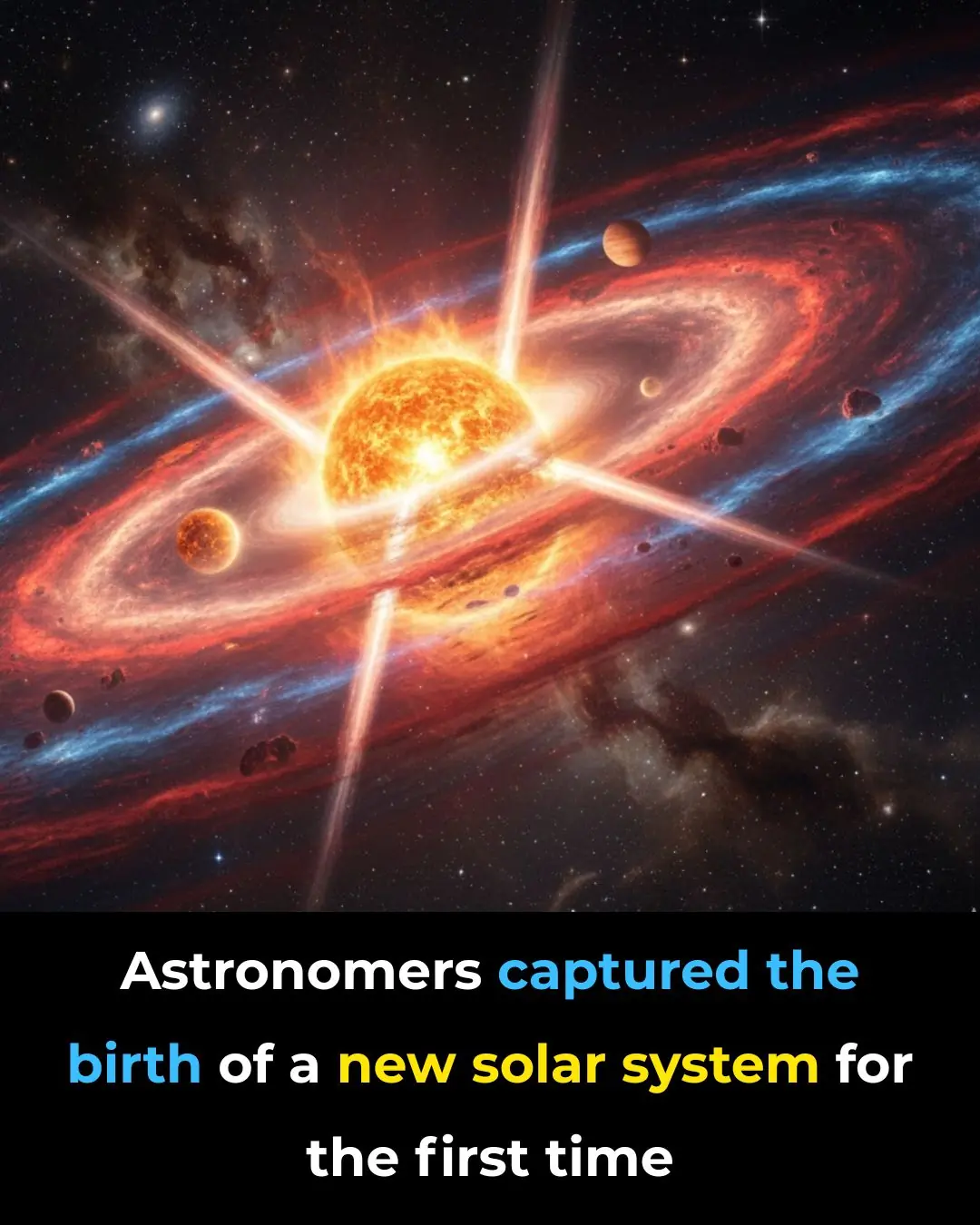
Astronomers have recently achieved a remarkable breakthrough by capturing an extraordinary and rare event: the birth of a new solar system. This significant discovery was made possible through the combined use of the Atacama Large Millimeter/submillimeter Array (ALMA) and the James Webb Space Telescope, two of the most advanced instruments in space exploration today. The object of interest, known as HOPS-315, is a nascent star located approximately 1,300 light-years away from Earth, and it is surrounded by a swirling cloud of dust and gas. This provides an unprecedented glimpse into the process of planet formation, offering scientists a visual snapshot of how planetary systems—like our own—form and evolve over time.
HOPS-315, which is still in its early stages of development, is classified as a "baby star" because it is in the process of forming. The surrounding dust and gas—composed primarily of hydrogen, helium, and various other molecular compounds—play a crucial role in the formation of planets. As the gas and dust particles collide and stick together, they eventually form larger bodies, which can lead to the creation of planets, moons, and other celestial bodies. The environment around HOPS-315 offers scientists a glimpse into a process that has likely occurred in countless regions of space throughout the history of the universe, including in the area that eventually gave rise to our own Solar System.
The ALMA telescope, located in the high-altitude desert of Chile, is particularly well-suited for studying such events because it is capable of observing wavelengths of light that are typically blocked by Earth's atmosphere. This allows it to see through the dense clouds of gas and dust surrounding star-forming regions. The James Webb Space Telescope, which was launched in December 2021, has also proven to be a valuable tool for studying distant astronomical objects. With its powerful infrared capabilities, Webb can observe objects that are too faint or distant to be detected by other telescopes. Together, these two instruments have provided scientists with an unparalleled view of the birth of HOPS-315, marking a significant achievement in the study of star and planet formation.
The discovery of HOPS-315 is significant not only because it provides a rare look at a star system in its infancy, but also because it allows scientists to make comparisons with our own Solar System's formation. By studying objects like HOPS-315, astronomers can learn more about the conditions that led to the creation of Earth and its neighboring planets. Furthermore, the study of star formation has important implications for understanding the broader processes that shape the universe, from the formation of galaxies to the creation of the fundamental building blocks of life.
While the discovery of HOPS-315 is groundbreaking, it is just one example of the many exciting developments in the field of astronomy. With the continued advancement of technologies like the James Webb Space Telescope and ALMA, scientists are gaining new insights into the most fundamental processes of the cosmos. The birth of new star systems and the formation of planets remain one of the most intriguing and essential areas of research in the field of astrophysics, providing key insights into the origins of not only our own Solar System but also those throughout the universe.
In conclusion, the observation of HOPS-315 represents a significant milestone in the ongoing exploration of the universe. This discovery not only sheds light on the intricate processes that lead to the formation of planetary systems but also offers a glimpse into the distant past of our own Solar System. As technology continues to advance, it is likely that even more breathtaking discoveries await, further deepening our understanding of the cosmos and our place within it.
Sources: