PART 2: They fell off a cliff together…
Life stories 01/05/2026 01:20
The Yellow Door
When Richard Sterling came home early, he found his daughter on the pantry floor eating dog food.
For one broken second, his brain refused to understand what he was looking at.
The kitchen was silent except for the soft hum of the refrigerator and the piano music drifting through the hidden speakers. Everything gleamed. White marble. Brass fixtures. Cabinets so flawless they looked untouched. The kind of kitchen people photographed for magazines and called timeless.
And in the middle of it, seven-year-old Sophie was crouched barefoot on the floor in a wrinkled pink dress, shoveling brown kibble into her mouth with both hands.
“Sophie?”
She flinched so violently the pellets scattered across the marble.
Her eyes flew to his face, then over his shoulder toward the doorway, as if the real danger might still be standing there. That was what made his blood go cold. Not the dog food. Not even the trembling.
The fear.
“Please don’t tell Miss Vanessa,” she whispered.
Tears rushed into her eyes so fast they seemed to appear all at once.
“Please, Daddy. She said I’m not allowed to eat outside mealtimes. But my stomach hurt.”
Richard dropped to his knees so quickly his phone slid from his hand and cracked against the floor.
Now that he was close, he saw what he should have seen weeks ago. Months ago. Sophie looked smaller. Not just small—reduced. Her face had grown delicate in the wrong way. Her wrists were thin. Her dress hung on her shoulders as if it belonged to another child.
“How long has it been since you ate?” he asked.
She stared at the floor. “Yesterday morning.”
The words hit him like a slap.
“What?”
She twisted the edge of her dress around one finger. “Miss Vanessa said I lost dinner. And breakfast.”
Richard felt his pulse jump hard in his throat.
“Why?”
“I spilled water on the rug.”
He just stared at her.
“You spilled water.”
She nodded.
“By accident?”
Another nod.
“And because of that, she didn’t feed you?”
Sophie’s chin quivered. “She said bad girls don’t get treats. Or meals. She said I’m clumsy.”
Her next words were almost too soft to hear.
“Like Mommy.”
That one nearly took him apart.
Claire had been dead four years, and still her name could split him clean open. He saw her funeral in a flash: black umbrellas, white flowers, Sophie’s tiny hand in his. He had promised himself that day his daughter would never grow up lacking anything.
He had thought that meant a beautiful house. The best schools. Private drivers. Security. Savings accounts and trust funds and a future nobody could touch.
His daughter, it turned out, had meant something simpler.
Food.
Safety.
Someone paying attention.
He was still kneeling there, trying not to come apart in front of her, when heels clicked down the hallway.
Vanessa appeared in the kitchen entrance dressed in cream silk and gold jewelry, every inch composed. Beautiful. Controlled. Perfectly at home in rooms designed to impress. Her expression shifted the moment she saw him on the floor beside Sophie.
“Richard,” she said. “You’re home early.”
He stood.
His voice was low enough to frighten himself. “Sophie was eating dog food.”
Vanessa gave a breath of a laugh. Too quick. Too practiced.
“Oh, for heaven’s sake. Children do bizarre things all the time. She’s probably pretending.”
Sophie’s hand locked around his sleeve.
Richard felt the tremor in her grip.
“She says she hasn’t eaten since yesterday morning.”
Vanessa came farther into the room, perfume arriving before she did. “You know how dramatic she can be. She had breakfast yesterday. She’s upset because I’ve been trying to teach her structure.”
Then she looked directly at Sophie and smiled.
It was a warm smile if you didn’t know what fear looked like in a child.
“Right, sweetheart?”
Sophie went rigid.
Not embarrassed. Not shy.
Rigid.
“Yes, Miss Vanessa,” she whispered automatically.
And just like that, Richard understood this wasn’t one terrible afternoon.
It was a pattern.
A routine.
A whole hidden life unfolding in his house while he was in boardrooms and airports and back-to-back calls telling himself he was doing all of it for her.
He crouched again and held out his hand.
“Come on, sweetheart,” he said quietly. “Let’s get you something real to eat.”
He didn’t look at Vanessa. He didn’t need to. He could feel her watching him, calculating, already rearranging the story.
The chef had left hours ago. Vanessa never liked staff lingering late unless guests were coming. So Richard took eggs from the refrigerator himself, found bread, sliced apples with hands that wouldn’t stop shaking, and made scrambled eggs badly enough to overcook one side and leave the other too soft.
Sophie sat at the counter with her knees together and her hands folded in her lap.
Waiting.
“You can eat,” he said.
She looked toward Vanessa.
His chest tightened.
“Sophie. Look at me.”
She did.
“You do not need anyone’s permission right now except mine. And I’m telling you to eat.”
She picked up the fork carefully, like it might be taken away if she moved too fast.
Then she began.
Small bites. Quick chewing. Eyes lifting every few seconds, checking.
Richard stood at the stove and watched.
Once he started noticing, he couldn’t stop.
The way she asked permission with her face before reaching for the apple slices.
The way she sat so straight it looked painful.
The way she didn’t make a sound.
The way relief and fear seemed to live side by side inside her.
When she finished, he took her upstairs.
Her bedroom stopped him cold.
It looked expensive. It looked immaculate. It looked dead.
The bed was made with military-tight corners. The shelves held carefully arranged toys that appeared never to have been touched. The curtains matched the rug. The rug matched the throw pillows. There was not a single marker stain, stuffed animal pile, crumpled blanket, or messy little trace of actual childhood anywhere in the room.
It was a showroom pretending to be a little girl’s life.
“Where are your drawings?” he asked.
Sophie pointed to a box on top of the wardrobe.
He brought it down and opened it on the bed.
Inside were crumpled pages, old construction-paper crafts, school projects, broken crayons, photos of Claire, and a drawing so sad and so plain it made him sit down hard on the edge of the mattress.
A little girl stood alone in a dark square room.
Outside the room was a door with a lock drawn on the outside.
Below it, in shaky block letters, were the words:
I wish Mommy would come back.
Richard had to swallow before he could speak.
“What room is this?”
Sophie stared at the floor. “The linen closet by the laundry room.”
The house seemed to tilt.
“She locked you in there?”
“Only when I was bad.”
“How often?”
Sophie didn’t answer.
He looked up at her. Really looked. Her shoulders lifted slightly, as if she was already bracing for him to be angry.
Not at Vanessa.
At her.
That was the worst part.
He stood and went to her slowly, the way you approach something frightened.
“Has she ever hurt you?”
A pause.
Then Sophie said, “Sometimes she squeezes my arm. Sometimes she covers my mouth if I cry.”
He rolled back the sleeve of her dress.
High on her upper arm, fading but still visible, were bruises in the shape of fingers.
He shut his eyes.
Only for a second.
When he opened them again, he made his voice steady.
“Listen to me. None of this is your fault. Do you understand? None of it.”
Sophie searched his face, uncertain.
“Did I make you mad?” she asked.
He nearly broke right there.
“No,” he said. “You didn’t do anything wrong.”
That night he ran her bath himself. He found children’s soap shoved behind towels in a cabinet and a pair of yellow rubber ducks in the back of a linen closet. While Sophie sat in the warm water making tiny quiet splashes, he searched her dresser for pajamas and found pairs from last year that still hung loose on her frame.
“Daddy?”
He turned.
She was sitting in a cloud of bubbles, arms wrapped around her knees, eyes too serious for her age.
“Why did you marry Miss Vanessa?”
There was no honest answer a child could use. Not grief. Not loneliness. Not the foolish adult hope that elegance might mean kindness, that order might mean love, that a woman who looked perfect in your ruined life might somehow make it whole.
“I thought she would help take care of us,” he said finally.
Sophie looked down at the water.
“She doesn’t take care of me like a mommy.”
“No,” he said softly. “She doesn’t.”
He tucked her into bed and stayed beside her until she fell asleep.
Twice she startled awake and reached into the dark to make sure he was still there.
Twice he took her hand and answered the same way.
“I’m here.”
When her breathing finally went deep and even, he went downstairs.
Vanessa was waiting in the living room with a glass of white wine and the kind of expression that usually won over donors, neighbors, and anyone who only knew her in polished rooms.
She started with tears.
Then came the wounded voice, the trembling hands, the deep sighs of a woman supposedly carrying too much alone.
“She rejects me, Richard. I’ve tried so hard, but you’re never here to see how manipulative she can be.”
He let her talk.
Then he asked, “Why is my daughter afraid to open the refrigerator?”
Vanessa blinked. “That is ridiculous.”
“Why is she underweight?”
“She’s picky.”
“Why are her drawings hidden in a box?”
“Because I didn’t want clutter everywhere.”
“Why is there a drawing of a locked closet?”
Something in Vanessa’s face changed.
The softness slipped.
The mask didn’t fully fall, but it moved enough for him to see what had always been underneath.
Coldness. Irritation. Resentment.
“Because children need boundaries,” she said. “You indulge her because you feel guilty about Claire. I’m the only person in this house willing to discipline her.”
“She’s seven.”
“And spoiled.”
“She was eating dog food.”
Vanessa set down her glass with careful precision. “Because she knew you’d react exactly like this.”
Richard stared at her.
In that moment, the last of his confusion burned away.
This wasn’t a woman overwhelmed by grief she never chose. It wasn’t frustration. It wasn’t a bad stepmother trying and failing.
This was control.
A child had become the one thing in the house Vanessa couldn’t style, silence, or arrange into perfection.
So she punished her.
Richard took out his phone.
He called David Lawson first, the attorney who had handled Claire’s estate and nearly every major legal decision in his life since then. David listened without interrupting.
When Richard finished, David said, “Photograph every bruise. Get Sophie to a pediatrician immediately. And hear me clearly: your wife cannot be left alone with that child for another minute.”
“She won’t be.”
He called the head of security next.
Within fifteen minutes, Vanessa had been escorted to the guesthouse at the edge of the property with one suitcase, a staff witness, and strict instructions that she was not to enter the main house again. She protested. Then threatened. Then laughed like the whole thing would look absurd in daylight.
For the first time since he’d known her, Richard didn’t care how anything looked.
He spent the night in the chair beside Sophie’s bed.
The next morning he canceled everything.
Board meeting. Investor lunch. Flight to San Francisco. He let it all burn.
Then he went downstairs and made pancakes.
He made them badly.
There was batter on the counter, batter on his shirt, batter somehow on the toaster. Sophie watched at first like she couldn’t quite believe she was allowed to stand there. Then she reached for the spoon. Then she laughed when he flipped one too early and it folded in half.
It was a tiny sound. Rusty. Surprised.
He realized, with a pain almost physical, that he couldn’t remember the last time he’d heard it.
After breakfast she went upstairs and returned with a shoebox she had hidden under the bed.
Inside were smooth stones, old photographs of Claire, more drawings, and a folded note worn soft at the creases from being opened over and over again.
Richard read it standing in the kitchen.
Mommy, I miss you. Daddy works all the time and Miss Vanessa doesn’t like me. I wish you could come back.
He sat down because his legs stopped feeling reliable.
By noon the pediatrician had documented bruising, weight loss, and signs consistent with ongoing food deprivation and emotional abuse. As a mandated reporter, she contacted child protective services herself. Sophie’s teacher added notes about chronic hunger, withdrawn behavior, and the child secretly saving crackers from lunch. A nanny Vanessa had fired months earlier told David she had been dismissed for giving Sophie snacks “without approval.” Two household employees admitted Vanessa locked the pantry at night and sent kitchen staff home early on purpose.
Piece by piece, the truth came together.
The house had been beautiful.
The life inside it had been cruel.
A judge granted a temporary protective order two days later.
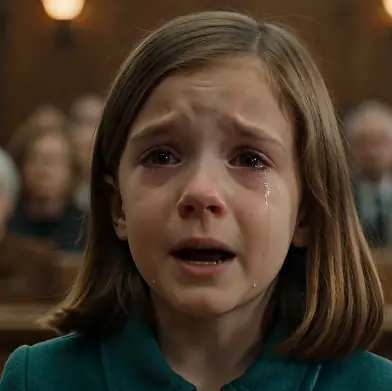
Three weeks after that, in a quiet family courtroom, Sophie told the truth in a voice so soft everyone had to lean in to hear it.
“She didn’t let me eat.”
“She locked me in.”
“She said Daddy would be mad if I told.”
That was all.
No drama. No tears on cue. No performance.
Just the kind of truth that doesn’t need decoration.
By the time the hearing ended, Vanessa had been barred from any contact with Sophie. The divorce filing came the same afternoon.
Richard walked out of the courthouse with his daughter’s hand in his, and for the first time in months, maybe longer, her grip felt different.
Not fearful.
Trusting.
Back at the mansion, the silence no longer felt elegant. It felt hollow.
Richard walked through room after room of polished stone, curated art, and furniture no one really lived on, and understood at last that he had confused luxury with safety. He had built a museum and called it a childhood.
He sold the house before summer.
The new house was smaller. Older. Real.
The floors creaked.
The kitchen got morning light.
The backyard was big enough for Max—the retired golden retriever Sophie fell in love with after one of Owen’s visits.
Her new room had paint smudges on the baseboards within a week.
There were stuffed animals on the floor, crayons on the desk, and drawings taped everywhere, crooked and bright and unapologetic.
On moving day Sophie stood on the front porch beside him and looked up at the faded front door.
“Can we paint it yellow?” she asked.
Richard smiled. “Yellow?”
She nodded. “So it looks happy before you even go inside.”
A week later, they did.
On the first warm Saturday after the paint dried, Sophie sat cross-legged on the living room rug with Max asleep beside her and drew a picture of the house.
A yellow door.
A crooked chimney.
A giant sun in the corner.
Three figures stood in front.
One tall.
One small.
One dog with a wagging tail too big for the page.
Richard sat down beside her and looked at the drawing.
“Who’s that?” he asked, even though he knew.
“That’s us,” Sophie said.
She said it simply, like the word no longer scared her.
Richard put his arm around her shoulders and pulled her close.
He didn’t promise her a perfect life. He didn’t promise that pain would never find them again, or that bad people never lie, or that fathers never fail.
He promised the only thing he had any right to promise now.
“I’m here,” he said.
Sophie leaned into him without hesitation.
This time, there was no fear in it.
“I know,” she whispered.
And for the first time, he believed she really did.