Warning! If You Have Found This Insect (Silverfish) in Your Home, It's a Sign That You Need to Take Action
Facts 01/07/2026 20:37
Artificial intelligence (AI) is bringing a major breakthrough to women’s healthcare, especially in the early detection of breast cancer. Recent studies show that advanced AI systems can analyze mammograms and detect subtle tissue patterns that may indicate a higher risk of developing breast cancer years before a tumor becomes visible on imaging. In many cases, these AI tools can identify which breasts are more likely to develop cancer 4–6 years in advance, offering a powerful opportunity for earlier monitoring and personalized care.
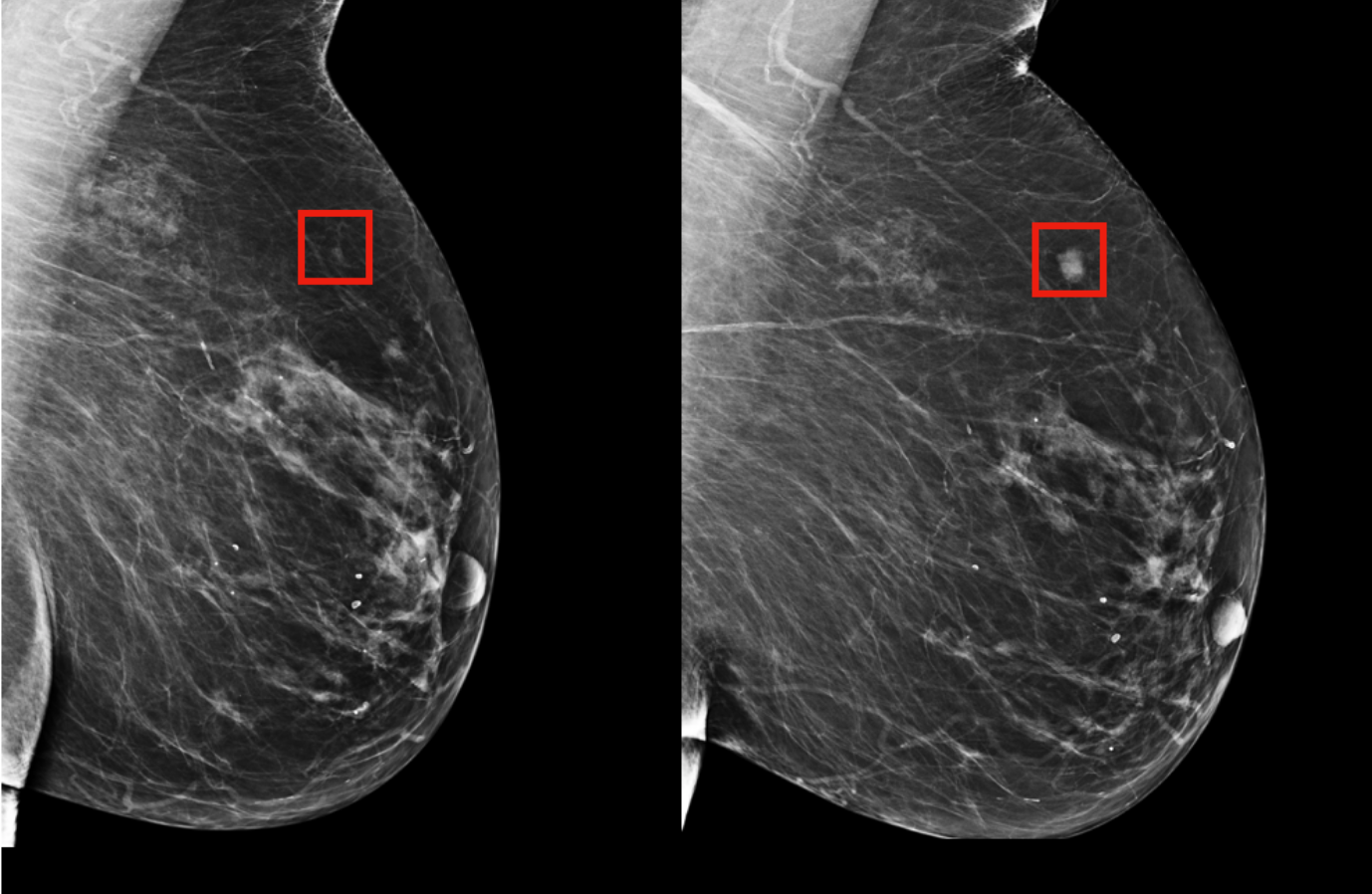
Traditional mammogram evaluations rely on what radiologists can visually interpret. However, AI can analyze millions of data points that the human eye cannot detect. By examining tiny structural patterns, tissue density arrangements, and complex visual markers, AI generates risk scores that estimate the likelihood of future cancer development.
These scores do not diagnose cancer, but they help reveal risk levels that might otherwise remain unnoticed for years—even in patients who appear completely healthy during routine screenings.
Several major clinical studies confirm the strength and reliability of AI in breast cancer risk prediction:
A study involving more than 324,000 women showed that multiple AI models outperformed the widely used Breast Cancer Surveillance Consortium (BCSC) risk-assessment tool. AI demonstrated greater accuracy in predicting which individuals would eventually develop cancer, especially within the next five years.
Another study with over 116,000 participants found that women who later developed breast cancer consistently had higher AI-generated risk scores in earlier scans. This highlights AI's potential to detect biological warning signs long before tumors appear.
These findings reinforce the growing role of AI as a powerful tool for identifying high-risk patients early and guiding more personalized screening strategies.
Among the most advanced systems today is Mirai, an AI model developed by MIT’s Computer Science and Artificial Intelligence Laboratory (CSAIL) and Massachusetts General Hospital. Studies published in Radiology and Nature Medicine show that Mirai can predict a woman’s five-year breast cancer risk with impressive accuracy—even across patients of different ages, backgrounds, and breast densities.
Other deep-learning systems based on digital breast tomosynthesis (DBT) also show excellent predictive performance. These innovations highlight a future where AI and radiologists work together to detect breast cancer significantly earlier than ever before.
AI does not replace traditional screening, but it serves as a highly valuable support tool. By identifying women with elevated risk levels, doctors can:
recommend earlier or more frequent screenings
monitor high-risk patients more closely
personalize screening plans instead of relying on one-size-fits-all guidelines
potentially detect cancers at more treatable stages
improve long-term outcomes and survival rates
This shift toward personalized, risk-based screening may ultimately save lives by catching cancer significantly earlier.
While AI tools are powerful, it is important to understand that:
A high-risk AI score does not guarantee that breast cancer will occur.
A low-risk score does not guarantee that someone is completely safe.
AI is meant to assist, not replace, radiologists and established clinical methods.
Healthcare professionals still consider family history, genetics, lifestyle, and other clinical factors when evaluating a patient’s overall cancer risk.
MIT CSAIL (2019–2023) – Research on the Mirai breast cancer risk prediction model
Harvard Medical School & Massachusetts General Hospital – AI mammography studies
Radiology Journal – Peer-reviewed research on AI breast cancer prediction
Nature Medicine – Studies on AI-assisted early cancer detection
National Institutes of Health (NIH) – Reports on AI’s impact in medical imaging
AI-driven mammogram analysis represents a major advancement in early breast cancer detection. By recognizing patterns that are invisible to human eyes and predicting cancer risk 4–6 years ahead, AI offers new possibilities for preventive care. When combined with clinical expertise, AI can help doctors identify high-risk patients earlier, improve screening strategies, and potentially save countless lives. As research continues to advance, AI will play an even more significant role in shaping the future of women’s health and early cancer detection.