
10 surprising ways a pinch of baking soda can change your life
Health 12/06/2026 16:19
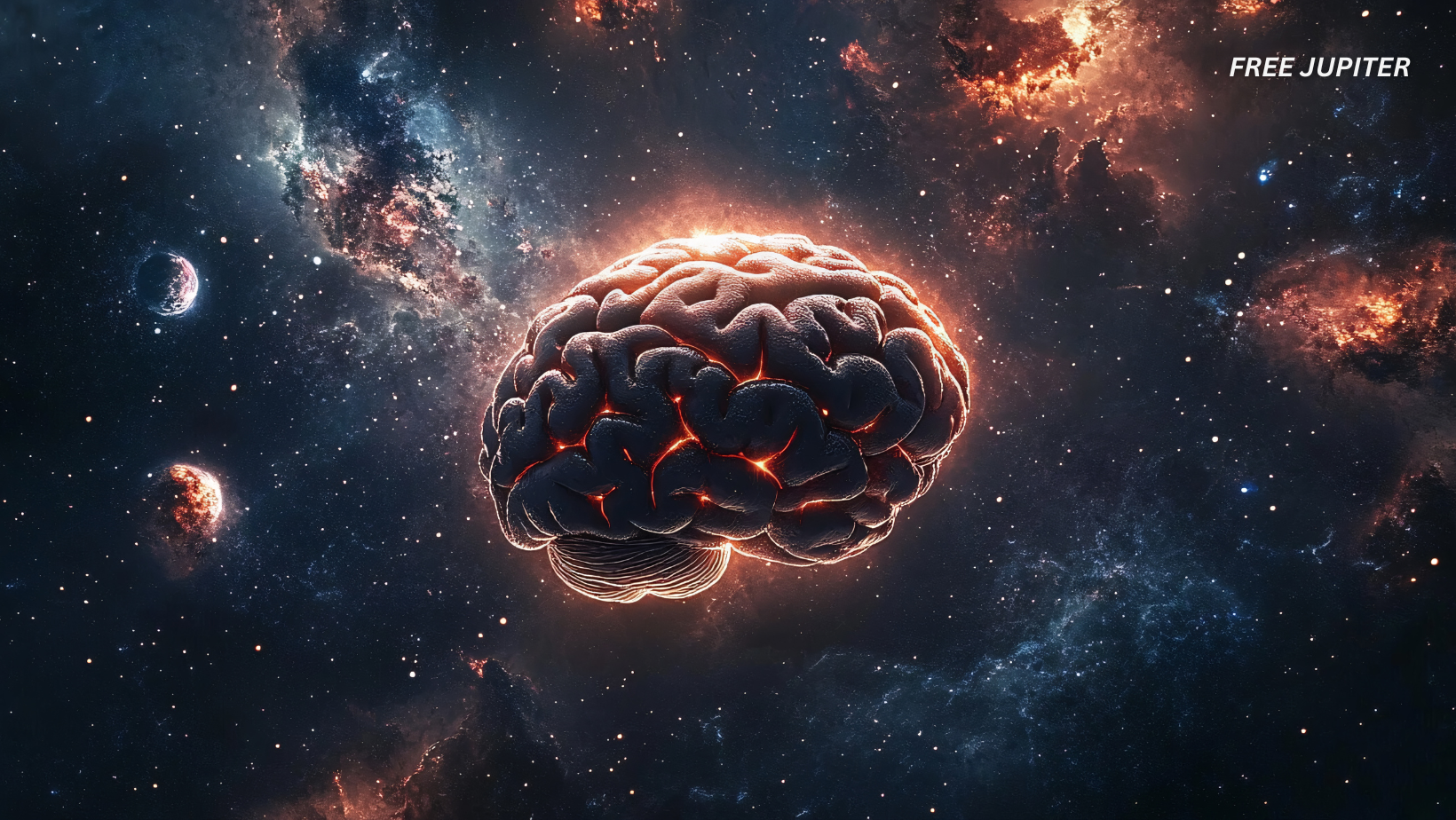
At first glance, the idea that your brain is operating in eleven dimensions might sound like something straight out of a Marvel movie or a late-night theoretical physics documentary. It evokes images of alternate realities, wormholes, and superheroes leaping through space-time.
But as strange as it sounds, this concept isn’t science fiction. In fact, it’s grounded in real, peer-reviewed science—and it’s changing the way we understand the human brain.
Thanks to a groundbreaking study from the Blue Brain Project, a Swiss-based neuroscience research initiative, scientists now believe our brains function on a level of complexity far greater than anyone previously imagined. And yes—this complexity might actually involve structures and patterns that behave in up to eleven dimensions.
Led by neuroscientist Dr. Henry Markram, the Blue Brain Project was launched with an ambitious goal: to create a complete digital reconstruction of the human brain. That means not just mapping out general brain regions, but digitally simulating every single neuron, every synapse, and every tiny electrical impulse that contributes to thought, memory, emotion, and perception.
The idea is that if we can replicate the brain in digital form, we can begin to unlock some of its biggest mysteries—like how consciousness arises, how mental illness works, and how human cognition could be augmented or replicated in artificial intelligence.
As the team dove deeper into the structure of the brain, they made a surprising discovery: the connections between neurons weren’t just a chaotic tangle, as once thought. Instead, they appeared to be highly organized, forming temporary but complex geometrical structures.
To understand and model these patterns, the team turned to an unexpected tool: algebraic topology, a branch of mathematics that explores how shapes and spaces are organized—not just in three dimensions, but in many.
At its core, algebraic topology allows researchers to mathematically describe how points, lines, surfaces, and shapes are connected in space. Unlike classical geometry, which focuses on specific angles and lengths, topology is concerned with relationships and connectivity—how things are joined together and how those connections persist when stretched, compressed, or twisted.
Using this mathematical framework, the Blue Brain team was able to map how groups of neurons (called “cliques”) connected with one another. What they discovered was stunning: these cliques weren’t just linking up randomly. They were forming increasingly complex shapes—lines, triangles, tetrahedrons, and beyond—resembling multi-dimensional objects.
In mathematical terms, some of these structures behaved as though they existed in up to eleven dimensions.
Think of these “cliques” as micro-communities of neurons. Each clique is a tightly connected group working together to process specific pieces of information.
Now, imagine that these cliques start linking with each other, forming networks that aren’t just flat or linear but stack into layered, geometric forms. A pair of neurons forms a line. Add a third, and you get a triangle. Add a fourth, and a three-dimensional pyramid (a tetrahedron) emerges. Keep going, and these shapes stretch into higher and higher dimensions—mathematically, if not visually.
These structures don’t exist in physical space like a cube or a ball does. Instead, they’re mathematical representations of the relationships between neurons—and how they temporarily organize to process thoughts, sensations, or memories.
To describe this phenomenon, the researchers used a poetic and powerful metaphor: a sandcastle.
Every time your brain processes something—whether it’s recognizing a friend’s face, solving a math problem, or recalling a childhood memory—it builds a temporary “sandcastle” of complex, multi-dimensional shapes. Once the task is done, the structure collapses, and the neurons rearrange themselves to form a new shape for the next task.
This constant building and unbuilding is what gives your brain its incredible flexibility. It can shift gears in milliseconds, adapt to new information instantly, and recover from disruptions with astonishing speed.
Although this research is based in neuroscience, the implications reach much further—into fields like artificial intelligence, quantum physics, and the philosophy of consciousness.
Some speculative theories suggest that the brain might use quantum processes or operate on a level that goes beyond classical mechanics. While this study doesn’t directly support those ideas, it lends credibility to the notion that the brain might be operating in a framework more complex than traditional biology accounts for.
Could the brain’s dimensional structure be connected to the underlying fabric of space-time? It’s still highly theoretical—but this research opens the door to new questions.
Most AI systems today, even advanced ones, operate in relatively shallow layers of computation compared to the brain’s intricate networks. They lack the capacity to spontaneously generate and dissolve complex multi-dimensional structures like our neurons do.
If future AI could mimic this high-dimensional architecture, we might see machines that don’t just “compute” but create, adapt, and “think” in ways that feel far more human.
One of the great unanswered questions in science is: What is consciousness?
Some theories suggest it arises from the sheer complexity of the brain. If that’s true, then these dynamic, multidimensional networks might be part of the explanation. Perhaps consciousness isn’t just about activity—but about the shape and flow of that activity in higher-dimensional space.
Even if you don’t think about dimensions beyond the third, this research reveals something profound: your brain is a constantly evolving architect of abstract spaces.
Every time you form a memory, recognize a voice, solve a puzzle, or dream, your brain is orchestrating a multi-dimensional dance of neuron cliques. It builds intricate patterns, tears them down, and builds them anew—thousands of times per second.
So, when you feel inspired, creative, or even distracted, know that your brain is doing something that, mathematically, no supercomputer on Earth can yet replicate.
The long-term ambition of the Blue Brain Project is not just to simulate brain structure—but to simulate thought itself.
If we can understand how these high-dimensional structures work, we might one day build virtual brains capable of thought, emotion, or even consciousness. This would revolutionize how we treat mental illness, how we build machines, and how we define what it means to be alive.
We’re not there yet—but every discovery brings us one step closer.
It’s easy to overlook the miracle happening inside your head. But under the surface of everyday life—while you’re brushing your teeth, reading a book, or deciding what to eat—your brain is building and demolishing structures more intricate than any man-made design.
These aren’t just thoughts. They’re living shapes in a multi-dimensional space. And they remind us that the human brain is not just an organ—but a universe of complexity, mystery, and potential.
So the next time you forget where your keys are or get lost in a daydream, just remember: your brain is doing quantum ballet in eleven dimensions. And somehow, you're still making it to your morning meeting.




Why Everyone Is Calling This the Perfect Healthy Salad























Narcissistic Personality Disorder Signs

Debate: Asking Babies for Consent Before Changing Their Diapers

Study identifies possible connection to autism development

Check your personality based on the word that comes to your mind first