The Subtle Ways True Love Reveals Itself in Intimate Moments
Facts 13/07/2026 20:27
Why Octopuses Are Throwing Shells at Targets They Seem to Dislike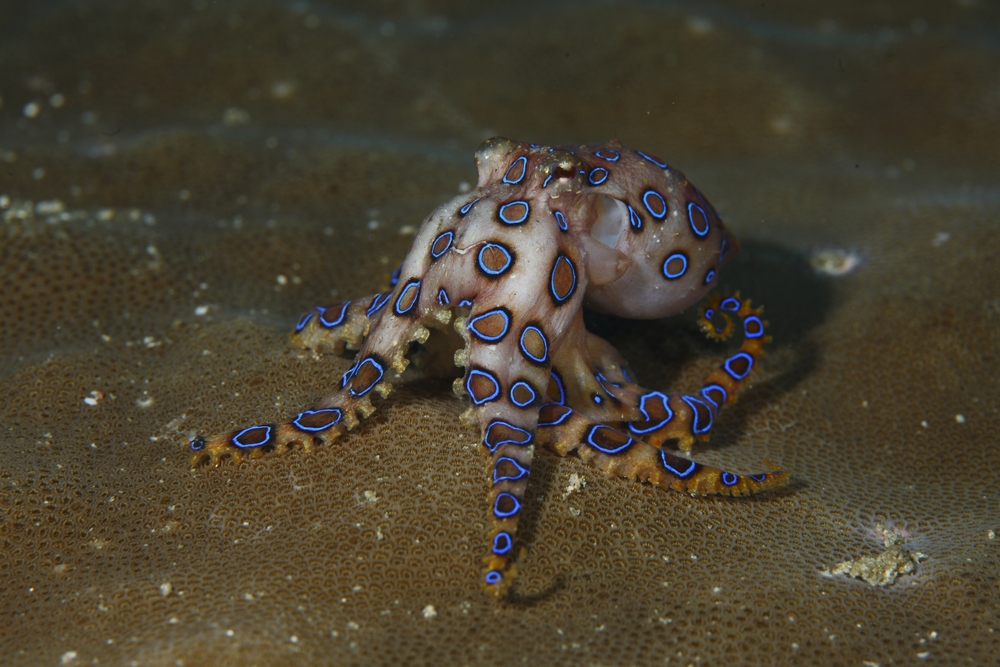
Octopuses have long been regarded as mysterious, incredibly intelligent creatures. However, new research from the waters of Australia and New Zealand has uncovered an astonishing behavior that challenges previous assumptions about how creatures without bones, tools, or humanlike appendages might interact. In a groundbreaking study, scientists observed gloomy octopuses engaging in a behavior that no one anticipated. Underwater cameras documented these octopuses gathering shells, silt, and algae, then intentionally launching them through the water at one another. At first glance, it might seem like a humorous oddity, but as researchers analyzed the footage more closely, it became apparent that something much more meaningful was occurring.
This discovery is so striking because it reveals that these octopuses are not merely throwing objects at random, but that their actions appear deliberate, controlled, and socially motivated. Scientists noted that the octopuses would often move their siphons into an unusual position beneath their arm web to project the debris, a behavior that requires both effort and purposeful intent. These throws occurred in various contexts—sometimes during den cleaning and sometimes during social interactions. In some instances, the debris even struck other octopuses. According to the researchers, “there is some evidence that some of these throws that hit others are targeted, and play a social role.” This finding opens a new window into octopus behavior, suggesting that these animals may have far richer emotional and social exchanges than previously understood.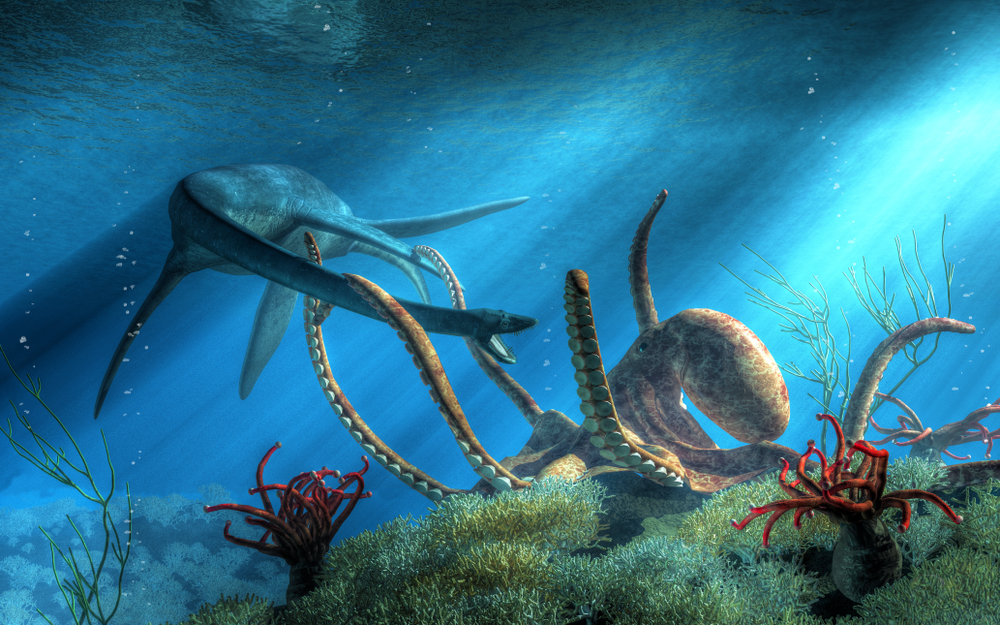
The Rare Act of Throwing in the Animal Kingdom
Throwing is an uncommon behavior in the animal kingdom, and scientists have long regarded precise, purposeful throwing as something particularly rare. In their published study, Professor Peter Godfrey-Smith and his colleagues wrote, “The throwing of objects is an uncommon behavior in animals.” They went on to explain that “a throw can be distinguished from other phenomena by the ballistic motion of a manipulable object or material, where ‘ballistic’ describes free motion with momentum.” This definition helps clarify why the actions of the octopuses are so significant, separating true throwing from merely accidental displacement of material.
Historically, throwing has been seen as a distinctly human behavior, and it has played a significant role in human evolution. However, a small number of non-human species have demonstrated the ability to throw with purpose. Throwing at a target has been observed in non-human primates, particularly chimpanzees and capuchins, as well as in elephants, mongooses, and birds. Related, though less precise, behaviors also occur in species like spiders that flick hairs at threats and archerfish that shoot water through the air. The gloomy octopus now joins this small group of animals capable of coordinated object projection—a remarkable feat, especially given their soft anatomy, which makes such actions physically challenging.
During 24 hours of underwater observation, researchers recorded 102 separate throwing events among roughly ten octopuses. This frequency suggests that throwing is not a rare accident but a consistent and somewhat frequent component of their behavioral repertoire. This finding also hints at a social complexity that might be deeper than previously thought.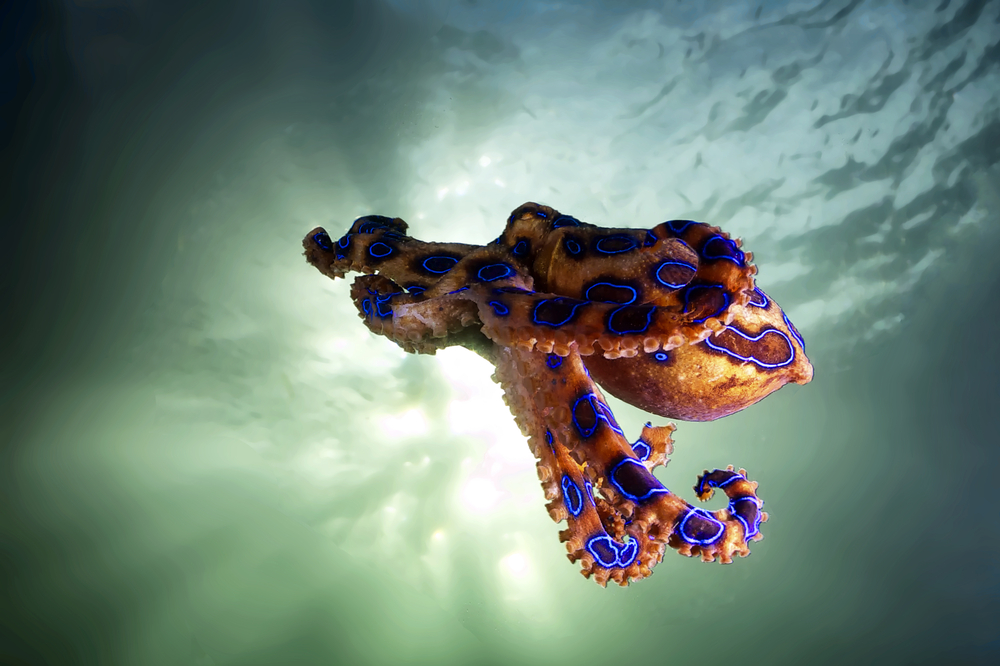
How Octopuses Manage the Mechanics of a Throw
For octopuses, throwing objects requires overcoming substantial physical limitations. Unlike animals with rigid limbs or bones, octopuses are entirely soft-bodied and rely on water pressure and their flexible arms to move and interact. To throw objects, they must first gather shells or silt beneath them using their arms and then reposition their siphon—a structure typically used for movement and propulsion—into an unusual angle beneath their arm web. This repositioning appears to be a crucial step in executing a throw, which is atypical for normal octopus behavior.
Once positioned correctly, the octopus expels a forceful jet of water from its siphon, propelling the gathered debris forward. Remarkably, some of these throws traveled several body lengths and made contact with nearby octopuses. About 17 percent of the throws landed on another octopus, which is an impressive feat given the underwater medium and the difficulty of generating directional force without skeletal support.
This behavior might even qualify as a form of tool use. The octopus manipulates material and uses the water jet as a means of propulsion. The ability to coordinate arm movements, siphon positioning, and water force requires not only physical dexterity but also advanced cognitive planning. This behavior exemplifies the octopus's remarkable adaptability and problem-solving abilities.
Key Components of Octopus Throwing
Material gathering: Octopuses gather shells, silt, algae, or other debris from beneath them.
Siphon manipulation: The siphon is repositioned at an unusual angle.
Force production: The octopus expels water with enough force to launch the material.
Spatial judgment: The throw is directed with apparent intent toward a target.
These four steps underscore the complexity of the act, explaining why only a few animal species are known to throw objects intentionally.
Why Gloomy Octopuses Throw Debris at Each Other
The motivation behind octopus throwing is more complex than simply labeling it as aggression. The footage reveals several potential reasons for this behavior, painting a nuanced picture of octopus social dynamics.
One possibility is that crowded living conditions contribute to these interactions. Jervis Bay, where the study took place, has a high population density of gloomy octopuses, as it provides abundant food and shelter. However, octopuses are solitary by nature, and the proximity of other octopuses may cause them to become agitated. A shell or cloud of silt tossed through the water may simply be an expression of frustration or discomfort.
Another strong possibility is defense. The study found that 66 percent of the throws were made by females, many of whom were guarding egg sites. A well-timed throw could serve as a warning to an approaching animal, discouraging intrusion without physical confrontation. In some cases, females even threw material at males attempting to mate, indicating a clear and deliberate signal of disinterest.
Some throws also occurred between octopuses whose dens were located too close to one another. In one instance, a female repeatedly launched silt at a neighboring octopus, which responded by ducking and raising its arms. This exchange strongly suggests that the octopuses understood the behavior as intentional. The study suggests that throwing may be part of a broader communication system among octopuses, supplementing their ability to change body color to communicate aggression or other emotions. Indeed, the research noted that darker coloration is commonly associated with aggression, and darker octopuses were more likely to throw objects with force and accuracy.
What These Throws Reveal About Octopus Intelligence
Octopuses are already known to be among the most intelligent invertebrates on Earth, and this behavior adds more weight to that reputation. Researchers observed that octopuses were able to target other individuals with their throws, often after direct interaction, demonstrating a level of awareness and understanding of the social context. The fact that these animals alter their behavior in response to one another suggests that both the throwers and the recipients of the debris recognize the social meaning of these actions.
The octopus's sophisticated nervous system—comprising a central brain and smaller neural clusters in each arm—supports impressive cognitive functions. This structure allows the octopus to multitask and coordinate intricate movements. When an octopus gathers debris, repositions its siphon, and times its water jet to accurately hit a target, it demonstrates advanced sensory processing, memory, and motor coordination.
The fact that octopuses vary the type of throw depending on context further supports the idea of intentionality. Some throws appeared casual or part of routine den cleaning, while others were clearly linked to interactions with neighboring octopuses. These observations suggest that octopuses understand the social meaning of their actions and can adjust their behavior accordingly.
Environmental Pressures and Behavioral Adaptation Beneath the Waves
The discovery of targeted throwing in octopuses also prompts broader discussions about how marine species respond to environmental changes. Dense aggregations, like the one in Jervis Bay, may reflect shifts in food availability, habitat structure, or the effects of warming waters. As climate change continues to alter marine ecosystems, behaviors like territoriality, communication, and conflict may become increasingly vital for species survival.
The gloomy octopus exemplifies the impressive adaptability of marine creatures. As competition for resources increases, these animals may develop new strategies for defending territory or protecting their young. Observations of behavior such as targeted throwing provide valuable insights into how species are adjusting to changing environmental pressures.
Octopus intelligence itself may play a role in their ability to adapt. The flexibility of their problem-solving skills, tool use, and social signaling could give them an advantage in unpredictable environments. Tracking these behaviors allows scientists to monitor how octopus populations respond to ecological changes and provides early clues about the impact of climate change on marine life.
A Reflection on What Octopuses Can Teach Us
The discovery that octopuses hold grudges and throw shells at targets they dislike offers more than a fascinating glimpse into animal behavior. It challenges our assumptions about marine life and encourages us to acknowledge the depth of emotion and decision-making in species that are so different from our own. These findings remind us that intelligence takes many forms, and that the animals inhabiting our oceans possess abilities we are only beginning to understand.
As climate change intensifies, the survival of intelligent species like the gloomy octopus will depend on our ability to protect their environments. Understanding the inner lives of these creatures strengthens the case for safeguarding the oceans they call home. Their throws, whether driven by frustration, defense, or social communication, provide small but significant windows into how life adapts, responds, and expresses itself beneath the surface.
(Sources: BBC News, National Geographic, Journal of Marine Biology)