Philippines Declares National Energy Emergency as President Marcos Promises Steady Oil Supply
News 25/03/2026 17:02
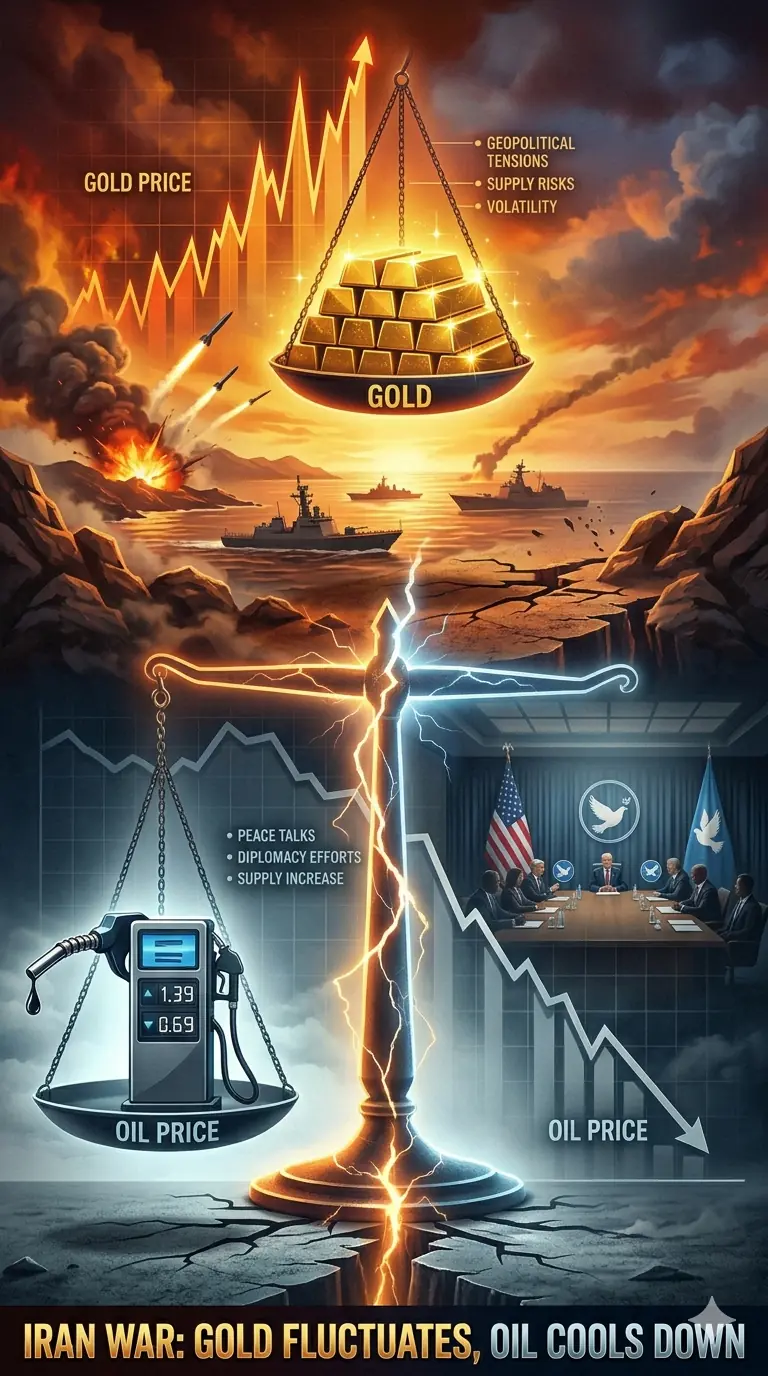
 Oil prices fell sharply on Wednesday after U.S. President Donald Trump said that Washington and Tehran are “in negotiations right now” and
indicated Iran is keen to reach a peace agreement, despite the Islamic Republic denying any direct talks with the U.S.
International benchmark Brent crude futures declined 5.5% to $98.72 per barrel, while U.S. West Texas Intermediate futures
were also down 5.1% at $87.65 per barrel.
Speaking from the Oval Office, Trump said he had pulled back from his earlier threat to launch strikes on Iranian energy infrastructure “based on the fact we’re negotiating.”
“They’re talking to us, and they’re talking sense,” Trump said when asked to elaborate on the shift.
Later Tuesday, The New York Times reported, citing two unnamed officials, that the U.S. had sent Iran a 15-point proposal aimed at ending the war.
According to the report, it remains unclear how widely the proposal, delivered through Pakistan, has been circulated among Iranian officials. It is also uncertain whether Israel, which is carrying out attacks on Iran alongside the U.S., would back the plan.
Iran’s top joint military command spokesperson signaled that oil markets will remain volatile, warning prices won’t normalize until regional stability is secured under its military control, Reuters reported.
Separately, Iran’s mission to the United Nations
said
Tuesday that “non-hostile vessels” would be able to pass through the
strategically vital
Strait of Hormuz, provided they coordinate “with the competent Iranian authorities.”
The social media post appears to establish a protocol that has
emerged in recent days, with some ships from China, India and Pakistan able to pass through the waterway as Iran flexes control over it.
The Middle East crisis has severely disrupted oil exports through the Strait of Hormuz since the U.S. and Israel launched strikes against Iran on Feb. 28. The maritime corridor typically carries about a fifth of the world’s oil and liquified natural gas (LNG) and represents a
key choke point for fertilizer trade.
The current disruption to oil supplies marks the largest shock in decades when measured as a share of global supply, Goldman Sachs co-head of global commodities research Daan Struyven said in a call with the media, underscoring the unusually high uncertainty facing markets.
The bank noted that near-term price movements are being driven less by changes in the base case outlook and more by shifts in the perceived probability of worst-case scenarios. Crude is effectively trading on a geopolitical risk premium as investors hedge against prolonged disruptions and critically low inventories, Goldman said.
The bank’s base case assumes flows through the Strait of Hormuz to normalize in April over a four-week period.
Oil prices fell sharply on Wednesday after U.S. President Donald Trump said that Washington and Tehran are “in negotiations right now” and
indicated Iran is keen to reach a peace agreement, despite the Islamic Republic denying any direct talks with the U.S.
International benchmark Brent crude futures declined 5.5% to $98.72 per barrel, while U.S. West Texas Intermediate futures
were also down 5.1% at $87.65 per barrel.
Speaking from the Oval Office, Trump said he had pulled back from his earlier threat to launch strikes on Iranian energy infrastructure “based on the fact we’re negotiating.”
“They’re talking to us, and they’re talking sense,” Trump said when asked to elaborate on the shift.
Later Tuesday, The New York Times reported, citing two unnamed officials, that the U.S. had sent Iran a 15-point proposal aimed at ending the war.
According to the report, it remains unclear how widely the proposal, delivered through Pakistan, has been circulated among Iranian officials. It is also uncertain whether Israel, which is carrying out attacks on Iran alongside the U.S., would back the plan.
Iran’s top joint military command spokesperson signaled that oil markets will remain volatile, warning prices won’t normalize until regional stability is secured under its military control, Reuters reported.
Separately, Iran’s mission to the United Nations
said
Tuesday that “non-hostile vessels” would be able to pass through the
strategically vital
Strait of Hormuz, provided they coordinate “with the competent Iranian authorities.”
The social media post appears to establish a protocol that has
emerged in recent days, with some ships from China, India and Pakistan able to pass through the waterway as Iran flexes control over it.
The Middle East crisis has severely disrupted oil exports through the Strait of Hormuz since the U.S. and Israel launched strikes against Iran on Feb. 28. The maritime corridor typically carries about a fifth of the world’s oil and liquified natural gas (LNG) and represents a
key choke point for fertilizer trade.
The current disruption to oil supplies marks the largest shock in decades when measured as a share of global supply, Goldman Sachs co-head of global commodities research Daan Struyven said in a call with the media, underscoring the unusually high uncertainty facing markets.
The bank noted that near-term price movements are being driven less by changes in the base case outlook and more by shifts in the perceived probability of worst-case scenarios. Crude is effectively trading on a geopolitical risk premium as investors hedge against prolonged disruptions and critically low inventories, Goldman said.
The bank’s base case assumes flows through the Strait of Hormuz to normalize in April over a four-week period.