
Marcel: The Classic Name Quietly
Facts 16/03/2026 09:58
People Are Just Now Discovering the Chilling Reason Why There Are No Human Remains in the Titanic Wreckage
More than a century after the tragic sinking of the RMS Titanic, people continue to be haunted by the ship’s story—and perhaps even more so by what wasn't found in its final resting place. Despite the loss of over 1,500 lives in one of the deadliest maritime disasters during peacetime, not a single human body has ever been located within the ship’s massive underwater wreckage. This eerie absence has left many questioning: What happened to all the victims of the Titanic?
The Titanic sank on April 15, 1912, during its maiden voyage from Southampton, England, to New York City after it struck an iceberg in the frigid North Atlantic. Due to an inadequate number of lifeboats and a rushed evacuation process, the tragedy claimed the lives of approximately 1,500 out of the 2,224 passengers and crew onboard.
It wasn’t until September 1, 1985, more than 70 years after the disaster, that the wreck of the Titanic was finally discovered—lying some 12,500 feet (nearly 3,800 meters) below the surface of the ocean. The ship was found to have broken apart before it sank, with its bow relatively intact and its stern more severely damaged. The surrounding area spanned a debris field roughly 5 by 3 miles wide, filled with fragments of the ship, furnishings, luggage, dinnerware, and other remnants of a bygone era.
But notably missing were human remains.
Although a few scattered personal items, such as shoes and boots—often found in pairs, eerily arranged on the seafloor—were discovered, no bones, bodies, or clear human remnants were ever recovered from the wreck site. So what exactly happened to the over 1,500 people who perished?
According to oceanographers and deep-sea researchers, there’s a scientific explanation that’s just as unsettling as it is fascinating. The wreck lies in a part of the Atlantic Ocean where extreme pressure, near-freezing temperatures, and unique chemical conditions prevail. These conditions make it inhospitable for human remains to survive long-term.
Robert Ballard, the famed explorer who led the team that first located the Titanic wreck, explained that the water at those depths is undersaturated in calcium carbonate, a critical component of bones. In such an environment, once soft tissue is consumed by marine organisms like deep-sea scavengers and bacteria, the bones themselves begin to dissolve—essentially vanishing into the surrounding water. Ballard noted, “The water in the deep sea is under-saturated in calcium carbonate… so once the critters eat their flesh and expose the bones, the bones dissolve.”
He contrasted this with the Black Sea, where human remains may be better preserved because its oxygen-depleted waters lack the marine life necessary to consume soft tissues—resulting in “perfectly mummified fossils.”
The idea that the victims of the Titanic were not recovered, not even in skeletal form, has unsettled many. Reddit users have expressed shock and discomfort upon learning this, with comments like “That is horrifying,” “This is so eerie to think about…,” and “Whoa, nightmarish.” Yet some found solace in the natural process, saying the victims were “given back to nature in the only way Mother Nature knows how.”
Since the discovery of the wreck, countless items have been carefully retrieved for study and exhibition. Museums around the world now display Titanic artifacts, from dinner plates to suitcases, providing tangible connections to those who were lost.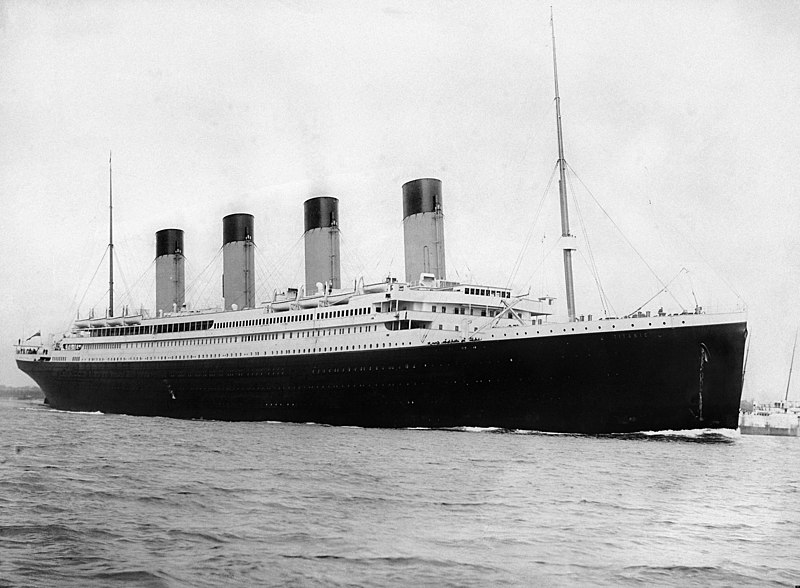
However, efforts to raise the Titanic itself have never succeeded—and likely never will. Over the years, the wreck has significantly deteriorated. Iron-eating bacteria and unintentional collisions from research submersibles have caused considerable structural damage. In 2006, experts estimated that the ship's remaining framework might collapse entirely within 50 years, leaving only piles of rust and interior objects behind.
The allure of the Titanic remains powerful, and expeditions to the site continue—though not without risk. In 2023, a tourist dive to visit the iconic wreck ended in tragedy when the Titan submersible, operated by OceanGate Expeditions, imploded during its descent, killing all five people on board, including CEO Stockton Rush.
Today, the Titanic lies silent and solemn on the ocean floor. While its human passengers are no longer physically present, their stories—and the mystery of their final moments—continue to captivate and move us, more than a century after that fateful night.