Raise Your Legs Daily
Facts 29/04/2026 08:24
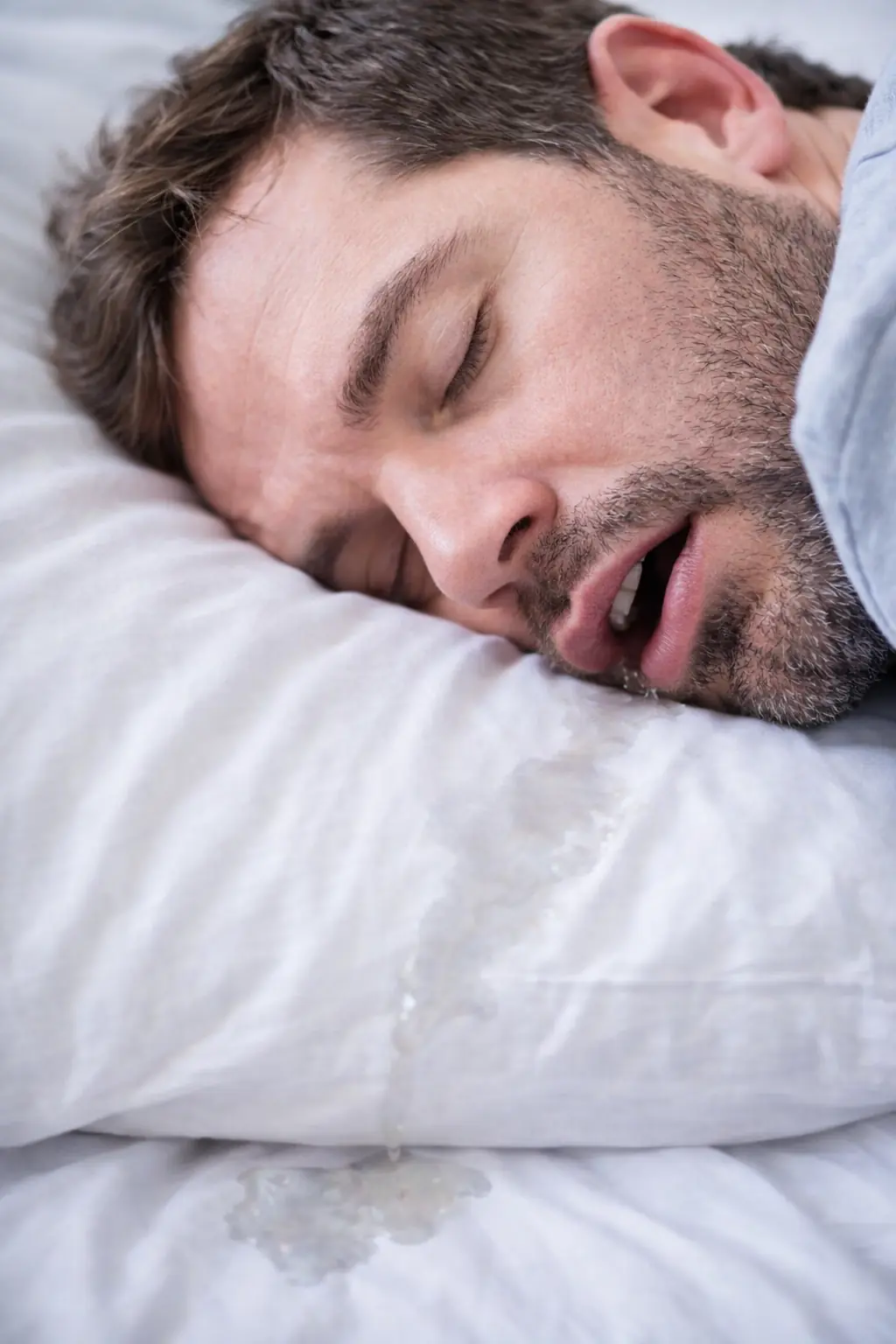
Have you ever woken up to find a damp patch on your pillow? While occasionally drooling during deep sleep (REM cycle) is often considered a sign of complete relaxation, doing it frequently might be your body’s way of sending a distress signal.
Known medically as Sialorrhea, excessive drooling while asleep is more than just an embarrassing habit. It can be linked to several underlying health conditions ranging from simple allergies to serious neurological concerns. Here are 6 diseases and health issues you should check for if you find yourself drooling every night.
One of the most common reasons for drooling is simply the inability to breathe through your nose. When your nasal passages are blocked due to a cold, sinusitis, or allergies, you naturally resort to mouth breathing.
The Result: Gravity causes saliva to escape the mouth during sleep.
What to check: Chronic allergies, deviated septum, or nasal polyps.
If you suffer from acid reflux or GERD, your stomach acid can irritate the lining of the esophagus. This irritation triggers the "Esophagosalivary Reflex," causing your salivary glands to produce excessive amounts of saliva to neutralize the acid. If you wake up with a sour taste in your mouth along with a wet pillow, your digestive system may be the culprit.
Drooling is a hallmark symptom of Obstructive Sleep Apnea (OSA). This is a serious disorder where your breathing repeatedly stops and starts during the night. People with sleep apnea often breathe through their mouths because their airways are narrowed or blocked.
Warning signs: Loud snoring, waking up gasping for air, and morning headaches.
The muscles in our mouth and throat are controlled by complex neurological signals. If these signals are disrupted, you may lose the ability to swallow saliva effectively while asleep.
Potential Risks: Drooling can be an early warning sign of Parkinson’s disease, Multiple Sclerosis (MS), or even a indicator of a potential stroke. If you notice sudden muscle weakness or difficulty swallowing during the day, consult a doctor immediately.
Poor oral hygiene or infections in the mouth can lead to an overproduction of saliva as the body tries to "wash away" bacteria.
Common causes: Gingivitis (gum disease), cavities, or tonsillitis. Inflammation in the throat or mouth makes the swallowing process uncomfortable, even subconsciously, leading to drooling.
Are you on any new prescriptions? Certain medications, particularly antipsychotics (like clozapine) and drugs used to treat Alzheimer’s disease, are known to cause excessive salivation as a side effect. Always check the label or consult your pharmacist if you notice a change in your saliva production after starting a new treatment.