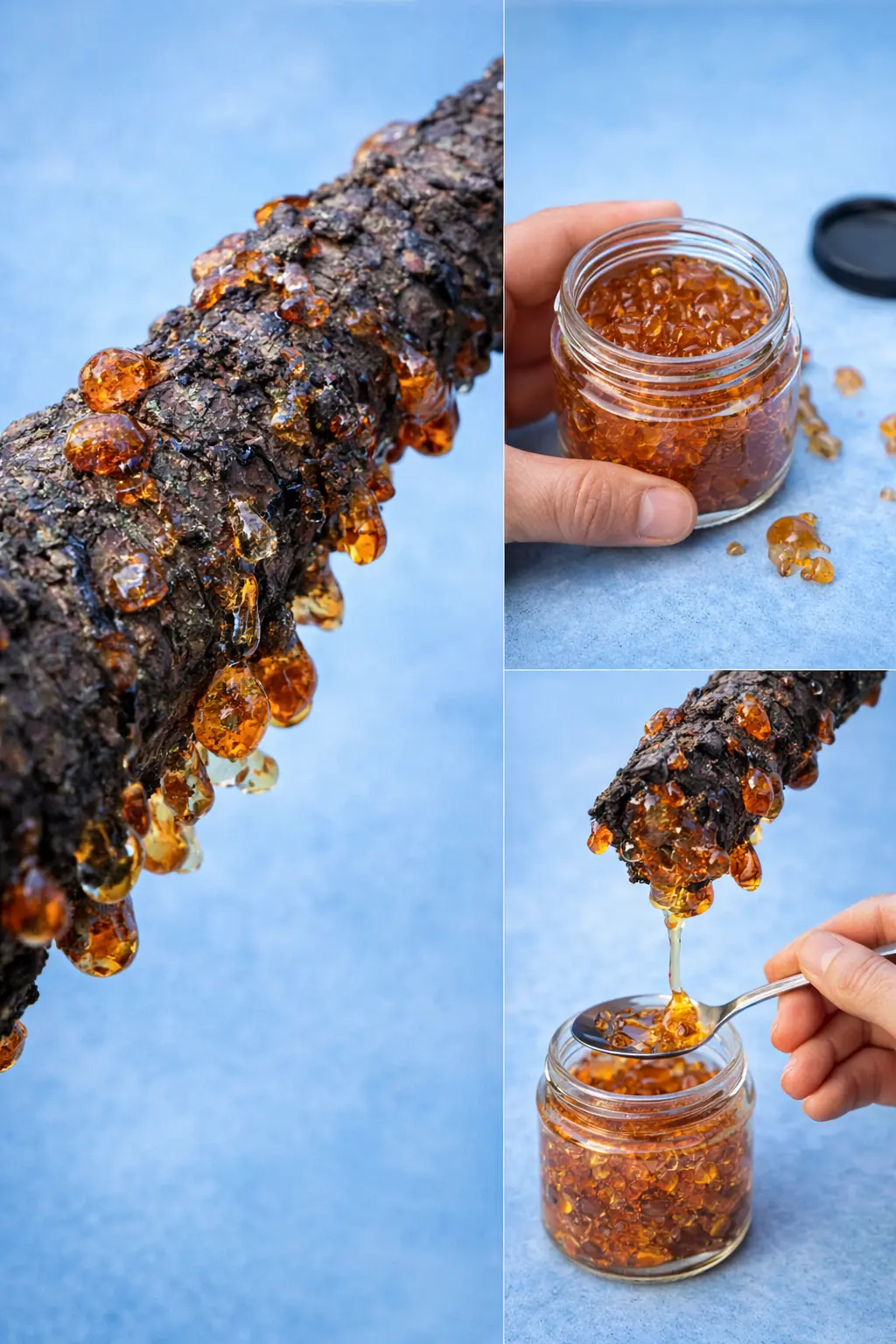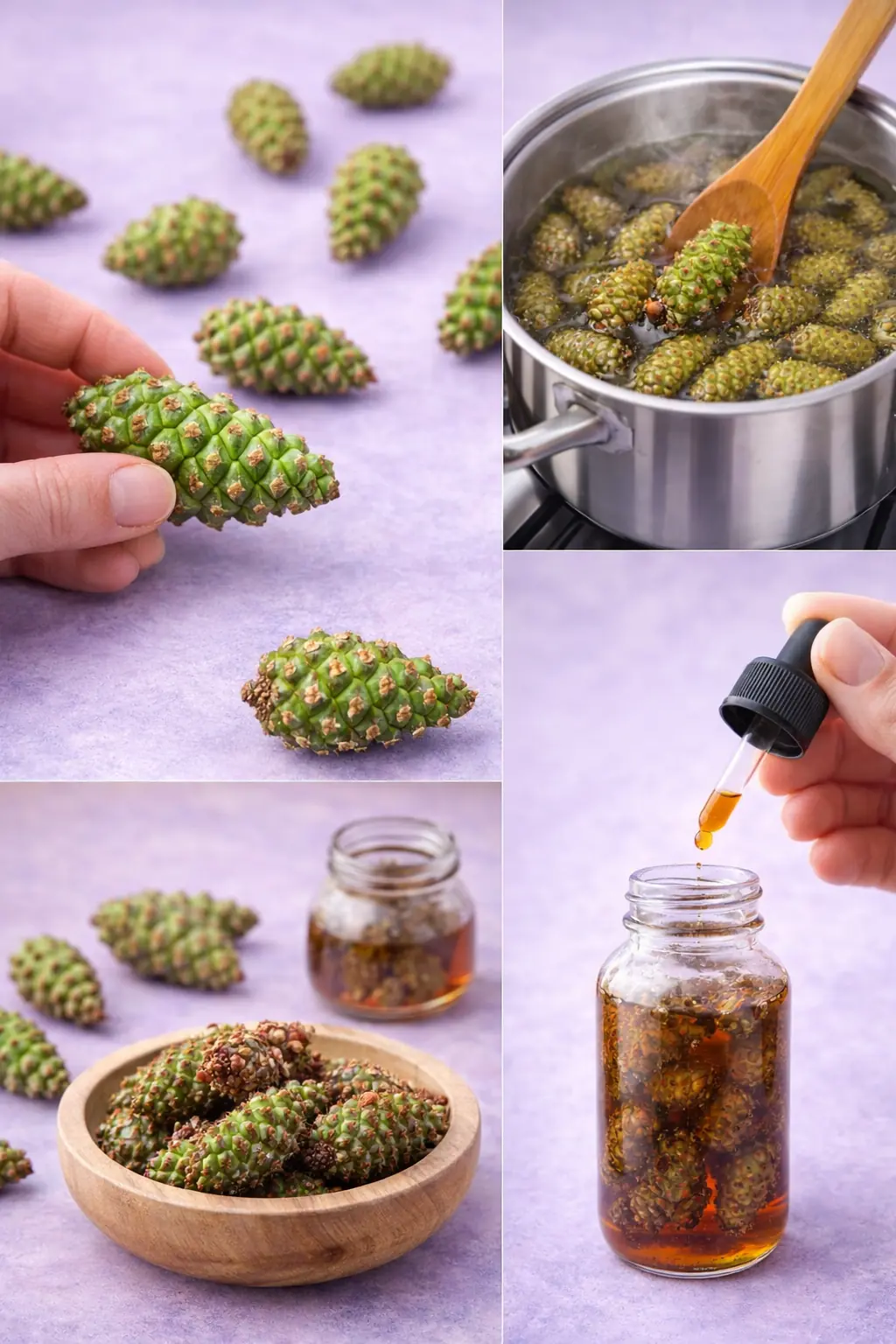
Pine cone syrup is a traditional homemade syrup made from young, green pine cones. It has a deep amber color, a gentle resin-honey sweetness, and a forest-like aroma that many people find comforting. For generations, it has been used both as a kitchen treat and as a simple home remedy for the throat and seasonal discomforts.
This guide explains everything in a clear, newbie-friendly way: what it is, its traditional benefits, how to make it, how to use it, and how to store it safely.
What Is Pine Cone Syrup?
Pine cone syrup is made from immature, soft green pine cones harvested in late spring or early summer. These cones release aromatic compounds, mild bitterness, and natural color when cooked or macerated with sugar, creating a syrup that tastes somewhere between honey and citrusy forest resin.
Important:
Only use cones from true pine trees (genus Pinus). Never use cones from yew (Taxus – toxic) or unidentified trees. If you’re unsure about identification, do not harvest.
Traditional and Culinary Benefits
Pine cone syrup is best viewed as a culinary remedy, not a medicine. Traditionally, it is appreciated for:
-
Throat comfort: Often stirred into warm water or tea to soothe scratchy throats
-
Cough support: Taken warm, it may help loosen mucus (folk use)
-
Aromatic breathing comfort: Pine aromatics like α-pinene give a “clear, fresh” sensation
-
Warming and calming effect: A spoon in hot water or milk feels comforting
-
Digestive lift: Mild bitterness can feel helpful after heavy meals
-
Mood and ritual: The scent and slow preparation are grounding and relaxing
-
Culinary versatility: Works as a unique sweetener in both sweet and savory dishes
-
Plant compounds: Pine contains polyphenols and vitamin C, though the syrup is not a supplement
Note: This is not medical advice. For ongoing symptoms, consult a healthcare professional.
Ingredients and Equipment (Stovetop Method)
Ingredients
-
500 g young green pine cones (soft, 1–3 cm)
-
700 g white sugar (or a mix of white + light brown)
-
500 ml water
-
Optional: lemon slices or 1–2 tsp lemon juice; vanilla or cinnamon for aroma
Equipment
-
Large bowl and colander
-
Knife and cutting board
-
Stainless steel or enamel pot
-
Spoon and fine strainer or cheesecloth
-
Sterilized glass bottles or jars
-
Kitchen scale (recommended)
How to Harvest and Prepare Pine Cones
-
Choose the right cones: They should be green, soft, and easy to cut.
-
Harvest responsibly: Take small amounts from multiple trees; avoid protected areas.
-
Clean gently: Shake off debris and insects, rinse briefly, and pat dry.
Method 1: Quick Stovetop Pine Cone Syrup (Best for Beginners)
-
Cut the cones (optional): Halve larger cones to speed extraction.
-
Simmer: Add cones and water to a pot. Simmer gently for 30–40 minutes, partially covered.
-
Strain: Remove cones and strain the liquid.
-
Add sugar: Return liquid to the pot, add sugar (and lemon if using). Stir over low heat.
-
Simmer again: Cook 10–15 minutes until lightly thickened (103–105 °C if using a thermometer).
-
Bottle: Pour hot syrup into sterilized jars, seal, and cool.
Yield: About 600–800 ml of pourable syrup.
Method 2: Slow Sun-Macerated Syrup (Traditional)
-
Layer clean pine cones and sugar in a jar (1:1 by weight).
-
Seal and place in sunlight for 2–6 weeks.
-
Once syrupy and dark, strain.
-
Gently heat 5–10 minutes for stability (optional), then bottle.
Pros: Deeper, more complex flavor
Cons: Takes weeks
Variations
-
Honey version: Use honey instead of sugar (no cooking, refrigerate). Never give honey to children under 1 year.
-
Spiced: Add cinnamon, vanilla, or juniper berries.
-
Citrus: Add lemon or orange peel (no white pith).
How to Use Pine Cone Syrup
-
1–2 teaspoons straight as a throat soother
-
Stir into tea, warm water, or milk
-
Drizzle over pancakes, yogurt, granola, or porridge
-
Use in desserts, glazes, or baked fruit
-
Mix into salad dressings or savory glazes
-
Replace simple syrup in cocktails or mocktails
Typical home use: 1–2 teaspoons up to 3 times daily when needed, or simply use as a sweetener.
Storage and Shelf Life
-
Sugar syrup: Sealed, cool and dark, 6–12 months. Refrigerate after opening (2–3 months).
-
Honey or sun-macerated syrup: Refrigerate; use within 2–3 months.
-
Discard if: Mold, fizzing, or off smells appear.
Common Troubleshooting
-
Too thin → Simmer a bit longer
-
Too thick → Add a little hot water and reheat gently
-
Bitter → Cones may be too mature; balance with lemon
-
Very dark → Normal with long maceration
Safety Notes
-
Start with small amounts if you have allergies or asthma
-
Consult a professional if pregnant, breastfeeding, or managing health conditions
-
This is a sugary product—use sparingly if diabetic
-
Identification matters: only true pine (Pinus) cones
Final Thoughts
Pine cone syrup is a beautiful example of old-world kitchen wisdom: simple ingredients, slow processes, and comforting results. Whether you enjoy it in tea, drizzle it on desserts, or keep a jar for seasonal comfort, it’s a rewarding project for beginners. Start with the quick stovetop method, then explore the slow sun method once you feel confident.