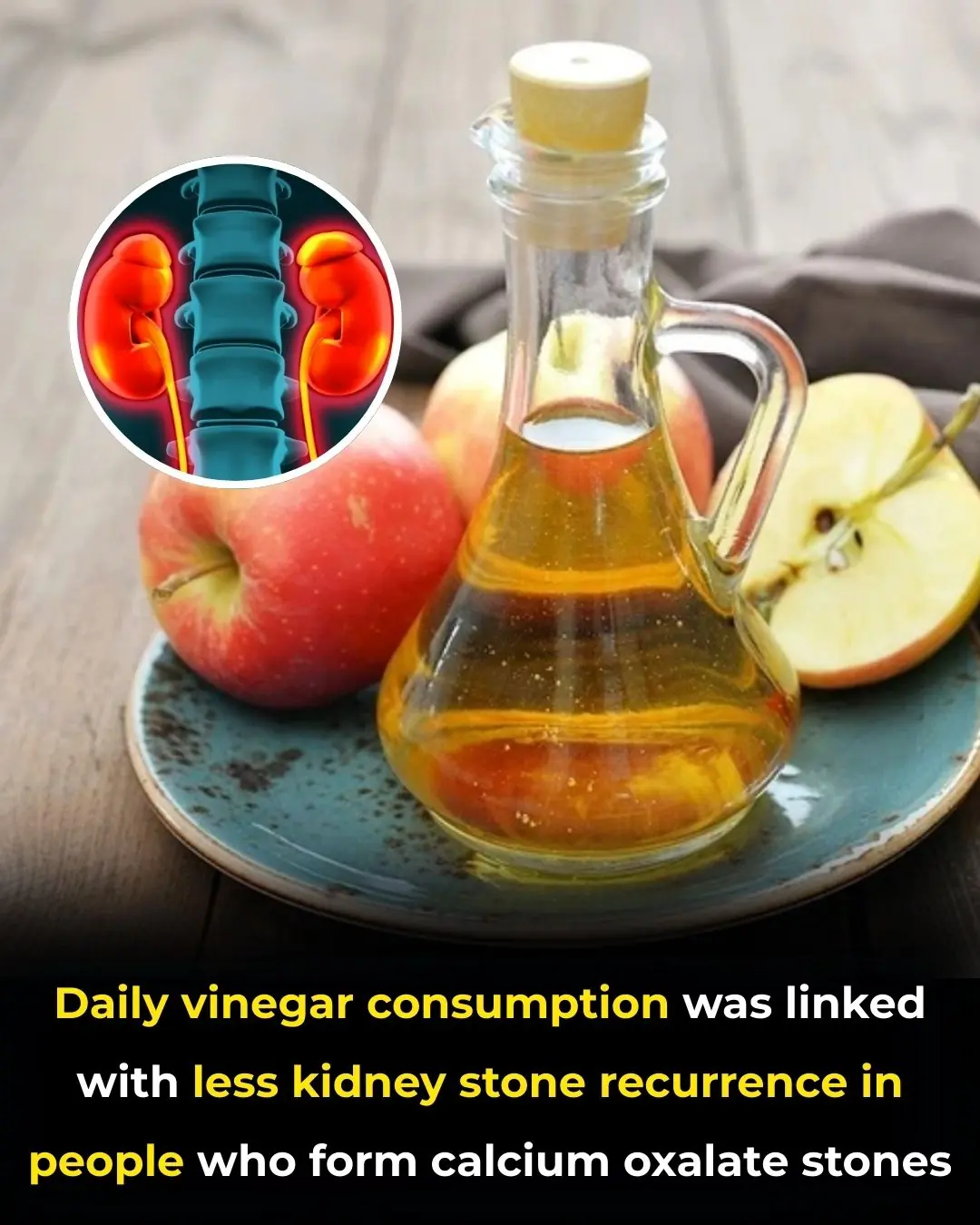
Vinegar Consumption and Reduced Risk of Calcium Oxalate Kidney Stones: Evidence from a Pilot Human Study
Health 30/12/2025 14:19
Peptic ulcer disease, encompassing gastric and duodenal ulcers, was historically a major cause of morbidity long before the discovery of Helicobacter pylori and the widespread use of acid-suppressing drugs. In the mid-20th century, treatment options were limited, healing was often slow, and recurrence was common. Against this background, physician Garnett Cheney of Stanford University reported a series of remarkable clinical observations suggesting that a simple dietary intervention—fresh raw cabbage juice—could dramatically accelerate ulcer healing.
Dr. Cheney investigated the effects of raw cabbage juice in patients with diagnosed gastric and duodenal ulcers. Rather than using pharmaceuticals as the primary intervention, patients consumed approximately one quart (about 950–1,000 ml) of freshly prepared raw cabbage juice per day, divided into multiple servings across the day. This intake was maintained consistently throughout the treatment period. The cabbage juice was not used as a minor supplement, but as the central therapeutic strategy.
The most striking finding from Cheney’s reports was the speed of ulcer healing. Gastric ulcers healed, on average, in about 7 to 10 days, often cited as roughly 7.3 days, while duodenal ulcers typically closed within 9 to 14 days. At the time, standard medical care often required several weeks for comparable healing, even under optimal conditions. The unusually rapid resolution observed with cabbage juice therefore stood out as clinically significant and difficult to explain by placebo effects alone, particularly given the objective nature of ulcer healing.
Cheney attributed these effects to a compound found in high concentrations in raw cabbage: S-methylmethionine, sometimes referred to historically as “vitamin U.” Although not a true vitamin by modern biochemical definitions, S-methylmethionine was proposed to enhance regeneration of the gastric and duodenal mucosa. According to Cheney’s hypothesis, this compound supported rapid repair of the epithelial lining of the stomach and intestine while also providing protection against ongoing acid-related injury. This mechanism differs fundamentally from acid suppression, instead emphasizing tissue repair and mucosal resilience.
The biological plausibility of these observations is notable. The integrity of the gastrointestinal lining depends on rapid cell turnover, adequate methylation reactions, and sufficient nutrient support for epithelial regeneration. Raw cabbage is rich not only in S-methylmethionine, but also in glutamine, vitamin C, and other phytochemicals that may synergistically support mucosal healing. Importantly, the juice was consumed raw, preserving heat-sensitive compounds that might be degraded during cooking.
It is essential to interpret Cheney’s findings in their historical and methodological context. These studies were conducted before the modern era of randomized, double-blind clinical trials and before the role of H. pylori infection was understood. As such, they do not meet contemporary standards for clinical evidence, and the reports largely consisted of observational case series rather than large controlled trials. Nonetheless, the magnitude and consistency of the reported healing times were sufficiently compelling to attract significant attention and to stimulate further research into diet-based approaches to ulcer healing.
Subsequent advances in gastroenterology shifted clinical focus toward antibiotics and acid-suppressing medications, and interest in cabbage juice as a primary therapy waned. However, Cheney’s work remains historically important because it demonstrated that nutritional interventions could exert powerful, rapid effects on tissue healing—effects that were measurable and clinically meaningful. It also highlighted that ulcer healing is not solely a matter of reducing acid, but also of actively supporting mucosal repair.
In conclusion, the clinical observations reported by Dr. Garnett Cheney at Stanford University provide early evidence that fresh raw cabbage juice, consumed at approximately one quart per day, can dramatically accelerate the healing of gastric and duodenal ulcers. The proposed role of S-methylmethionine (“vitamin U”) in promoting mucosal regeneration offers a biologically plausible explanation for these effects. While these findings predate modern clinical trial methodology and should not be interpreted as definitive proof by today’s standards, they remain a striking example of how simple, food-based interventions may profoundly influence gastrointestinal healing (early clinical reports from Stanford University School of Medicine).