Think You’re Buying Real Honey

Honey has been valued for thousands of years—not only for its natural sweetness but also for its unique flavor, versatility, and long history of use in traditional remedies.
But as honey grows in popularity, so do concerns about adulterated or diluted products. Some honey products may contain added sugar syrups or other sweeteners, making it difficult for consumers to know exactly what they’re buying.
The good news?
While no home test can guarantee purity with complete certainty, there are a few simple observations that may help you identify honey that deserves a closer look.
Here’s what you should know before your next purchase.
Why Honey Authenticity Matters
Pure honey is produced by bees from flower nectar and contains a complex mix of natural sugars, enzymes, organic compounds, and trace nutrients.
Adulterated honey may be diluted with ingredients such as:
- Corn syrup
- Rice syrup
- Glucose syrup
- Sugar solutions
These products can look remarkably similar to genuine honey, making them difficult to identify through appearance alone.
That’s why many consumers look for simple ways to evaluate honey before buying it.
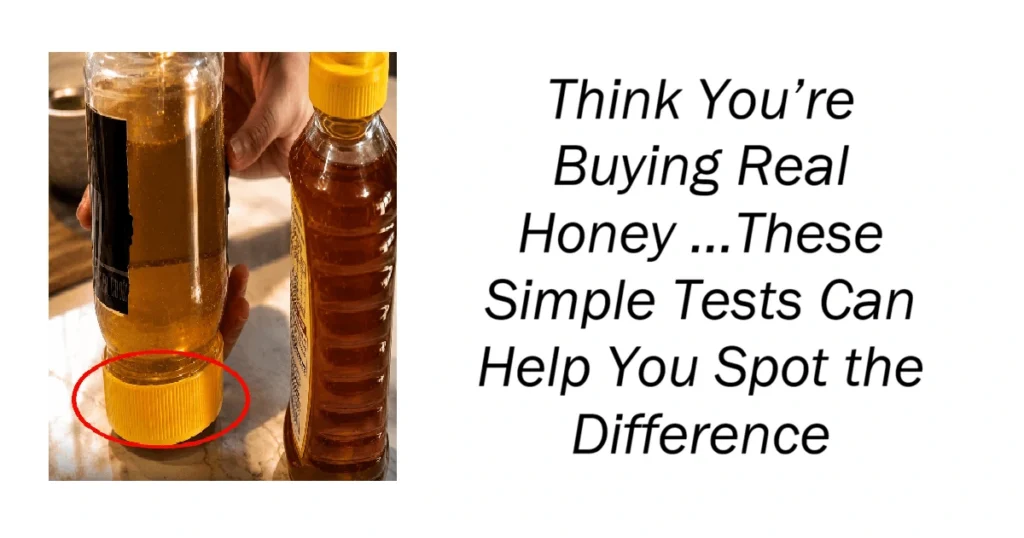
Test #1: The Shake-and-Flip Bubble Test
One of the most popular home methods involves observing how bubbles behave inside the bottle.
How to do it:
- Hold the honey bottle upright.
- Shake it gently a few times.
- Turn the bottle upside down.
- Watch how the air bubbles move.
What some people look for:
Thicker honey tends to slow bubble movement because of its higher viscosity.
Thinner honey may allow bubbles to rise more quickly.
Important note:
This test primarily measures thickness—not purity.
Many factors affect viscosity, including:
- Moisture content
- Temperature
- Floral source
- Age of the honey
So while the bubble test can tell you something about consistency, it cannot reliably confirm whether honey is pure or adulterated.
Test #2: The Water Glass Test
This is another popular kitchen experiment.
How to do it:
- Fill a clear glass with water.
- Add a spoonful of honey.
- Observe what happens.
Typical results:
Thicker honey often sinks to the bottom before slowly dispersing.
More diluted honey may mix with the water more quickly.
Reality check:
Just like the bubble test, this method reflects consistency rather than authenticity.
A thick syrup could behave similarly to genuine honey, while some real honeys naturally dissolve faster than others.
It’s fun to try, but it isn’t a definitive test.
Test #3: Crystallization
Many people are surprised to learn that crystallization is completely natural.
In fact, most genuine honey will eventually crystallize under the right conditions.
Why it happens
Honey naturally contains glucose and fructose.
Over time, glucose may separate and form crystals, creating a thicker or grainier texture.
What to expect
Real honey may:
- Become cloudy
- Develop fine crystals
- Turn thick and spreadable
But here’s the catch
Not all real honey crystallizes at the same rate.
Some varieties crystallize within weeks.
Others remain liquid for months or even years.
Likewise, some processed or adulterated honey can also crystallize.
Crystallization alone cannot prove authenticity, but it is usually a normal sign of natural honey.
Quick Thumb Test
This simple test is often shared online.
Try it:
Place a small drop of honey on your thumb.
Observe whether it stays in place or spreads.
Generally:
- Thick honey tends to stay put.
- More watery honey may spread more easily.
Again, this reveals consistency—not purity.
Still, it can give you a rough idea of the honey’s texture.
The Best Ways to Buy Quality Honey
Home tests can be interesting, but the most reliable approach starts before the honey ever reaches your kitchen.
Look for:
✔ Minimal ingredient lists
✔ Trusted brands
✔ Local beekeepers
✔ Farmers’ markets
✔ Transparent sourcing information
Be cautious of:
- Extremely cheap “honey” products
- Vague labeling
- Added sweeteners listed in ingredients
When possible, buy from producers who can explain where and how their honey is harvested.
What Makes Real Honey Special?
Beyond sweetness, honey contains naturally occurring compounds that contribute to its flavor, aroma, and texture.
Different floral sources create dramatically different varieties, from light and delicate to dark and robust.
Whether drizzled over yogurt, stirred into tea, or used in cooking, quality honey offers a unique taste that artificial substitutes often struggle to replicate.
The Bottom Line
Many viral honey tests can be fun to try, but most of them measure thickness rather than authenticity.
The bubble test, water test, and thumb test may provide clues about consistency, but they cannot definitively determine whether honey is pure.
For the best chance of buying genuine honey:
- Read ingredient labels carefully.
- Purchase from reputable sources.
- Learn about the producer whenever possible.
When it comes to honey, knowledge is often more reliable than any home experiment.
And sometimes, the simplest way to find great honey is to know—and trust—the people who make it.
News in the same category


How to Know If an Avocado Is Safe to Eat: The Ultimate Guide to Avoiding Waste (and Disappointment)

Stop Throwing Away That Oil Cap

Soak leftover squeezed lemon halves and 1 common liquid and you will never go back

The Mystery of the Little Ledge: What That Small Kitchen Island Shelf Is Actually For (And How to Love It)

If You See Someone with a Three-Dot Tattoo, Run as Far as You Can

No One Had Ever Explained That to Me! The Surprising Reason Some Outlets Are Installed Upside Down (And Why It's Actually Brilliant)

6 Effective Ways to Keep Mice Out of Your Home

Why Your Fingers Wrinkle in Water

Cleaning Your Washing Machine’s Detergent Drawer Effortless

The Way You Sit

Seeing White Powder on the Back of Your TV

Bleach Stains on Your Clothes? No Need to Throw Them Away: Here's the Solution

Doctors Reveal That Eating Eggs in the Morning Causes… (The Truth About Eggs, Cholesterol, and Your Health)

Can You Figure Out How Old My Sister Is? Most People Get It Wrong

Dog Sniffing Explained: What Your Pet Is Trying to Tell You

Why Wool Sweaters Get Those Annoying Little Pills

Convert Adjustable Wrench into a Versatile Tool

The Viral “Rice Trick” for Mice

Skip the Store-Bought Drinks: This Homemade Strawberry Juice Is Bursting With Fresh Flavor and Ready in Just 10 Minutes
News Post

The unexpected connection between morning blood flow and a stronger heart

Over 40? Lines on Your Nails May Reveal More Than You Think

Fatty Liver Disease: 6 Warning Signs You Should Never Ignore

These 5 Foods Don't Always Make the Best Leftovers—Here's Why.

Your Body May Give You Early Clues—These 6 Nighttime Symptoms Could Be Important

Fatty Liver Disease Explained: Risk Factors, Symptoms, and Evidence-Based Management

Waking Up During the Night Isn't Always Normal - Here's What Could Be Behind It

🌿 The Most Powerful Herbs That Help Support Healthy Circulation and Reduce the Risk of Blood Clots in the Legs 💬👀 👇

If bitten by a poisonous snake, is it safe to suck on the wound with your mouth?

Husbands With These 2 Bad Habits May Put Their Wives at Higher Risk of Breast Cancer - Stop Them Now Before They Harm The Whole Family

Woman Suffers Acute Kidney Failure After a Meal: What We Can Learn About Food Safety

Proven Health Benefits of Ground Flax Seeds and Flaxseed Meal

3 Types of Fish That Could Carry Hidden Health Risks — No Matter How Delicious They Are, You May Want to Avoid Them

6 Reasons Why You Pee A Lot

Brain Health Specialists Warn About A Daily Habit That Can Affect Your Mental Well-Being

Doctors Warn: Stop Eating These 4 Foods Immediately—They May Carry Hidden Parasites That Put Your Health at Risk

Fatty Liver Disease Explained: Risk Factors, Symptoms, and Evidence-Based Management

Kidney patients! 4 proteins you should eat and 6 you should never touch... To keep receiving my recipes, just say something... Thank you!

Could Your Nighttime Leg Pain Be a Sign of Poor Circulation? Here's What You Should Know