What It Means When a Black Cat Comes Into Your Home
Tips 15/01/2026 23:28

Okra is an affordable vegetable with impressive nutritional value and a wide range of health benefits. It is low in calories yet rich in essential nutrients, making it especially suitable for people with diabetes, constipation, high blood pressure, and digestive issues. Okra helps strengthen the immune system, supports bone health, and plays an important role in fetal development during pregnancy.
For women, okra offers additional benefits such as supporting weight loss, improving skin appearance, and helping reduce acne. Thanks to these remarkable advantages, okra is often referred to as the “green ginseng” in many Asian cultures, highlighting its reputation as a natural health-boosting food.
Okra can be prepared in many ways, including boiling, making salads, cooking soups, or stir-frying. Each cooking method brings out a unique flavor and texture. Among them, boiled okra is especially popular because it is light, refreshing, easy to prepare, and quick to cook. However, many people find that boiled okra can become slimy, which makes it less appealing to eat if not prepared correctly.
When buying okra, it is best to select young, tender pods. These are easier to eat and have a better texture. Choose okra that is no longer than about 8 cm, with a light green color and a firm surface. Avoid pods that are too long, dark green, overly soft, or covered with stiff hairs, as these are signs of mature okra, which tends to be tough and chewy after cooking.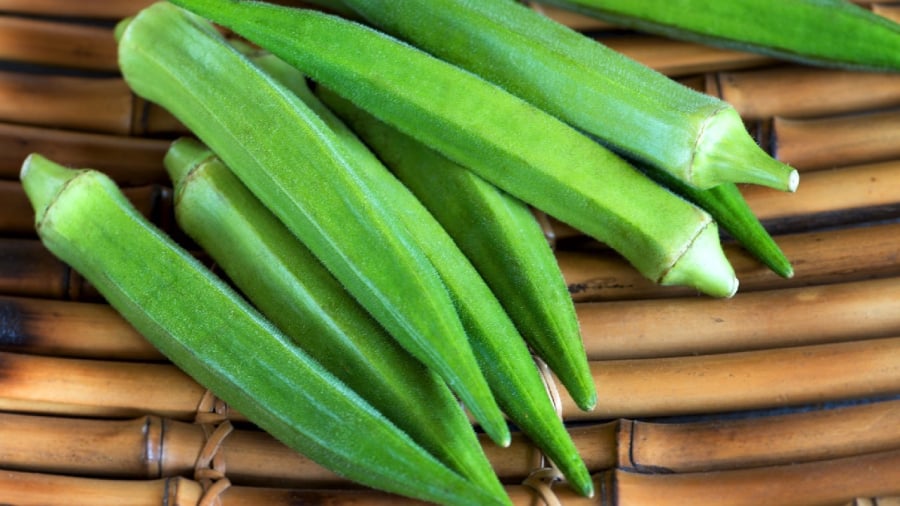
Okra has a thin layer of fine hairs on its surface, so it should be washed thoroughly to remove dirt and impurities. You can soak the okra in warm salt water for about 15 minutes to help loosen surface dirt more easily. After soaking, rinse the okra again under clean running water to ensure it is completely clean.
To prevent sliminess when boiling, do not cut off the tip of the okra pods before cooking. You may trim the long stem slightly, but avoid cutting too deeply into the pod, as this releases more mucilage and increases sliminess.
Place a pot of water on the stove and bring it to a rolling boil. Once the water is boiling, add a pinch of salt and a few drops of cooking oil. Then add the okra and boil until just cooked. Okra cooks very quickly, so there is no need to boil it for too long. The salt and oil help the okra retain its vibrant green color and improve its overall appearance.
While the okra is cooking, prepare a bowl of boiled water that has been cooled, and add several ice cubes to create an ice bath. As soon as the okra is cooked, remove it from the pot and immediately place it into the ice water. This step helps stop the cooking process, keeps the okra crisp, and preserves its bright green color.
It is important not to cut off the okra stems before boiling, as doing so helps prevent excessive sliminess. Once the okra has cooled, remove it from the ice bath and let it drain well. At this point, you can cut off the stems and slice longer pods into smaller pieces if desired. Boiled okra can be eaten as is, dipped into your favorite sauces, or mixed into salads for a refreshing and nutritious dish.
In summary, to avoid slimy boiled okra, the key is simple: do not cut the stems before cooking. Boil the okra whole, then trim and slice it afterward. With this method, you can enjoy tender, vibrant, and delicious boiled okra every time.