The Powerful Benefits of Eating Lactuca serriola Leaves (Prickly Lettuce)
Garden Healthy 18/02/2026 22:56
Willow functions as a natural source of aspirin-like compounds. Because of this, the same precautions that apply to aspirin also apply to willow.
Do NOT use willow (including catkins, bark, or leaves) if you:
Are allergic to aspirin or salicylates
Take blood-thinning medication
Have stomach ulcers or gastritis
Suffer from kidney problems
Are pregnant or breastfeeding
Plan to give it to children with viral illness (due to the risk of Reye syndrome)
Good medicine depends on the person, not just the plant.
Even the most respected natural remedies are not appropriate for everyone. If you are unsure whether willow is safe for you, consult a qualified healthcare professional before using it.
Each spring, long before most plants fully awaken, willow trees dress themselves in soft, silvery catkins. To many, these delicate “puffs” simply signal the end of winter. Yet few realize that they represent one of humanity’s oldest known remedies for pain.
For thousands of years, willow has grown alongside rivers, wetlands, and human settlements. Long before the invention of modern aspirin, communities across continents relied on this tree to ease joint pain, calm fevers, and reduce inflammation. The early appearance of catkins—when little else is available—made them an especially accessible seasonal medicine.
In a time when nature is just beginning to stir, willow quietly offers relief.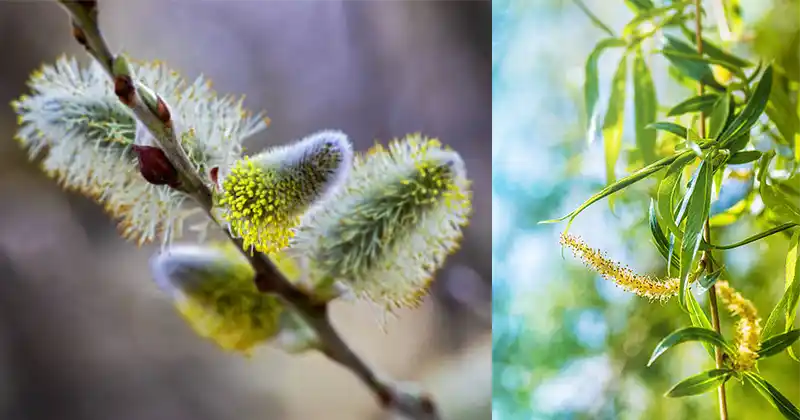
One of willow’s greatest strengths is its availability. Species of Salix nigra (black willow) are widespread across much of the eastern and midwestern United States. Meanwhile, Salix alba (white willow) and other relatives have become naturalized in many regions worldwide.
Willows:
Thrive along rivers, lakes, ditches, and marsh edges
Adapt easily to parks, roadsides, and urban spaces
Grow quickly and regenerate readily
Produce abundant catkins each spring
You do not need remote wilderness to find willow. It is often a quiet companion to human life—standing beside bridges, lining rural roads, or growing near backyard streams.
Willow contains salicin, a natural compound that the body converts into salicylic acid—the original inspiration behind synthetic aspirin.
This is not mere folklore. Willow is one of the most scientifically studied medicinal trees in traditional herbal practice. Indigenous peoples across North America, Europe, and Asia used willow for centuries to treat pain and fever. Modern research later confirmed that salicin-rich preparations can help calm inflammation and reduce discomfort.
Unlike synthetic aspirin, however, whole-plant preparations often act more gradually. Many people describe willow as gentler and smoother—providing steady support rather than a sudden, sharp effect.
Willow catkins may help ease:
Headaches and mild migraines
Arthritis discomfort
Lower-back pain
Sore or stiff joints
Toothaches
General inflammatory aches
The effect is typically slower than standard aspirin but may feel less abrupt on the digestive system when used appropriately.
After intense physical work or exercise, willow preparations may assist with:
Muscle stiffness
Tendon irritation
Post-exercise soreness
Overworked shoulders and knees
Athletes and laborers alike have traditionally valued willow for recovery support.
Historically, willow was used to help the body respond to mild fevers. Rather than “forcing” temperature changes, it appears to support the body’s natural cooling mechanisms.
Because salicin has mild blood-thinning properties, willow has been traditionally valued to:
Support healthy circulation
Ease cold hands and feet
Reduce tension linked to restricted blood flow
However, this same property is why it must not be combined with blood-thinning medications.
Strong infusions have been used as gargles for:
Sore throats
Irritated gums
Minor mouth discomfort
Willow’s mild antimicrobial and anti-inflammatory actions make it suitable for short-term external use.
Externally, willow preparations may calm:
Itchy skin
Minor rashes
Insect bites
Inflamed acne spots
Modern skincare even uses willow-derived salicylic acid for similar purposes—highlighting how traditional knowledge continues to influence contemporary formulations.
Most herbal texts focus on willow’s inner bark, which is indeed stronger medicine. However, catkins offer unique advantages:
They appear in early spring when bark harvesting may be impractical
They are gentler and more aromatic
Harvesting them does not damage the tree
They contain similar active compounds in milder concentrations
For beginners, catkins often provide a safer and more sustainable introduction to willow medicine.
Early spring, as soon as catkins open
After morning dew has dried
Before they fully yellow and release pollen
Choose clean environments away from heavy traffic
Avoid polluted ditches or chemically treated parks
Prefer trees near clean, flowing water
Take only a small portion from each tree
Never strip an entire branch
Harvest mindfully and responsibly
Sustainable gathering ensures that willow remains healthy for years to come.
Spread catkins in a thin layer
Dry in shade with good airflow
Store in glass jars away from light and moisture
Proper drying preserves both aroma and potency.
1–2 teaspoons dried catkins
1 cup hot (not boiling) water
Steep 10–15 minutes
Drink up to two cups daily when needed for mild aches or headaches.
Simmer catkins gently for 10 minutes
Let sit another 10 minutes
Strain and sip slowly
This method extracts more active compounds.
Fill a jar halfway with fresh or dried catkins
Cover with alcohol
Let sit 3–4 weeks
Strain and store in a dark bottle
Tinctures offer longer shelf life and convenient dosing.
Prepare a strong tea
Use as a warm compress for sore muscles
Gargle for throat discomfort
Apply to irritated skin
External applications often provide localized relief.
Willow’s inner bark contains higher concentrations of salicin and has historically been used for:
Chronic joint pain
Long-term inflammation
Persistent back problems
However, bark harvesting must be done carefully to avoid harming the tree. Catkins, by contrast, are renewable and gentler—making them more sustainable for regular seasonal use.
Willow catkins remind us that medicine does not always come from a pharmacy shelf. Sometimes it hangs quietly from branches while the world is still emerging from winter.
This tree has comforted workers, elders, parents, and entire communities for generations. When used wisely and respectfully, willow remains a valuable ally in natural wellness traditions today.
Willow is powerful. Natural does not mean risk-free.
Do not use if any of the contraindications listed above apply to you. Never combine willow with aspirin or blood thinners. Start with small amounts and observe how your body responds.
Listen carefully to your body—and treat this ancient tree with the respect it deserves.