
Warning! If You Have Found This Insect (Silverfish) in Your Home, It's a Sign That You Need to Take Action
Facts 01/07/2026 20:37
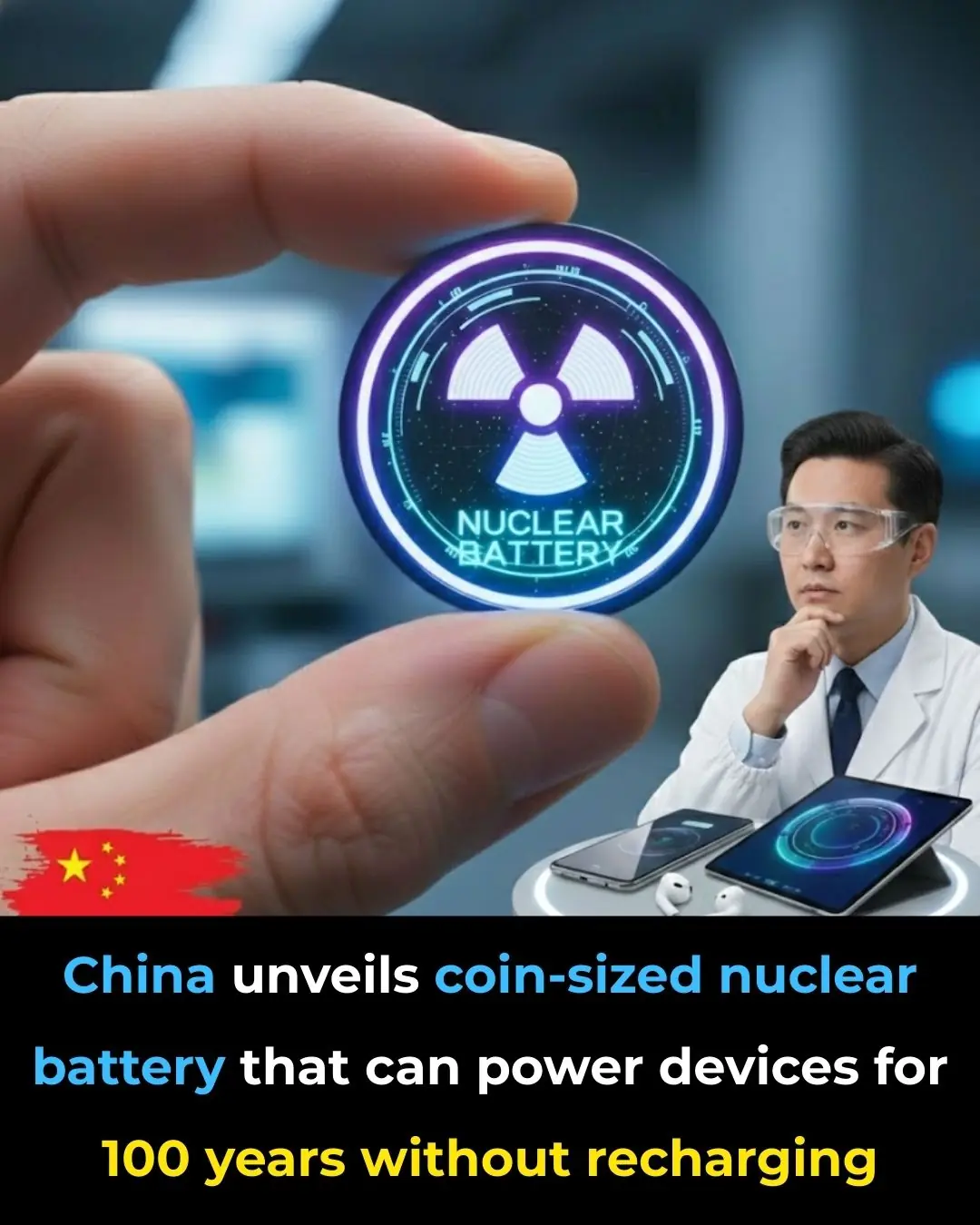
China's emerging startup, Betavolt, has unveiled a groundbreaking invention — a coin-sized nuclear battery that promises to deliver power without the need for recharging. This innovative battery utilizes betavoltaic energy, a technology that harnesses the energy from radioactive decay to generate electricity. Unlike conventional batteries, which gradually lose their charge and require recharging, this battery offers a continuous and steady output of power for up to 50 years. More impressively, future versions of this battery are designed to last a full century, making it a potential game-changer in multiple fields. 🔋☢️
The technology behind this nuclear battery works by converting the energy released from radioactive decay into electricity. Specifically, the battery uses a small amount of radioactive isotopes, which decay over time, emitting beta particles. These particles are then converted into electrical energy. While the concept of using radioactive materials for power generation is not entirely new, Betavolt's achievement lies in miniaturizing this process into a small, compact device. This allows the battery to be highly efficient and incredibly long-lasting, without the need for any human intervention for maintenance or recharging.
Betavolt's innovation opens up new possibilities in several areas where traditional battery technologies fall short. One of the most promising applications is in the field of microelectronics. Devices that require a constant, low power supply, such as sensors, IoT devices, and wearable technology, could benefit significantly from these long-lasting batteries. With no need for constant charging, these devices could operate autonomously for decades without human intervention.
Another exciting prospect is the application of this technology in space exploration. Space missions often require power sources that can operate for extended periods without maintenance or recharging, which is why nuclear batteries have been used in spacecraft in the past. However, Betavolt's coin-sized version could make space exploration more efficient and cost-effective, as it provides a smaller, lighter, and more durable option for powering satellites, rovers, and other space-based equipment.
In the medical field, the potential for implantable devices such as pacemakers or neurostimulators is enormous. Traditional batteries for medical implants often need to be replaced every few years, which requires costly surgeries and poses risks to the patient. Betavolt’s nuclear battery could potentially power these devices for decades, if not longer, eliminating the need for frequent replacements and reducing risks associated with surgical procedures.
Despite its promise, the technology does raise several important questions, particularly concerning safety and public perception. The use of radioactive materials, even in small quantities, may be met with skepticism and concern, especially when it comes to consumer applications. Betavolt will need to ensure that their batteries are thoroughly tested for safety and are able to be safely disposed of at the end of their lifespan. Regulatory bodies will also need to establish clear guidelines and standards for these types of batteries to ensure they do not pose a risk to health or the environment.
Additionally, the cost of manufacturing these nuclear batteries could be higher than traditional batteries due to the specialized materials and technology involved. However, as the technology matures and production scales up, it is likely that the costs will decrease over time, making it more accessible for various industries.
The advent of Betavolt’s nuclear battery could significantly alter our approach to energy storage and power generation. With its long lifespan and consistent power output, this innovation challenges our current reliance on rechargeable lithium-ion batteries, which degrade over time and require frequent replacements. As we continue to develop green energy technologies and seek sustainable solutions for energy storage, Betavolt’s nuclear battery could play a crucial role in reducing waste and improving energy efficiency.
The company’s plans to further enhance the battery’s lifespan to a full century are particularly intriguing. This could open up possibilities for even more revolutionary applications in fields like artificial intelligence, autonomous vehicles, and high-performance computing, where energy demands are substantial and consistent.
As the technology advances and more companies begin to explore the potential of nuclear-based energy solutions, we may be witnessing the beginning of a new era in portable power. Whether or not we are ready to embrace the concept of nuclear batteries in everyday life, there is no doubt that innovations like Betavolt’s are pushing the boundaries of what is possible in energy technology.
“The Promise of Nuclear Batteries,” Science News (2025).
“Betavoltaic Energy and Its Applications,” Energy Today Journal (2024).
“Innovation in Space Energy Solutions: The Role of Nuclear Batteries,” Space Exploration Review (2025).
“Betavolt Unveils Nuclear Battery Technology,” TechCrunch (2025).