Jessica Cox: The World’s First Licensed Armless Pilot and Her Journey to Inspire the Impossible
Facts 12/12/2025 00:14
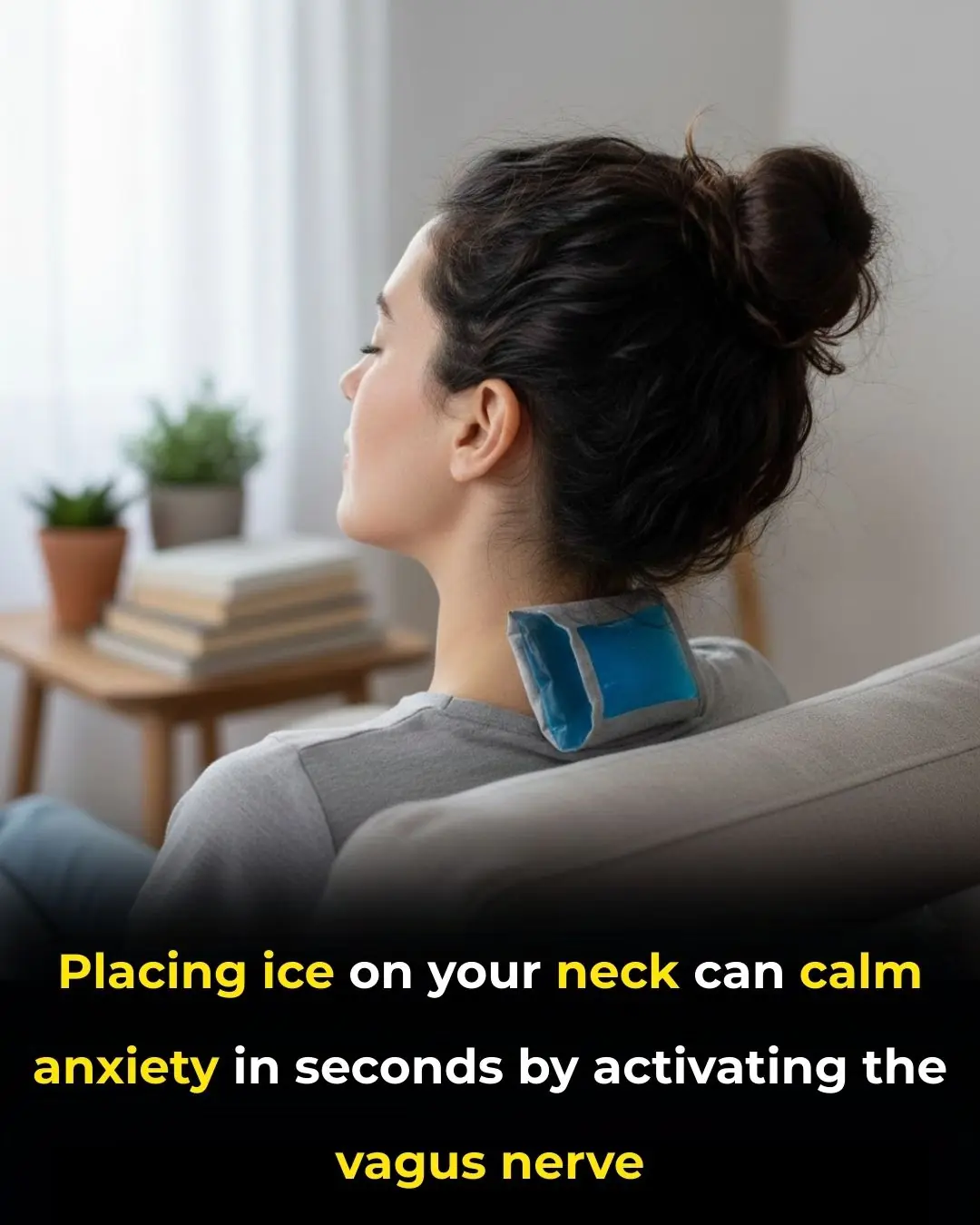
Feeling Anxious? You Might Not Need a Pill—Just an Ice Pack
If you're feeling anxious, you might be surprised to know that you don’t necessarily need medication to calm your nerves—sometimes, all it takes is an ice pack. Recent studies have shown that placing a cold compress or ice pack on the back of your neck can quickly reduce feelings of anxiety by stimulating the vagus nerve, which plays a vital role in controlling your body’s relaxation response.
The vagus nerve is a key component of the parasympathetic nervous system, the part of the nervous system responsible for slowing down the heart rate, calming the mind, and restoring balance to the body after a stressful event. When this nerve is activated by cold exposure—particularly around the neck and upper spine—it sends a signal to the brain to switch from the “fight or flight” response, which is triggered during stress, into a more relaxed state known as “rest and digest.”
This simple yet effective technique has already been implemented in various fields, including therapy, military training, and emergency medical settings, as a way to rapidly alleviate symptoms of panic, reduce cortisol levels, and restore a sense of control. In fact, many individuals report feeling an immediate difference within 30 to 60 seconds: their heart rate slows, their breathing becomes deeper, and their thoughts feel clearer.
One of the most appealing aspects of this method is that it’s completely safe, drug-free, and incredibly easy to do. To perform the technique, you only need to wrap a cold pack—though a bag of frozen vegetables will work just fine—in a cloth and apply it gently to the back of your neck for 30 to 90 seconds. The cold temperature works by triggering the vagus nerve, which leads to the relaxation response.
What makes this technique even more compelling is that it’s not just a passing trend—it’s rooted in neuroscience. Activating the vagus nerve with cold exposure can provide fast relief from a range of anxiety-inducing situations, whether you’re dealing with social anxiety, exam stress, or just an overwhelming moment.
In an era when mental health awareness is growing, non-invasive, accessible methods of stress reduction like this are becoming increasingly popular. Research has shown that cold exposure can have a significant impact on stress management and the regulation of the nervous system. According to a study published in Frontiers in Psychology, vagus nerve stimulation has been shown to help lower cortisol levels and promote relaxation (Kraus et al., 2020). The fact that this technique can be done with something as simple as an ice pack makes it an attractive option for anyone seeking relief without relying on medication.
In summary, managing your anxiety doesn’t always require willpower or pills—sometimes, a little cold exposure is all it takes to help your body and mind relax. Whether you’re facing social anxiety, stress before an important test, or simply feeling overwhelmed, using cold exposure on the back of your neck can provide immediate and effective relief.
Sources:
Kraus, T., et al. (2020). "Vagus nerve stimulation for anxiety disorders: A systematic review." Frontiers in Psychology.
Choi, Y., et al. (2021). "Cold exposure and vagus nerve activation: Neurobiological mechanisms and therapeutic potentials." Neuroscience Letters.