Why You Keep Waking Between 3 and 5 A.M
Facts 01/05/2026 14:32
Beneath the shimmering surface of our blue planet lies a realm that remains one of Earth’s least explored frontiers. Once we descend beyond the first 200 meters (656 feet), sunlight fades almost entirely—and we enter a world of astonishing mystery, biological marvels, and scientific promise. This deeper portion of the ocean, often referred to as the deep seabed, covers vast stretches of the planet that humans have barely begun to understand.
What follows is a journey downward—from the dim twilight zone, through the crushing darkness of the abyss, and finally into the almost unimaginable depth of the Mariana Trench.
Between 200 and 1,000 meters lies the mesopelagic zone, a region known as the twilight zone. Sunlight cannot penetrate deeply here, creating an environment washed in perpetual dusk. Yet life flourishes.
Bioluminescent organisms—jellyfish, lanternfish, comb jellies, deep-sea squid—emit their own ethereal glow. These flashes of blue, green, and violet form a living constellation of lights drifting through the dark. Many animals here migrate vertically each day, rising at night to feed and sinking by day to hide, performing the largest daily migration on Earth.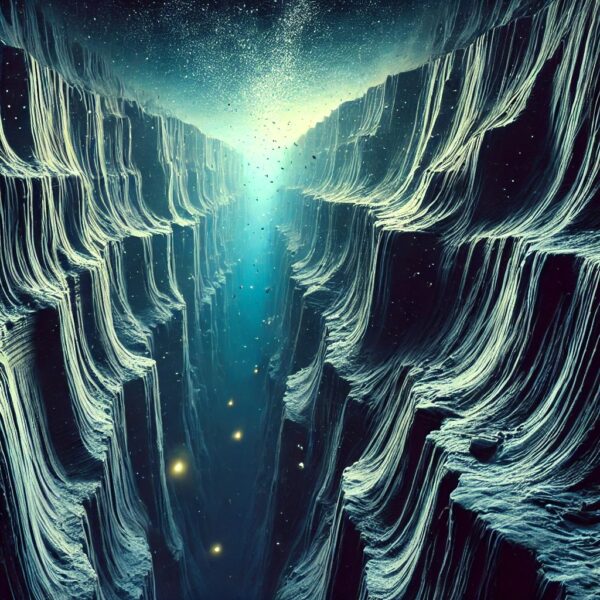
Descending further, we enter the bathypelagic zone, a world of complete darkness and unimaginable pressure—as heavy as 400 times atmospheric pressure at sea level.
Only highly specialized creatures survive here. Some have gelatinous bodies that resist crushing forces; others live extremely slow, conserving energy in an environment with little food. With no light, animals have evolved oversized eyes, heightened senses, or complete blindness.
At depths of 3,000 to 6,000 meters, we reach the abyssal plains, which stretch for thousands of kilometers across the ocean floor. These plains appear barren but host extraordinary life adapted to near-freezing temperatures, heavy pressure, and minimal nutrients.
Giant tubeworms, sea cucumbers, and deep-sea urchins populate hydrothermal vent communities, relying not on sunlight but chemosynthesis, where bacteria convert chemicals like hydrogen sulfide into energy. These ecosystems reveal how life can thrive without sunlight—an incredible clue to how life may exist on other planets.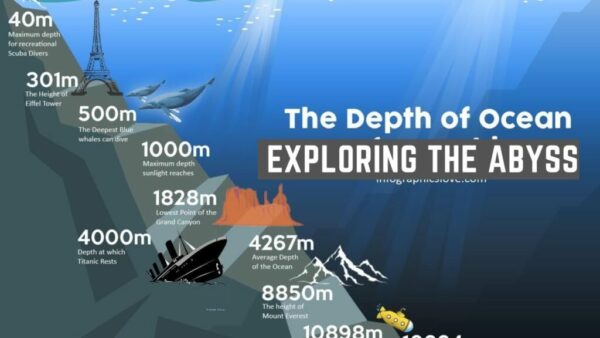
Our descent reaches its ultimate destination: the Mariana Trench, plunging nearly 11,000 meters (36,089 feet). If Mount Everest were placed inside, its peak would still be submerged.
This trench is more than a dramatic natural feature—it's a scientific treasure. Studying it helps researchers understand tectonic plate movement, earthquakes, and Earth's geological past. It also harbors some of the toughest organisms on the planet: microbes that survive crushing pressure, extreme cold, and complete darkness.
These extremophiles provide clues about the origins of life on Earth and fuel speculation about life on icy moons like Europa and Enceladus, where similar conditions might exist beneath surface oceans.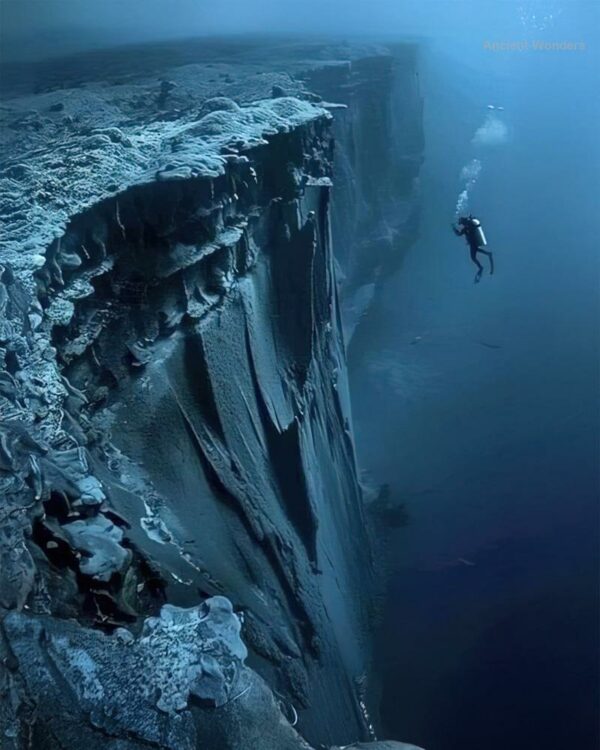
The deep ocean is more than an unexplored wilderness—it’s a key to our future.
Every expedition reveals new species, surprising adaptations, and insights into evolution and survival under extreme conditions.
Deep-sea pressures inspire breakthroughs in engineering and materials science, influencing submarine design, robotics, and even space exploration.
The seabed contains rare-earth metals vital for electronics and renewable energy. However, deep-sea mining poses ethical challenges, risking permanent damage to ecosystems we barely understand.
Deep waters store massive amounts of carbon and play a major role in regulating Earth’s climate—another reason why protecting them is essential.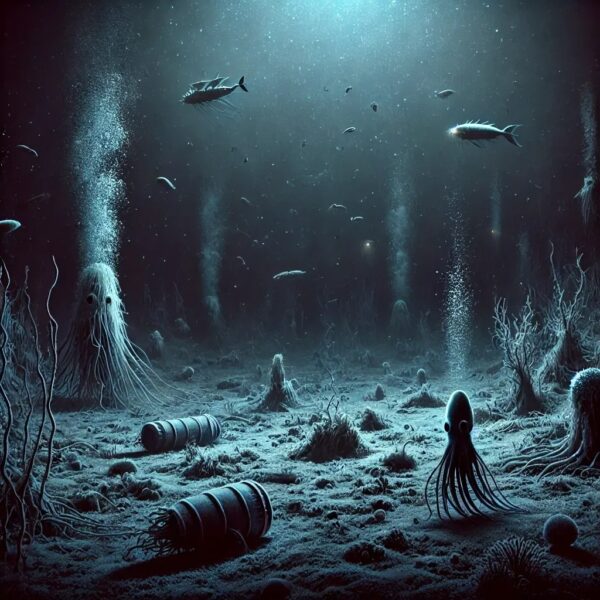
The deep seabed is one of Earth’s last frontiers—vast, beautiful, and filled with secrets that could reshape our understanding of life, our planet, and even the universe. As exploration advances, we must balance discovery with respect, ensuring that this fragile realm remains intact for future generations.
The ocean hides wonders beyond imagination. The deeper we go, the more we realize how little we truly know.