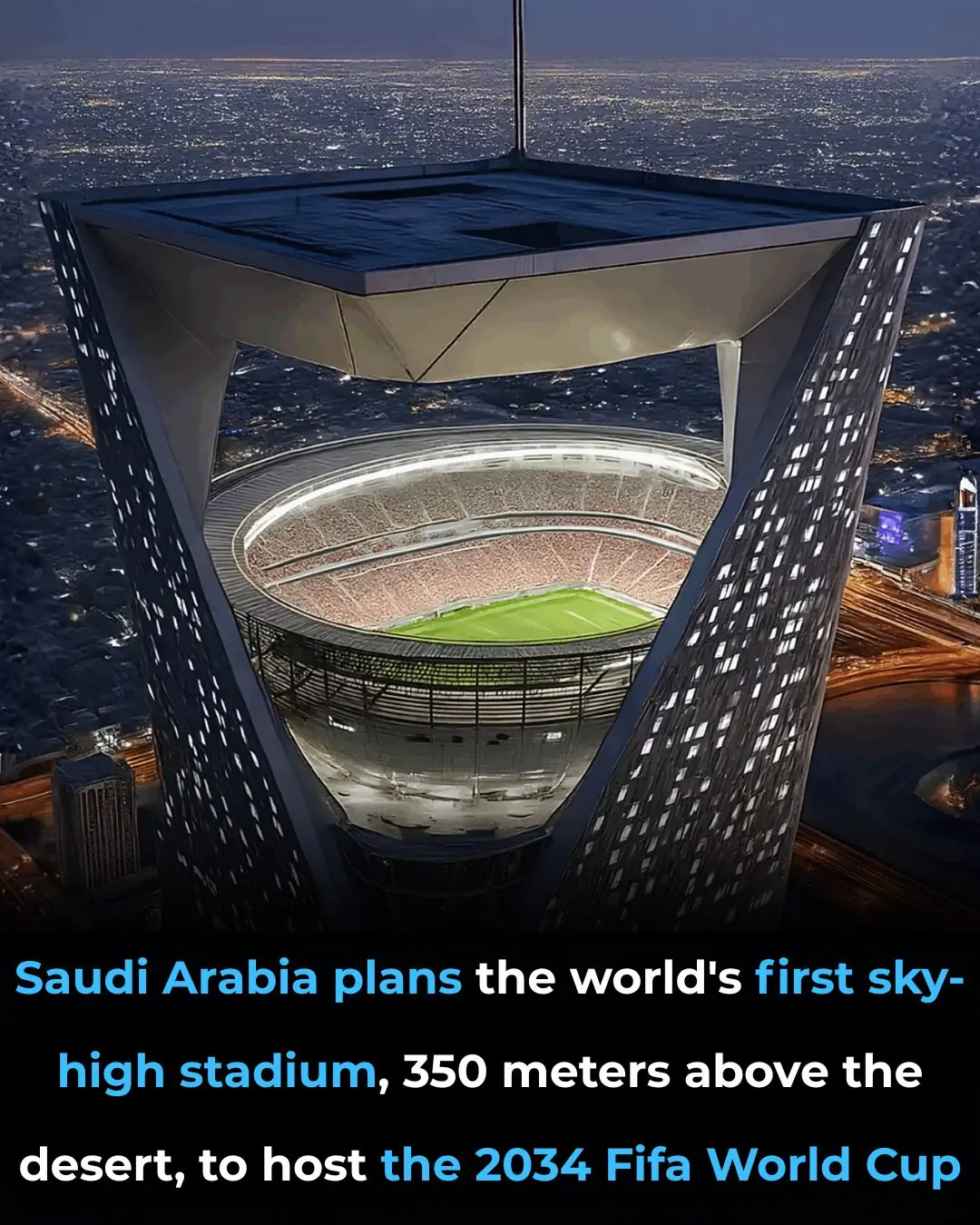
Saudi Arabia has recently revealed plans for the NEOM Stadium, a groundbreaking sports venue that aims to be the world's first "sky stadium." Suspended 350 meters (1,150 feet) above the desert landscape within NEOM's visionary smart city, The Line, this futuristic arena promises to revolutionize sports architecture and urban design. The stadium will have the capacity to seat 46,000 spectators and is scheduled to be a key venue for the 2034 FIFA World Cup, marking a significant milestone in the kingdom's efforts to modernize and diversify its economy through major infrastructure projects.
What sets the NEOM Stadium apart from conventional sports arenas is its ambitious energy model. Designed to be powered entirely by renewable sources, the stadium will rely on solar and wind energy, aligning with Saudi Arabia's broader commitment to sustainable development. This innovative energy solution underscores the kingdom’s growing focus on eco-friendly and cutting-edge technology, aiming to minimize the carbon footprint of major events and infrastructures. The stadium’s integration into NEOM, a smart city designed to be powered by clean energy, further exemplifies the country’s drive to shape a new era of sustainable urban living.
The construction of the NEOM Stadium is set to begin in 2027, with completion expected by 2032. This ambitious timeline is part of a broader effort to have the stadium ready in time for the 2034 FIFA World Cup. The Fédération Internationale de Football Association (FIFA) has already given its preliminary support for the project, recognizing its potential to set new standards for sustainable sports architecture. FIFA officials have expressed enthusiasm about the prospect of having such an innovative structure as part of the World Cup’s future venues, and its role in demonstrating how sports and sustainability can go hand in hand.
However, the project is not without its challenges. The construction of a stadium suspended high above the desert presents significant engineering hurdles, particularly in terms of structural integrity and safety. The height at which the stadium will be built introduces concerns about the accessibility of the venue, especially in emergency situations, as well as the stability of such a massive structure in the face of extreme weather conditions. These challenges are compounded by the need to ensure that the stadium will be accessible to the general public, which includes addressing transportation and logistical concerns related to its location in the heart of a desert environment.
In addition to engineering challenges, there are concerns about the broader timeline of the NEOM project itself. While the vision for the city and its infrastructure is grand, progress in certain areas has been slower than initially expected. The original completion target for NEOM was 2039, but delays have already pushed back parts of the development, including the construction of essential utilities and transportation networks. Despite these setbacks, the development of NEOM Stadium is being prioritized, with construction fast-tracked to ensure it meets the tight schedule for the 2034 World Cup.
The announcement of the NEOM Stadium has sparked mixed reactions online. Many have expressed awe at the innovative design and the ambition behind the project, seeing it as a bold step forward in both sports and urban development. Others, however, have raised doubts about the feasibility of such a high-altitude structure, questioning its practicality and the potential risks involved in building such an extraordinary venue. Critics have pointed out that while the concept is undoubtedly ambitious, there may be unforeseen challenges in terms of both construction and long-term sustainability.
Despite the uncertainties surrounding its construction and eventual operation, the NEOM Stadium stands as a symbol of Saudi Arabia’s aspirations to become a global leader in both sports and innovation. Whether it will meet its goals and deliver on its promises remains to be seen, but its ambitious design and commitment to sustainability have already placed it at the forefront of international discussions about the future of sports venues and smart cities.
Sources:
-
Saudi Vision 2030
-
FIFA’s Environmental Sustainability Initiatives
-
NEOM official website
-
The National News (UAE)