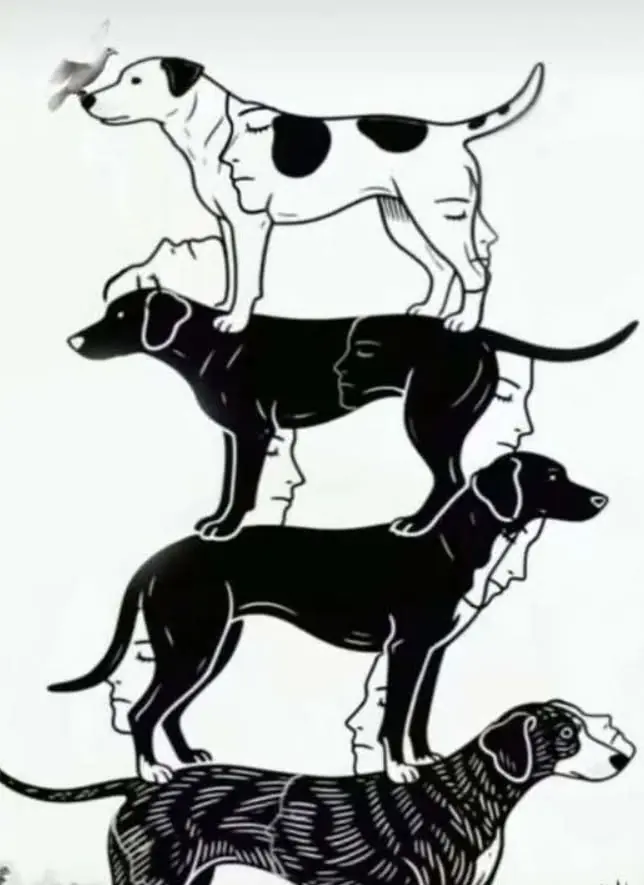

People Are Confused About What This Might Be
Facts 24/06/2026 20:57
Ancient DNA Study Reveals Early Europeans Had Dark Skin and Eyes Until Recently
A groundbreaking study of ancient DNA has upended previous assumptions about the appearance of early Europeans, revealing that most of them had dark skin, eyes, and hair until surprisingly recent times. This discovery sheds light on the evolutionary journey of human pigmentation, offering fresh insights into how and when lighter skin traits became prevalent in Europe.
The research, which involved the analysis of 348 ancient genomes from 34 countries across Europe and Asia, provided a comprehensive look at how human pigmentation evolved over the past 45,000 years. The study's findings show that dark pigmentation, particularly darker skin, remained dominant in European populations well into the Iron Age. Lighter skin traits, which are now characteristic of many Europeans, only began to emerge around 3,000 years ago, much later than previously believed.
Homo sapiens, the first modern humans, migrated into Europe from Africa approximately 50,000 to 60,000 years ago. These early humans carried the genetic traits of their African ancestors, including dark skin pigmentation, which was well-suited to the sunny environments of Africa. As humans moved to Europe, however, the lower levels of sunlight, especially in northern latitudes, presented a challenge in terms of vitamin D synthesis. Over time, lighter skin evolved as a genetic adaptation to help humans better absorb sunlight and produce vitamin D in these less sunny regions.
The study also examined the evolution of other physical traits, such as eye color. It was found that lighter eye colors, including blue eyes, likely spread through sexual selection or possibly even chance. Interestingly, a 17,000-year-old child’s remains were discovered with blue eyes but dark skin, demonstrating that early Europeans exhibited a much greater genetic diversity than previously assumed. This finding underscores the complexity of human evolution, highlighting that pigmentation and other physical traits did not evolve in a simple, linear fashion.
The results of this study challenge long-held ideas about the appearance of early Europeans and offer new perspectives on the history of human adaptation. For years, it was assumed that lighter skin became common in Europe much earlier, but this research shows that the process was gradual and influenced by a variety of environmental and genetic factors.
One of the most significant revelations from this research is the reminder that human evolution is a complex and nonlinear process. The genetic diversity observed among early Europeans, including the coexistence of dark skin with blue eyes, suggests that human populations were adapting to their environments in diverse ways and that evolutionary changes occurred over a much longer timeline than previously thought.
The implications of these findings extend beyond our understanding of human evolution. By studying ancient genomes, scientists gain insights into how genetic traits are passed down, how they spread across different populations, and how human migration patterns shaped the genetic makeup of modern populations. These insights not only help us better understand the past but also inform ongoing research into how genetic traits, including those related to health and disease, are inherited and evolve over time.
The study has also sparked important discussions about the role of genetic adaptation in human evolution. As researchers continue to investigate the factors that influenced the development of lighter skin in Europe, new questions emerge about the mechanisms of human adaptation to different environments. For instance, while sunlight and vitamin D production played a major role, researchers are also exploring other factors, such as dietary changes and social structures, that could have influenced the evolution of pigmentation.
Furthermore, this research adds to a growing body of evidence showing that human evolution is a highly dynamic process. As we continue to uncover more about the genetic makeup of ancient humans, we gain a clearer picture of how populations migrated, adapted, and evolved over tens of thousands of years. This knowledge is vital for understanding not only our history but also the future of human genetics and the ways in which our genes may continue to evolve in response to environmental changes.
Sources:
Nature – "The evolution of human pigmentation in Europe" https://www.nature.com/articles/s41586-020-2873-0
Science – "Ancient DNA reveals complex human history in Europe" https://www.sciencemag.org/news/2020/03/ancient-dna-reveals-complex-human-history-europe
American Journal of Human Genetics – "Genetic adaptation of early Europeans" https://www.ajhg.org