Ants, Cockroaches, and Mosquitoes Will Soon "Move Out" Thanks to These Simple Natural Tricks
Tips 29/07/2026 09:06
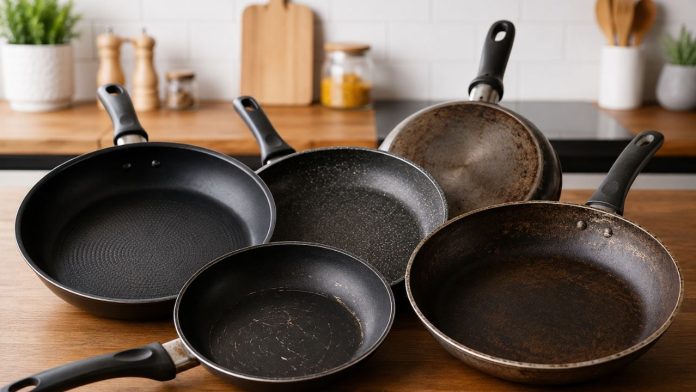
A nonstick pan makes everyday cooking easier, but it isn't designed to last forever. As it ages, its performance gradually declines, and continuing to use a worn-out pan can affect your cooking results, make cleanup more difficult, and even create safety concerns. Here are the key signs that it's time to replace your nonstick pan.
One of the clearest warning signs is a damaged cooking surface. If you notice deep scratches, peeling coating, or uneven patches where the nonstick layer has worn away, your pan has likely reached the end of its useful life.
This type of damage commonly occurs after years of use or from cooking with metal utensils. Once the coating deteriorates, food sticks more easily, forcing you to use more oil and reducing the benefits of a nonstick pan.
A quality nonstick pan should allow foods like eggs, fish, and pancakes to release easily. If food consistently sticks even when you're cooking at the proper temperature and using the same amount of oil, the coating has probably worn out.
While extra oil or more careful cleaning may seem like a solution, these fixes won't restore the original nonstick performance. Persistent sticking is a strong sign that it's time for a replacement.
Repeated exposure to high heat—especially heating an empty pan—can cause the base to warp.
To check, place the pan on a flat countertop or stovetop. If it rocks, spins unevenly, or doesn't sit flat, the bottom has likely become distorted.
A warped pan distributes heat unevenly, creating hot spots that can burn food while leaving other areas undercooked.
Over time, you may notice dark patches, stubborn burn marks, or discoloration that doesn't disappear with normal cleaning.
These changes often indicate long-term heat damage. Besides affecting the pan's appearance, they can reduce both heat distribution and nonstick performance.
If your food starts cooking unevenly or burns more easily, replacing the pan will help restore more consistent cooking results.
The cooking surface isn't the only part that deserves attention. Check the handle and the overall structure of the pan as well.
Loose handles, rusty rivets, cracks, or other structural damage can make the pan unsafe to use. A weak handle increases the risk of dropping a hot pan, potentially causing burns or kitchen accidents.
In most cases, replacing a heavily damaged pan is safer and more practical than attempting repairs.
The lifespan of a nonstick pan depends on its quality, how often it's used, and how well it's maintained. However, no nonstick pan is designed to last indefinitely.
If you've been using the same pan for several years and it's showing multiple signs of wear, it's worth considering a replacement—even if it's still technically usable.
Waiting until a pan completely fails often means you've already been cooking with reduced performance for quite some time.
A nonstick pan is one of the most frequently used tools in the kitchen, but it won't last forever. Peeling coating, constant sticking, a warped base, permanent discoloration, or a loose handle are all warning signs that shouldn't be ignored.
Replacing your nonstick pan at the right time not only improves your cooking experience but also helps keep your kitchen safer and your meals consistently delicious.