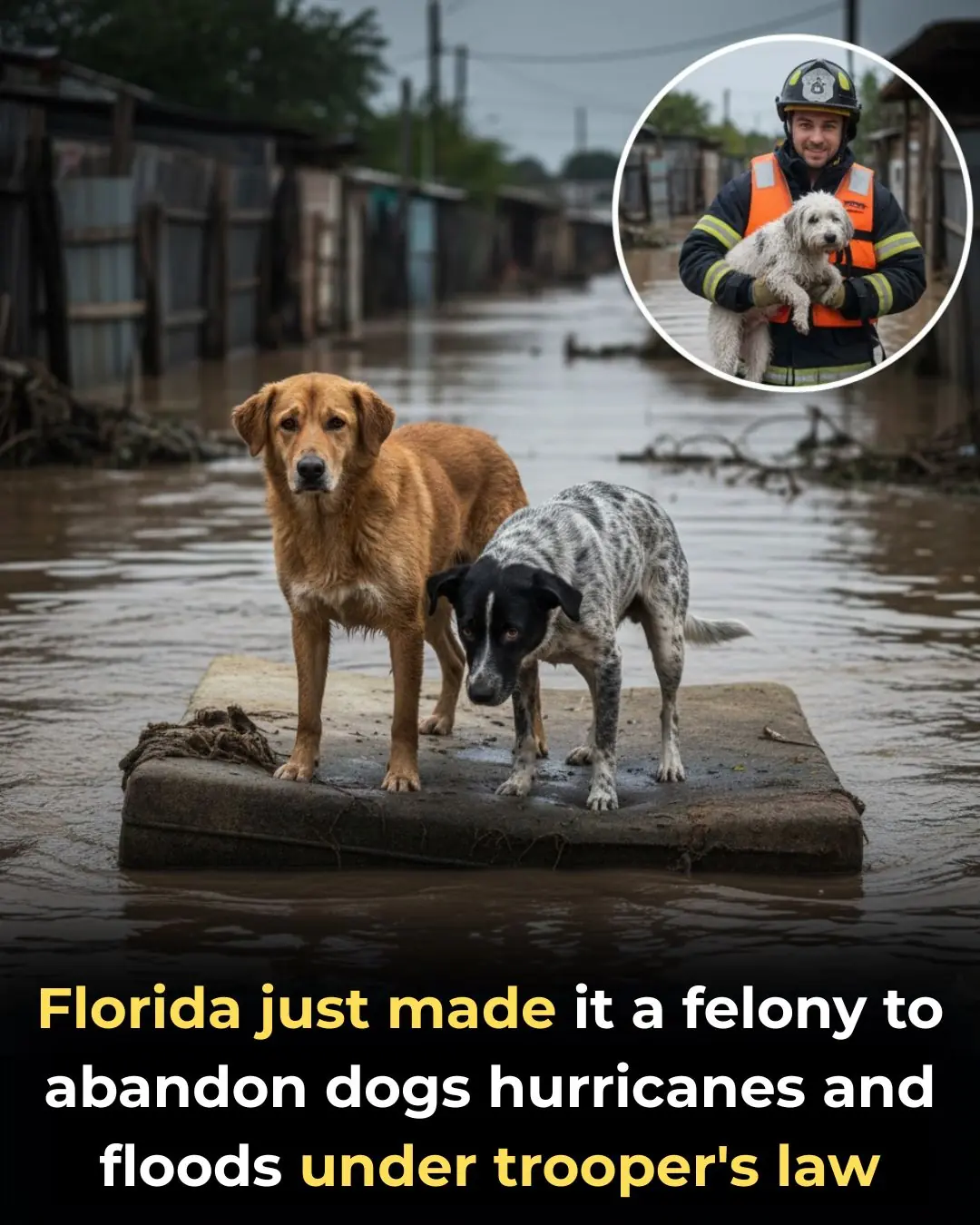
Florida Makes It a Felony to Abandon Dogs During Hurricanes Under Trooper’s Law
Life stories 06/01/2026 19:45
In the bustling coastal markets of Papua New Guinea, marine life is often viewed strictly through the lens of commerce and sustenance. However, for Arron Culling, a New Zealander working in the region, these markets became the front lines of a personal mission to save an ancient species. Culling has gained international acclaim for a simple, recurring act of heroism: purchasing live sea turtles destined for the dinner table and returning them to the sanctuary of the open ocean.
Sea turtles have inhabited our oceans for over 100 million years, yet today, nearly all species are classified as endangered. In many parts of the Coral Triangle—an area encompassing Papua New Guinea—sea turtles are legally or illegally harvested for their meat and shells.
According to the World Wildlife Fund (WWF), the illegal wildlife trade is one of the greatest threats to marine biodiversity. While some local communities rely on turtles for traditional subsistence, the commercialization of turtle meat in local markets has pushed populations to a breaking point. Arron Culling’s intervention highlights a stark economic reality: in these markets, a creature’s life can often be bought for as little as $50 USD.
Culling’s story captured the world’s attention when he shared photos of his "shopping trips" on social media. Unlike most market-goers, Culling and his co-worker weren't looking for a meal; they were looking for survivors. After paying the market price for two large sea turtles, Culling drove them to a secluded beach, far from the reach of nets, and filmed them as they scrambled across the sand back into the waves.
Culling reportedly released over a dozen turtles using this "buy-and-release" method. While critics sometimes argue that purchasing animals from markets can inadvertently fund further poaching, conservationists note that such viral stories play a crucial role in "social signaling." By assigning a higher value to a living turtle than a dead one, Culling’s actions challenge the normalization of consuming endangered species.
The significance of releasing even a single adult turtle is immense. According to The Sea Turtle Conservancy, only about 1 in 1,000 sea turtle hatchlings survive to adulthood. An adult turtle that has already beaten those staggering odds is a "biological goldmine" for the species, capable of laying hundreds of eggs over several decades to help stabilize dwindling populations.
In Papua New Guinea, the species most commonly found in these markets include the Green Turtle and the Hawksbill. Both play vital roles in marine ecosystems; Green turtles maintain healthy seagrass beds, while Hawksbills help manage coral reef health by consuming sponges that would otherwise outcompete coral.
Arron Culling’s gesture has sparked a broader conversation about how individuals can contribute to wildlife protection. His story emphasizes that you don't need to be a marine biologist to make a difference. Advocacy can take many forms:
Supporting Local Legislation: Pushing for stricter enforcement of CITES (Convention on International Trade in Endangered Species).
Sustainable Tourism: Choosing travel operators that protect rather than exploit local wildlife.
Direct Action: Supporting organizations that provide alternative livelihoods for coastal communities so they no longer rely on poaching.
As those turtles disappeared back into the blue of the Pacific, they took with them a message of hope. Arron Culling reminds us that while the global extinction crisis is vast, the life of a single individual—be it a human or a turtle—is always worth the investment.
| Species | Status | Key Role in Ecosystem |
| Green Turtle | Endangered | Mows seagrass, keeping it healthy for other fish. |
| Hawksbill | Critically Endangered | Protects coral reefs by eating sponges. |
| Leatherback | Vulnerable | Controls jellyfish populations in the open ocean. |
| Source | IUCN Red List / WWF | Marine Ecology Progress Series |