How to Take a Loop of the Entire U.S. by Train
Facts 08/12/2025 23:08
Long before forests spread across the Earth, the planet was dominated not by towering trees but by colossal fungi. Over a billion years ago, vast landscapes were filled with three-metre-tall fungus columns, long before plants emerged as humble shrubs. Fast-forward to today, and fungi have once again stepped into the spotlight—this time as unexpected heroes in the global battle against plastic pollution.
One of the most remarkable discoveries of the last decade is a mushroom capable of digesting plastic, revealing a hidden potential within the fungal kingdom that could reshape how we manage waste.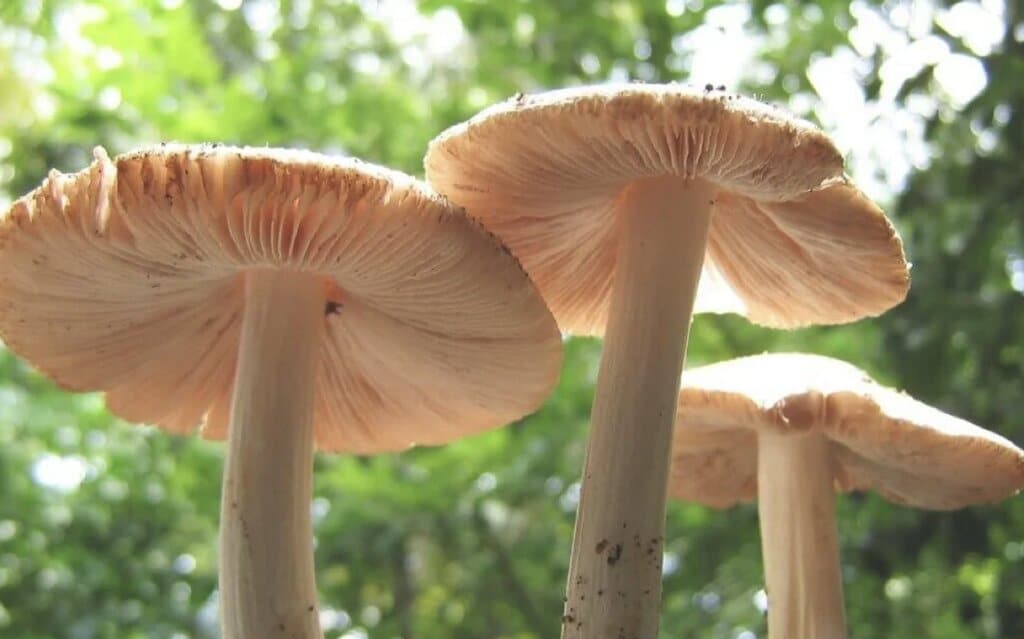
Plastic, once celebrated as the miracle material of the 20th century, has become one of the planet’s greatest threats—accumulating in landfills, oceans, and the food chain. So when Yale University students uncovered Pestalotiopsis fungi in the Ecuadorian Amazon in 2011, they stumbled upon a breakthrough: a mushroom that can survive on polyurethane as its sole carbon source—even in oxygen-poor places like landfills.
Even more surprising? Once the fungus completes its plastic feast, it produces a soft, mushroom-like byproduct that is safe to touch and smells faintly of licorice.
Austrian designer Katharina Unger later collaborated with scientists at Utrecht University to create the Fungi Mutarium—a system that feeds sterilized plastic into agar pods, where the fungus gradually digests the waste. After a few months, what remains is a puffy cup-shaped edible fungi structure. Researchers envision households and community centres eventually using miniature versions to recycle plastic locally rather than relying solely on industrial systems.
A mushroom is only the tip of the organism. Beneath the soil lies its true body—mycelium, a dense, branching root network that can reach for kilometres. The world’s largest living organism is actually a mycelial web in Oregon, stretching 8.8 km² and estimated at 2,400 years old.
Mycelium forms the foundation of entire ecosystems, connecting up to 90% of all plant species through nutrient-sharing networks popularly dubbed the “wood-wide web.” These fungal threads transport water, minerals, and chemical signals, while plants send carbohydrates back in return. This underground partnership has shaped ecosystems for millions of years—and now humans are finally learning to harness it.
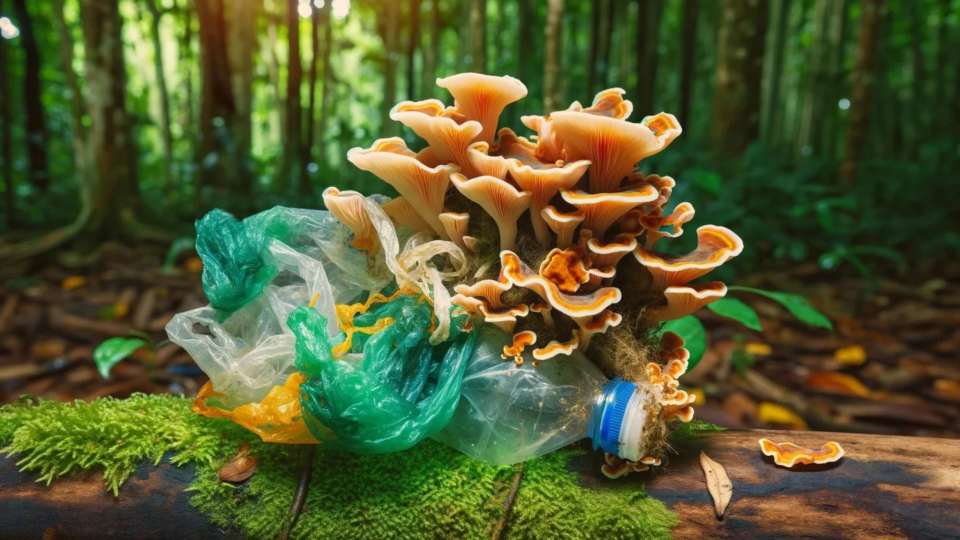
The idea that mushrooms might replace plastics sounds futuristic, but designers and engineers are already making it reality.
In 2021, Stella McCartney unveiled a mycelium-based leather alternative in Paris—soft, durable, and fully biodegradable. Leading brands like Adidas, Hermès, and Lululemon have announced their own mycelium-based products, marking a shift away from petroleum-derived "pleather" toward materials grown sustainably.
In Seattle, innovators Eben Bayer and Gavin McIntyre have pioneered mushroom-grown materials through their company Evocative Design. Their creations include:
Fully biodegradable flip-flops
Greensulate, a fire-resistant insulation board
Mycelium composites that grow into specific shapes in darkness, requiring minimal energy
Their “programmable biology” approach lets mycelium grow into moulds for furniture, packaging, foam alternatives, and even plant-based meats.
Mushrooms aren’t just tools—they’re powerful environmental allies.
Irish botanist Brian Murphy uncovered how endophytes (fungi living within plant tissues) enhance crops’ resistance to drought and disease, potentially eliminating harmful chemical pesticides. These fungi have helped plants survive in extraordinary places—from Mount Everest to the Athabasca oil sands.
Mycology pioneer Paul Stamets has documented extraordinary fungi that:
Break down diesel and petroleum waste (97% reduction in two months)
Absorb radioactive materials, thriving even at Chernobyl
Digest oil in seawater using biodegradable mycelium-filled booms
Stamets describes mycelium as “the neurological network of nature”—a living intelligence shaping ecosystems and healing damaged environments.
The discovery of Pestalotiopsis microspora highlights the difficult choices faced by Amazonian nations like Ecuador. Beneath one of the most biodiverse regions on Earth lies nearly a billion barrels of oil. The question: destroy irreplaceable ecosystems for economic survival—or protect the forest and remain in poverty?
In 2007, President Rafael Correa launched a bold initiative: wealthy nations would pay Ecuador to leave the Yasuni National Park untouched. He sought $3.6 billion—half the oil’s projected value. But after raising only $13 million, the plan collapsed, and oil interests moved forward.
This conflict split communities—even families. In the village of Sana Isla, sisters Blanca and Innes Tapuy became symbols of this divide: one willing to die to protect the forest, the other arguing that petrodollars were essential for their people’s future.
Ecuador’s history only deepens the pain. Texaco (later acquired by Chevron) extracted 1.5 billion barrels of oil from the region, leaving behind what many call an “Amazon Chernobyl”—toxic pits, polluted rivers, destroyed farmland, and a $9.5 billion court judgment that Chevron continues to fight aggressively.
Amid this turmoil, the Amazon’s plastic-eating mushroom stands as both a promise and a warning. A treasure of immense global value grows in a forest continually threatened by the very industries contributing to plastic pollution.
From ancient fungal giants to modern plastic-eaters, mushrooms have shaped Earth for over a billion years—and they may shape our future too. Whether as biodegradable materials, environmental repair tools, or a beacon of hope in the fight against plastic, fungi are emerging as one of nature’s most transformative forces. The challenge now is ensuring the ecosystems that foster these wonders survive long enough for humanity to benefit from them.