Jessica Cox: The World’s First Licensed Armless Pilot and Her Journey to Inspire the Impossible
Facts 12/12/2025 00:14
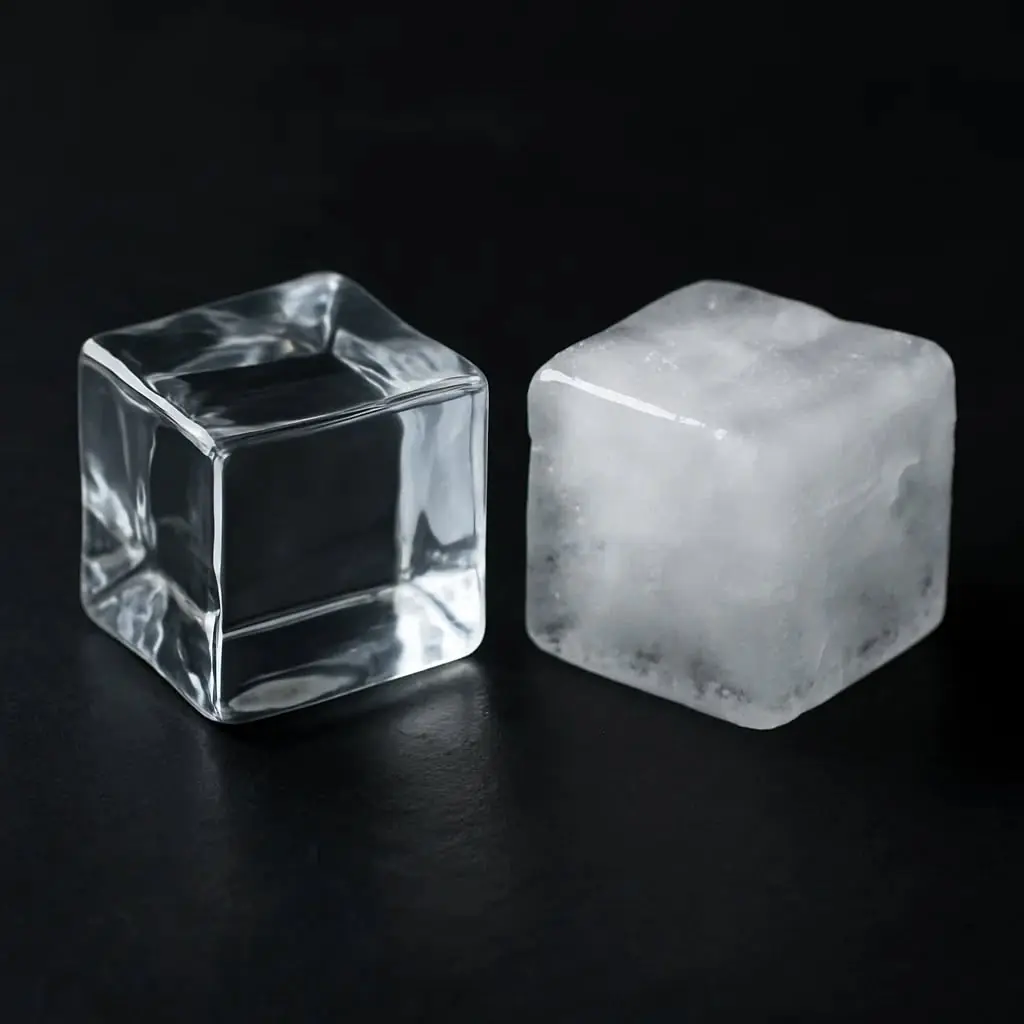
If you’ve ever opened your freezer and noticed that some ice cubes look beautifully transparent while others appear cloudy and white, you’re witnessing a simple but fascinating bit of science. The difference doesn’t come from the freezer itself—it comes from what’s inside the water before it turns to ice.
Clear ice typically forms when the water used has been boiled or purified. Boiling water drives out dissolved gases such as oxygen and nitrogen, which are naturally present in tap water. These gases seem harmless while the water is still liquid, but they play a major role when freezing begins. Without the tiny air bubbles created by trapped gases, the water can solidify in a more uniform, orderly structure. This results in ice that is smooth, glass-like, and highly transparent because light passes straight through rather than scattering in different directions.
Tap water, on the other hand, contains both dissolved gases and a range of minerals and microscopic impurities. As freezing occurs, the pure water molecules solidify first, pushing the remaining gases, minerals, and particles toward the center of the cube. This creates a cluster of trapped air pockets and tiny fractures. These irregularities refract and scatter light, giving the ice its cloudy, milky appearance. Even though this cloudiness is harmless, it highlights how sensitive the freezing process is to the smallest impurities.
This difference explains why upscale bars, restaurants, and professional photographers often rely on boiled, distilled, or specially filtered water to create crystal-clear ice. Clear ice not only looks more attractive but also melts more slowly, allowing cocktails to stay chilled without diluting too quickly. Many enthusiasts even use directional freezing methods—forcing ice to freeze from one direction—to mimic the clarity achieved in commercial ice machines.
With a little attention and a simple extra step, you can produce the same high-quality clear ice at home. Start by boiling your water, letting it cool, and then freezing it in well-insulated molds. By removing dissolved gases and allowing the ice to freeze slowly and evenly, you can transform ordinary tap water into striking, glass-like ice cubes. It’s a small scientific tweak that makes a surprisingly big visual difference—perfect for elevating your drinks or simply satisfying your curiosity about how everyday materials behave.