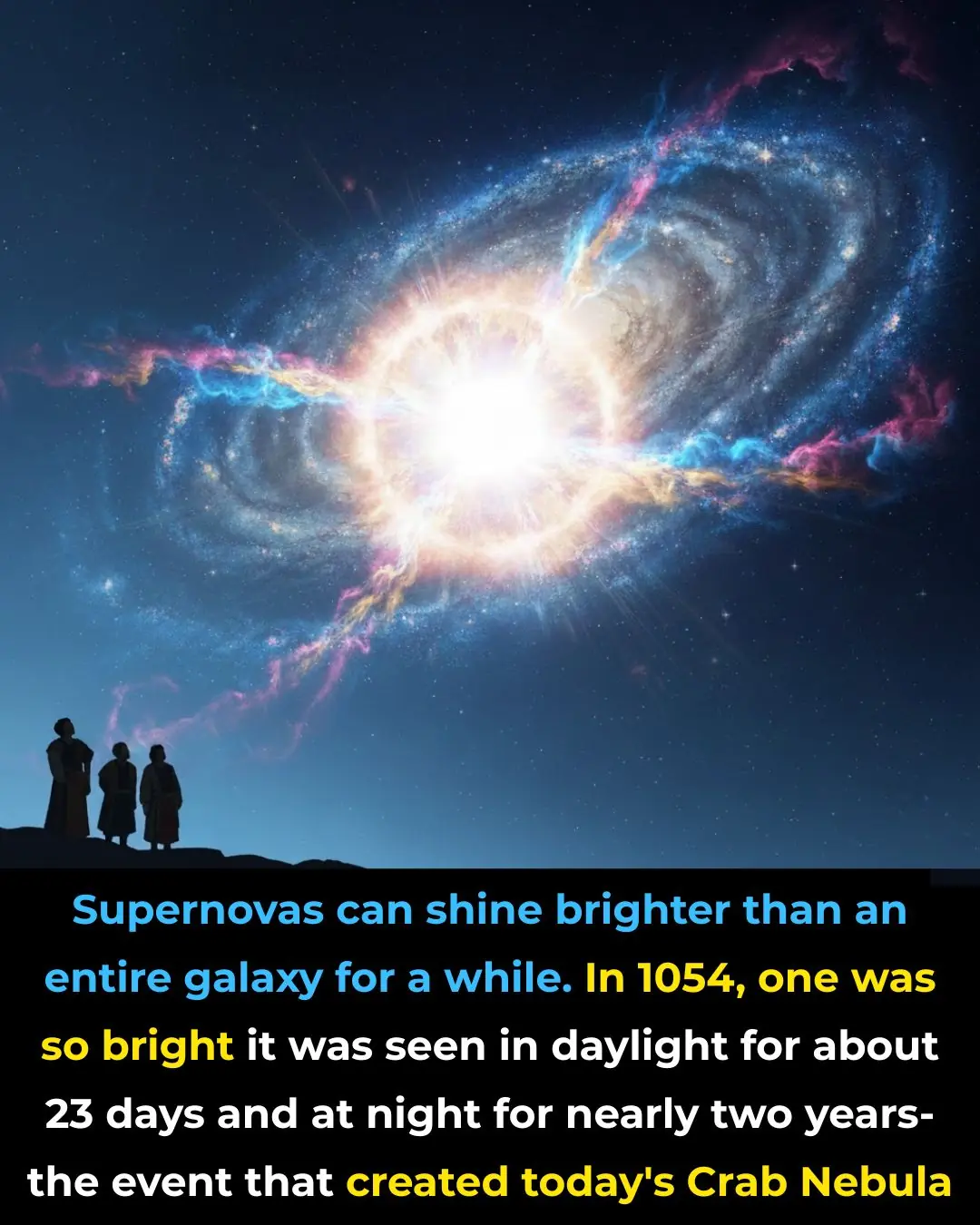
In the year 1054, astronomers across various parts of the world, including China, Japan, and the Middle East, were witnesses to an extraordinary event — a celestial phenomenon that would captivate the imagination of humanity for centuries to come. A star, brighter than anything seen before, suddenly appeared in the night sky. This star was so intense in its brilliance that it could be observed even during the day, remaining visible for an astounding 23 days and continuing to shine at night for almost two years.
What these astronomers observed was nothing short of an astronomical marvel: the explosive death of a massive star, known as a supernova. This violent event unleashed an amount of energy so immense that it briefly outshone the entire galaxy, becoming one of the brightest objects in the sky during that time. This supernova was designated as SN 1054, and its discovery marked a key moment in the history of astronomy.
Fast forward nearly a millennium, and the legacy of this cosmic explosion still endures in the form of the Crab Nebula. The remnants of the supernova continue to expand and evolve in the depths of space, forming one of the most studied and fascinating objects in the universe. The Crab Nebula, a pulsar wind nebula, is a region of space where high-energy particles are expelled from the rapidly rotating neutron star at its center. These particles, along with the emission of radiation across the electromagnetic spectrum, make the Crab Nebula a beacon of scientific exploration.
The Crab Nebula’s composition and the phenomena surrounding it provide valuable insights into the life cycle of stars, the nature of supernova explosions, and the intricate processes that drive the evolution of such celestial bodies. Researchers from institutions like NASA and the European Space Agency (ESA) continue to monitor the nebula, using advanced telescopes and instruments to study its intricate details and to enhance our understanding of the universe.
The supernova of 1054 and the formation of the Crab Nebula serve as a breathtaking reminder of the profound and often paradoxical nature of the cosmos. Even in the cataclysmic destruction of a dying star, the universe has the power to create something truly magnificent and enduring. The nebula, with its stunning colors and intricate structures, is a testament to the incredible forces that shape the universe, and it stands as a lasting symbol of both the destructive and creative aspects of the cosmos.
Today, the Crab Nebula remains an awe-inspiring object for astronomers and stargazers alike, offering a glimpse into the complexities of space, time, and the life cycles of stars. It underscores the universe’s ability to generate awe-inspiring beauty even from the most violent and destructive events. As we continue to explore the far reaches of the universe, the Crab Nebula stands as a testament to the enduring mysteries and wonders that await discovery.
Sources:
-
NASA, "The Crab Nebula," https://www.nasa.gov/mission_pages/spitzer/news/crab-nebula.html
-
European Space Agency (ESA), "The Crab Nebula," https://www.esa.int/Science_Exploration/Space_Science/Crab_Nebula
-
Hubble Space Telescope, "Crab Nebula: A Stellar Remnant," https://hubblesite.org/contents/news-releases/2010/news-2010-42.html