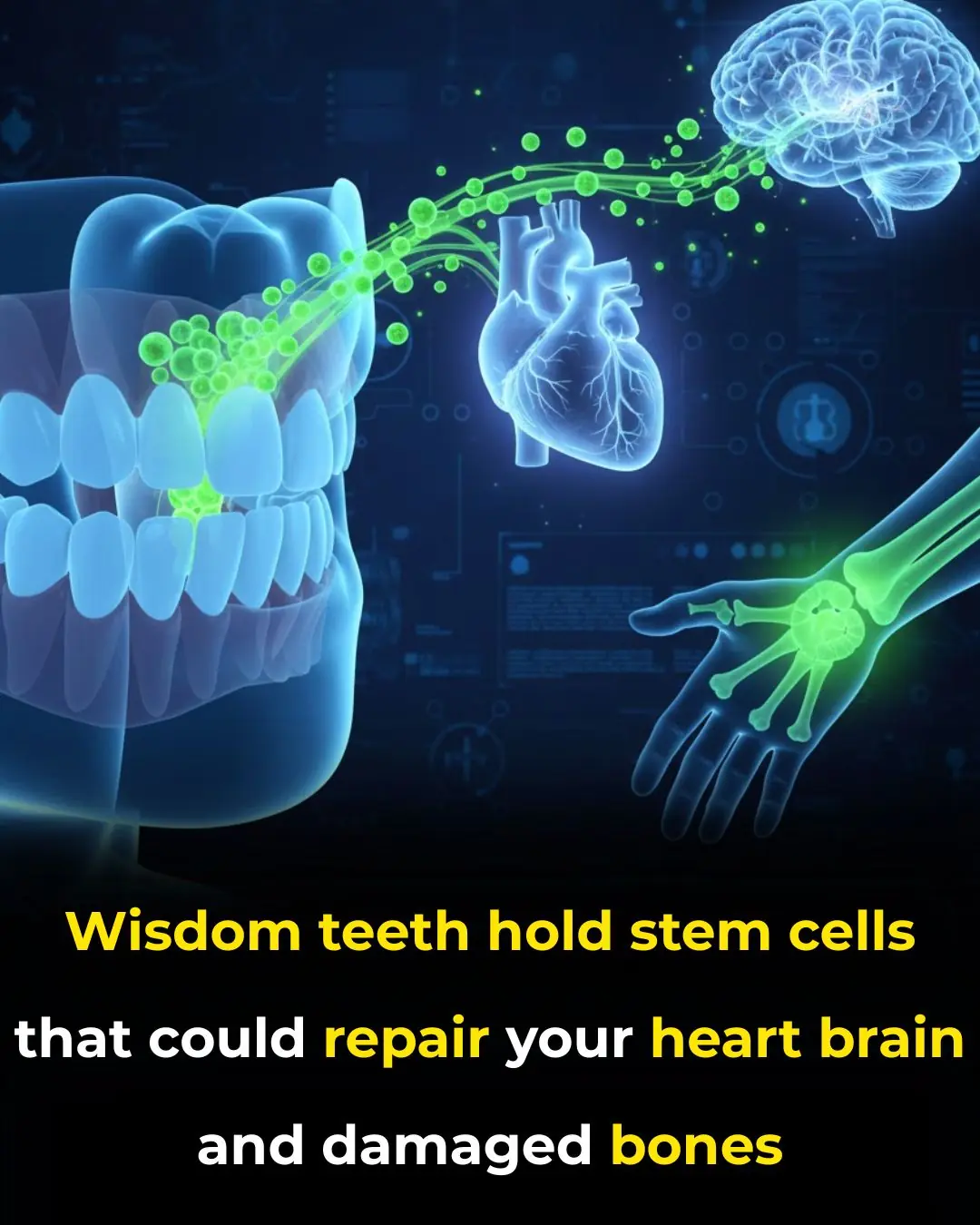
Scientists have recently made a groundbreaking discovery suggesting that the wisdom teeth many people casually discard could hold the key to unlocking powerful new treatments for a range of medical conditions. Within these often-dismissed teeth lies a treasure trove of stem cells that have the potential to regenerate tissues in vital organs such as the heart, brain, and bones. This exciting finding could pave the way for treatments capable of restoring organs damaged by injury, disease, or aging.
Researchers have identified that the dental pulp found inside wisdom teeth contains mesenchymal stem cells, a type of stem cell that is also present in bone marrow. These mesenchymal stem cells have the remarkable ability to transform into a variety of tissue types, including bone, muscle, cartilage, and even nerve cells. In a series of laboratory studies, scientists were able to harness these stem cells to repair bone fractures, regenerate heart tissue after cardiac damage, and even restore neuronal function in brain injury models. This breakthrough shows great promise for the future of regenerative medicine, particularly in the realm of repairing tissue damage.
What makes this discovery even more groundbreaking is the fact that harvesting stem cells from wisdom teeth is far more accessible than traditional bone marrow extraction. Bone marrow extraction is a highly invasive and painful procedure, but harvesting stem cells from wisdom teeth is simple, safe, and non-invasive. Many dental clinics around the world have begun collaborating with biobanks to preserve these teeth, allowing individuals to store their stem cells for potential future use in medical treatments. This makes it easier for people to potentially tap into their own regenerative cells for personalized healing treatments down the line.
This new development could revolutionize the field of regenerative medicine by turning what is typically seen as a routine dental procedure into a promising avenue for long-term health benefits. The implications are immense—imagine a future where heart damage from a heart attack can be repaired using stem cells from your own wisdom teeth, or where bone loss from osteoporosis could be reversed, or even where treatments for neurodegenerative diseases like Alzheimer's or Parkinson's could be based on stem cells taken from the patient's own body. This concept of using a person's own cells to heal themselves is not just a futuristic dream, but an emerging reality that could drastically improve the quality of life for countless individuals.
This discovery also opens up possibilities for more accessible and affordable medical treatments, as storing and using wisdom teeth for stem cell therapy could become a common practice. Researchers are continuing to explore the full potential of these cells, and while there are still many challenges to overcome, the findings so far are promising.
The next time your dentist discusses the need to remove your wisdom teeth, it might be worth considering the potential benefits of saving them. What many people once considered a waste could hold the future of medicine within its roots—the power to heal the human body, one cell at a time.
Sources:
-
The National Institute of Dental and Craniofacial Research (NIDCR), Mesenchymal Stem Cells: Potential for Regenerative Medicine, 2023.
-
Journal of Regenerative Medicine, Stem Cells in Dental Pulp and Their Potential for Therapy, 2024.