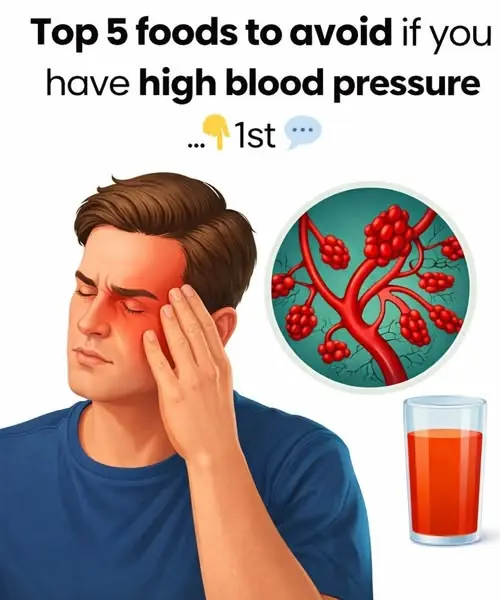
Foods That Can Quietly Raise Your Blood Pressure
Health 24/04/2026 21:07
Atrial fibrillation (AFib) is the most common heart rhythm disorder globally. It occurs when the upper chambers of the heart beat irregularly and rapidly, disrupting blood flow and dramatically increasing the risk of stroke. Early recognition and proper treatment can prevent life-threatening complications.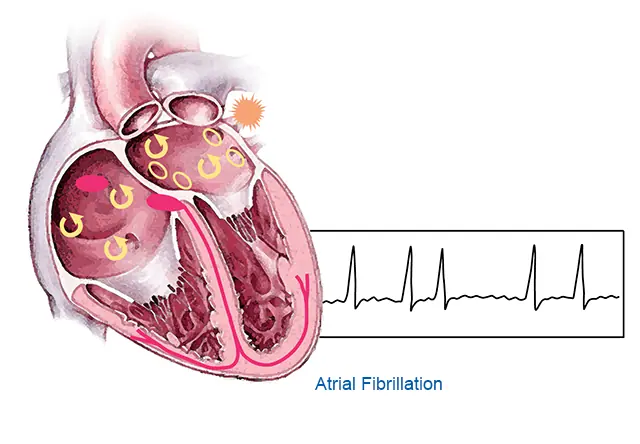
In a healthy heart, electrical signals trigger a steady heartbeat. With AFib, these signals become chaotic, causing the atria to quiver instead of pumping properly. As a result:
Blood may pool inside the heart.
Clots may form.
The risk of stroke increases up to 5 times.
Paroxysmal AFib – Comes and goes, lasting minutes to hours.
Persistent AFib – Lasts more than 7 days and needs treatment to stop.
Long-standing persistent AFib – Lasts over 12 months.
Permanent AFib – Continuous, and rhythm can’t be restored.
Some people feel nothing, while others experience:
Heart palpitations
Irregular or racing heartbeat
Chest discomfort
Shortness of breath
Lightheadedness
Weakness or fatigue
Anxiety
Trouble exercising
AFib becomes more common with age, but other triggers include:
High blood pressure
Heart disease or valve problems
Thyroid disorders
Sleep apnea
Diabetes
Obesity
Alcohol intake (especially binge drinking)
Viral infections
Smoking
Chronic stress
The biggest danger is stroke. Blood that pools in the atria can form clots. If a clot travels to the brain, it may block blood flow and trigger a stroke.
Other complications include:
Heart failure
Chronic fatigue
Reduced quality of life
Doctors may perform:
EKG
Holter monitor
Echocardiogram
Blood tests
Stress tests
Rate-control drugs (beta-blockers, calcium channel blockers)
Rhythm-control drugs (antiarrhythmics)
Blood thinners to prevent stroke
Medication to reduce clot formation
An electrical shock or medication resets the heart rhythm.
A minimally invasive procedure that destroys abnormal electrical pathways.
Maze procedures or pacemakers for severe cases.
Exercise regularly
Maintain healthy weight
Limit caffeine and alcohol
Quit smoking
Improve sleep hygiene
Manage stress
Atrial fibrillation may be silent, but its complications are not. Early diagnosis and proper treatment can prevent stroke and protect long-term heart health.