Disclaimer:
This content is for informational purposes only and is not intended as medical advice, diagnosis, or treatment. Always consult a qualified healthcare professional for personalized guidance.
Henbit is often one of the very first purple-flowering plants to spread across lawns, garden beds, and field edges while the air is still cool and early spring has barely arrived. At a glance, many people dismiss it as “just another weed.” But once you learn to recognize it, henbit reveals itself as a surprisingly practical wild plant—useful in the kitchen, adaptable in simple home preparations, and beneficial for early-season pollinators when little else is blooming.
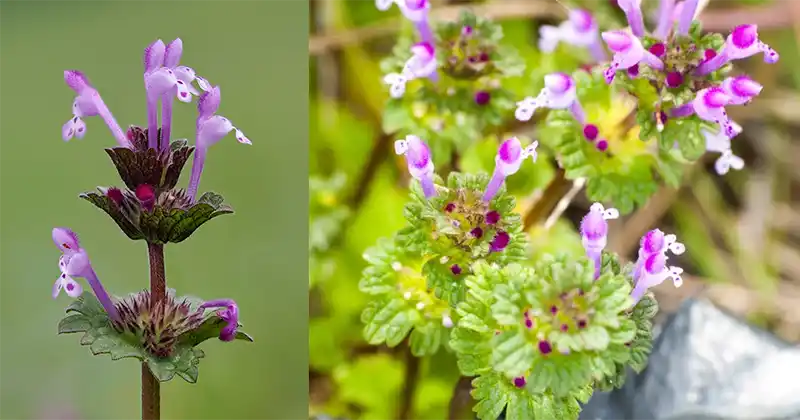
How to Identify Henbit (And Avoid Confusion)
Henbit, scientifically known as Lamium amplexicaule, belongs to the mint family. Like many members of this family, it shares a few reliable identifying characteristics that make it easier to recognize once you know what to look for.
Key Identifying Features
-
Square stem: Gently roll the stem between your fingers—you’ll usually feel distinct edges rather than a round shape.
-
Opposite leaf arrangement: Leaves grow in pairs directly across from each other along the stem.
-
Rounded, scalloped leaves: The edges appear softly toothed, and the leaves may feel slightly fuzzy.
-
Clasping upper leaves: One of the clearest clues—near the top of the plant, the leaves appear to wrap around or “hug” the stem.
-
Small purple-pink tubular flowers: These cluster near the upper portion of the plant and bloom in cool seasons.
-
Low, spreading growth habit: Henbit often forms small, patchy mats across the ground.
Henbit vs. Similar-Looking Plants
Henbit is sometimes confused with other mint-family weeds. For example:
-
Purple dead nettle (Lamium purpureum) typically has more triangular leaves, often tinted purple toward the top. Its upper leaves do not clasp the stem the same way henbit’s do.
-
Other mint-family plants may share similar flower shapes, but the clasping upper leaves are a strong indicator that you’re looking at henbit.
Correct identification is essential before any culinary or home use.
Where Henbit Grows and When to Harvest
Henbit thrives in disturbed soils. You’ll commonly find it in lawns, garden beds, farmyards, field margins, and even sidewalk cracks. It prefers cool conditions and is most abundant from late winter through spring, with a possible second appearance in autumn in some climates.
Best Time to Harvest
-
Before heavy flowering: The greens are most tender at this stage.
-
Early flowering: Still suitable for use, especially for teas and infused preparations.
Harvesting Tips
-
Choose clean growing areas—avoid roadsides, sprayed lawns, or contaminated soil.
-
Snip the top 10–15 cm (4–6 inches), focusing on tender stems, young leaves, and flower tops.
-
Rinse thoroughly and consider a brief soak to remove grit or tiny insects.
Wild harvesting should always be done mindfully. Gather only what you need and leave plenty behind, especially in areas where pollinators rely on early blooms.
Practical Homemade Uses
Henbit has a mild, green flavor with a subtle mint-family character. It’s far gentler than strongly aromatic mints, making it versatile and approachable.
1) Fresh Spring Green in Meals
Young henbit can be used much like other mild leafy greens:
-
Add a handful to salads (best when very young and tender).
-
Stir into omelets or scrambled eggs.
-
Toss into soups near the end of cooking.
-
Blend into pesto with garlic, seeds or nuts, lemon juice, and olive oil.
-
Mix into yogurt dips or soft cheese spreads.
If stems seem tough, focus on the leaves and flower tops.
2) Henbit Tea (Simple Herbal Infusion)
One of the most common at-home uses is a basic herbal infusion.
How to prepare:
-
Use 1–2 teaspoons of dried henbit (or a small handful fresh).
-
Pour hot water over the herb.
-
Cover and steep for 10–15 minutes.
-
Strain and enjoy.
Many people begin with one cup and observe how they feel before making it a regular habit.
3) Infused Oil for External Use
Traditionally, mild herbs are sometimes infused into oil for skin-friendly applications.
Basic infused oil method:
-
Fully dry the henbit first (moisture can cause spoilage).
-
Fill a clean jar halfway to three-quarters with dried plant material.
-
Cover completely with a stable carrier oil, such as olive oil.
-
Seal and store in a cool, dark place for 2–4 weeks, shaking occasionally.
-
Strain and store away from heat and light.
This oil can be used on its own or as a base for salves.
4) Simple Henbit Salve
To make a basic balm:
-
Gently warm the infused oil.
-
Add beeswax gradually until it thickens to your desired consistency (test a drop on a cool spoon).
-
Pour into small containers and allow to set.
5) Drying for Later Use
To preserve henbit:
-
Spread it in a thin layer in a shaded, well-ventilated area.
-
Once fully dry and crisp, store in an airtight jar away from light.
-
For best quality, use within 6–12 months.
Proper drying helps maintain flavor, color, and usability.
Benefits Commonly Associated with Henbit
Henbit is not considered a powerful or dramatic herb. Instead, it fits into the category of gentle, everyday wild plants traditionally used in simple ways.
1) Seasonal Comfort
Henbit tea is often enjoyed during seasonal transitions when people prefer mild, plant-based options for general support.
2) Gentle Soothing Qualities
As a member of the mint family, henbit shares the mild, soothing nature associated with many of its relatives—though it is notably less intense in aroma and flavor.
3) Early-Season Nutritional Variety
In early spring, when cultivated greens may still be limited, henbit provides fresh plant diversity to meals. Adding small amounts of wild greens can broaden seasonal dietary variety.
4) Traditional External Applications
In folk practice, mild herbs are often infused into oils or salves for simple skin applications. Henbit is sometimes included among these gentle botanical options.
5) Pollinator Support
Henbit’s early blossoms attract bees and other insects at a time when nectar sources are scarce. Even if you choose not to harvest it, allowing a patch to flower can contribute to early-season ecological balance.
Using Henbit Comfortably
-
Start small, especially if you’re new to wild greens.
-
Choose young, tender growth for food use.
-
Keep tea preparations mild.
-
Rotate herbs rather than relying heavily on one plant daily.
-
Pay attention to how your body responds.
Safety Notes
Henbit is widely regarded as an edible wild green in many regions, but basic precautions apply:
-
Accurate identification is essential. If uncertain, do not consume.
-
Avoid harvesting from chemically treated or polluted areas.
-
If pregnant, breastfeeding, taking medication, or managing a health condition, consult a qualified professional before regular use.
-
Discontinue use if you notice any unusual reaction.
Henbit is one of those humble plants that rewards closer attention. Once you learn to recognize its distinctive clasping leaves and soft purple blooms, it transforms from “weed” to useful seasonal ally. Whether you gather a small handful for your kitchen, prepare a simple tea, experiment with an infused oil, or simply leave it blooming for bees, henbit quietly earns more respect than its reputation suggests.