Rising Tide of Change: The World’s Coastlines Are Entering a New Era
News 05/12/2025 12:38
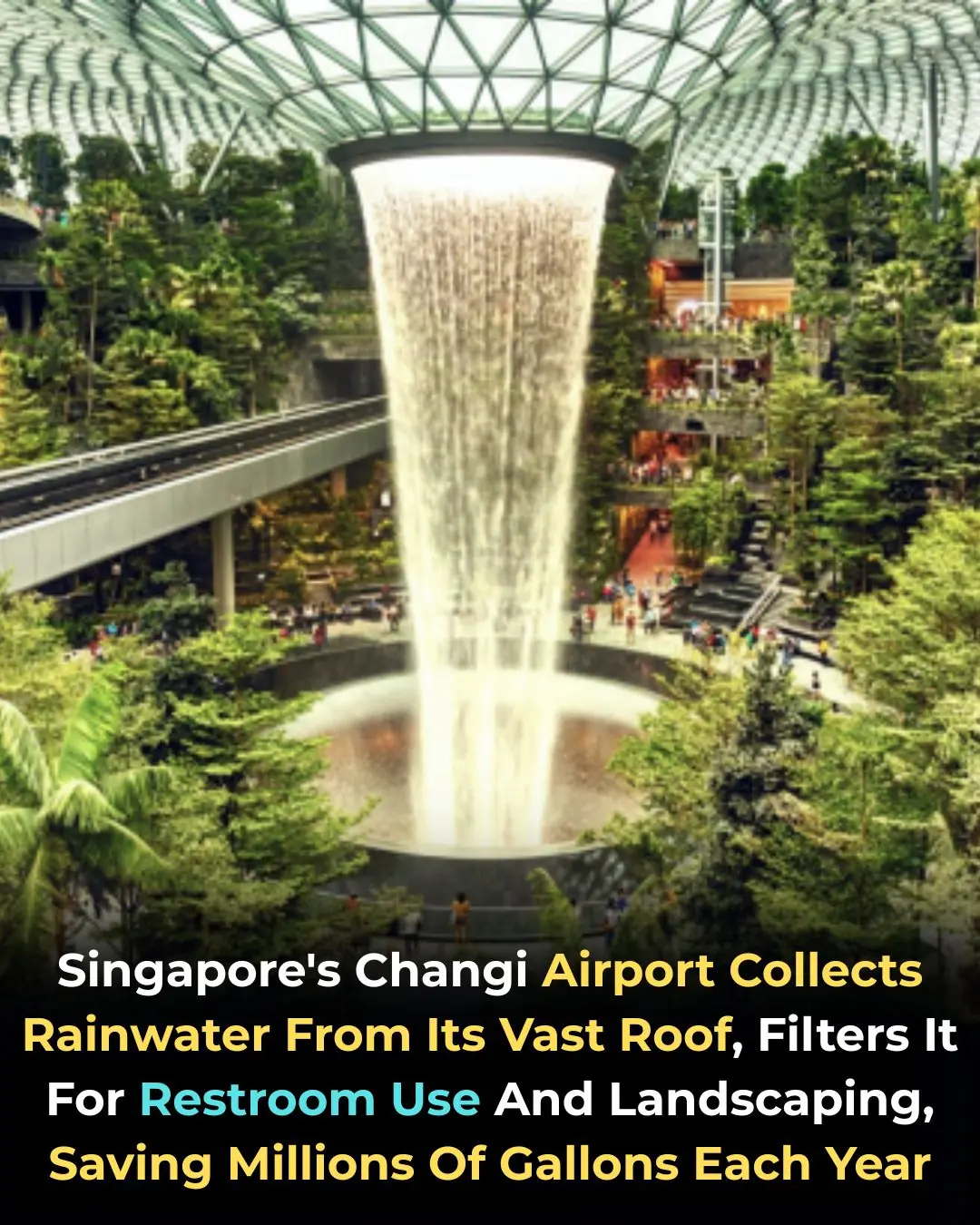
Singapore’s Changi Airport is widely known as one of the best airports in the world — but beyond its luxury lounges and lush indoor gardens, it is also a powerful model for how modern infrastructure can embrace sustainability without sacrificing beauty or comfort.
At the center of this innovation stands the breathtaking Rain Vortex inside Jewel Changi — the world’s tallest indoor waterfall, reaching 40 meters high. Millions of travelers pass by it each year, capturing photos of the shimmering cascade without realizing the ingenious system working behind the scenes.
Singapore receives heavy tropical rainfall year-round, but instead of letting this abundant resource pour off the roof and vanish into drains, Jewel Changi captures it.
Here’s how the system works:
A massive 14,000 m² dome-shaped glass roof collects rainwater efficiently during Singapore’s frequent storms.
The harvested rainwater is delivered to an advanced filtration and purification system, removing debris and ensuring the water meets strict quality standards.
The purified water is then fed into the airport’s network, where it is reused for essential daily operations — dramatically cutting freshwater demand.
Changi Airport maximizes the value of every drop, using the harvested rainwater in several ways:
🚽 Restroom Flushing
With millions of passengers every month, restrooms consume huge amounts of water. By using recycled rainwater, Changi slashes its reliance on municipal supplies.
🌱 Irrigation for Indoor and Outdoor Gardens
Jewel Changi is famous for its rainforest-like indoor ecosystem — over 2,000 trees and palms, and more than 100,000 shrubs. All of this greenery thrives thanks to the reclaimed rainwater supply.
🌊 Sustaining the Iconic Rain Vortex
Perhaps the most enchanting use of all, the waterfall itself is powered by the very rainwater it collects — creating a self-sustaining loop of art, engineering, and nature.
With Singapore’s annual rainfall averaging 2.4 meters, and Jewel’s giant roof area covering 14,000 square meters, the airport collects millions of gallons of usable water every year.
In total, Changi reclaims over 8 million gallons of rainwater annually — enough to fill more than 13 Olympic-sized swimming pools.
For an airport serving more than 65 million passengers a year, this is more than an impressive statistic. It’s a demonstration of what future-ready infrastructure can achieve when sustainability is built into its core design.
Jewel Changi is not just a tourist attraction — it’s a working solution for a world facing water scarcity, urban heat stress, and climate instability. By transforming rainfall into a renewable resource, Changi Airport shows how airports, malls, and public spaces can operate sustainably while remaining inviting, efficient, and visually stunning.
With every drop recycled and every visitor passing through its lush, climate-conscious environment, Changi stands as a beacon of what eco-friendly design looks like when innovation meets imagination.
In an age of climate urgency, airports like Changi aren’t just moving people —
they’re moving the world forward.