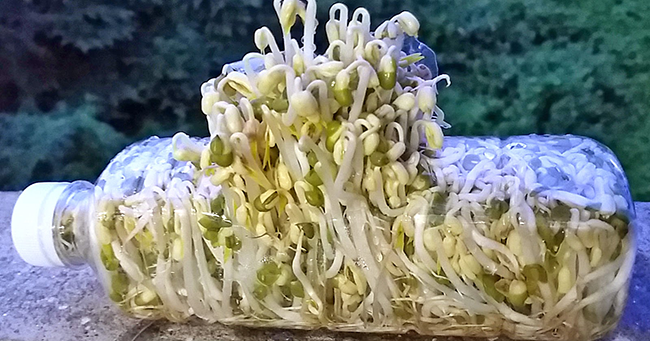
How to grow bean sprouts using plastic bottles quickly and easily; you'll have them ready to eat in 3 days.

How to Grow Bean Sprouts at Home Using Plastic Bottles
Simple, Fast, Safe, and Cost-Free
You can easily refer to the method below to grow clean and safe bean sprouts at home using recycled plastic bottles. This method is not only simple and quick but also extremely economical and environmentally friendly, making it suitable for every household.
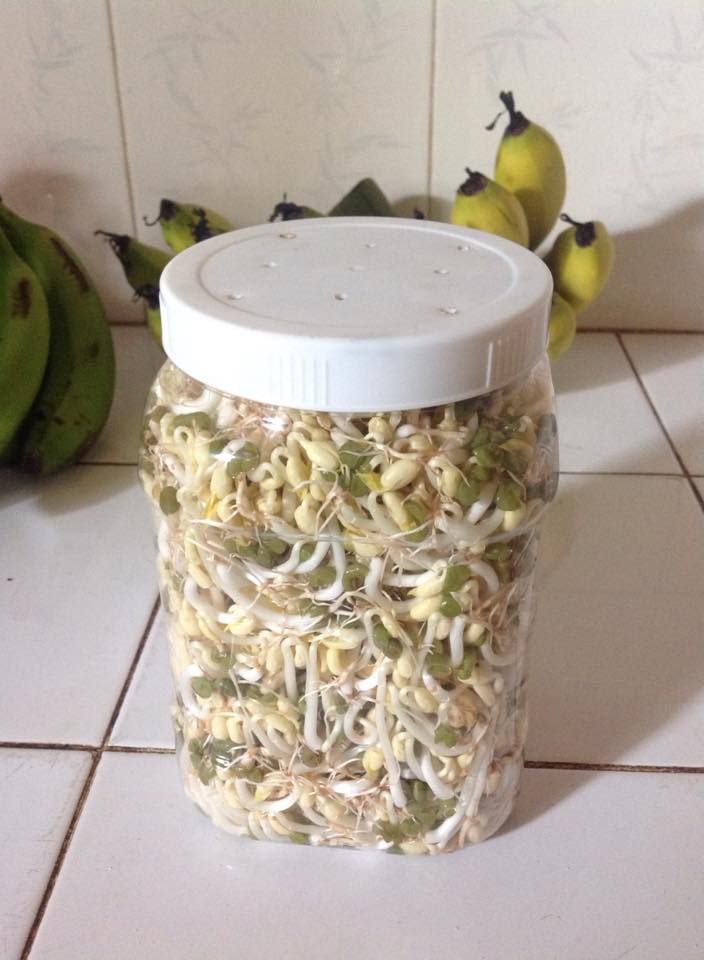
Method 1: Growing Bean Sprouts with a Plastic Bottle

Ingredients:
-
50 grams of mung beans
-
One medium-sized plastic bottle or plastic container
Instructions:
-
Soak the beans in clean water for about 6–8 hours until they swell.
-
Prepare the plastic bottle by washing it thoroughly. Punch or drill 4 small holes near the neck of the bottle to allow air circulation and proper drainage.
-
Add the soaked beans into the bottle.
-
Each day, water the beans by filling the bottle with clean water and letting them soak for about 30 minutes. After that, drain all the water completely to prevent waterlogging.
-
Cover the bottle with a black plastic bag or dark cloth to block out light, which helps the sprouts grow white, thick, and tender.
-
Place the bottle in a dark, well-ventilated area.
After 3–4 days, you will harvest around 400 grams of fresh, clean bean sprouts, enough to prepare delicious and healthy meals for the whole family.
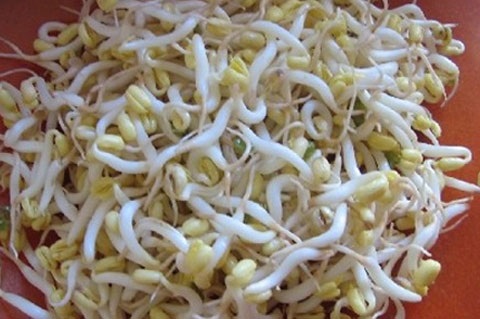
Method 2: Detailed Instructions for Growing Bean Sprouts Safely at Home
Ingredients:
Bean sprouts offer numerous health benefits, including providing vitamins, fiber, and antioxidants that support digestion and overall health.
To make clean bean sprouts at home, it is essential to start with high-quality beans. You can use black beans or soybeans, but mung beans are the most commonly used because they are rich in nutrients and sprout quickly.
When choosing mung beans, prioritize Vietnamese mung beans, which are typically small, long, and firm—ideal for sprouting. Avoid beans of unclear origin, especially some imported varieties with large, round, shiny seeds, as they may contain harmful chemicals. Using contaminated beans can lead to unsafe sprouts that negatively affect your family’s health.
Depending on the size of your plastic bottle, you can adjust the amount of beans accordingly. For example, a 1.5-liter plastic bottle (such as Lavie, Coca-Cola, or Pepsi bottles) usually requires about 50 grams of mung beans.
Step-by-Step Guide to Growing Bean Sprouts in Plastic Bottles
Step 1: Prepare the Bottles
Collect used plastic bottles (1.5-liter size works best). Wash them thoroughly to remove any residue. Punch small holes around the sides and at the bottom of the bottle to ensure good drainage and airflow.
Step 2: Soak the Beans
Put 50 grams of mung beans into the prepared bottle. Submerge the entire bottle in a basin of water and soak for about 8 hours. After soaking, drain all the water carefully to keep the beans from becoming waterlogged.
Step 3: Store in Darkness
Place the bottle in a completely dark area to encourage strong and healthy sprout growth.
Step 4: Water Daily
Each day, water the sprouts 1–3 times. You can place the bottle in a bucket of water, let it soak for about 5 minutes, then lift it out and allow the water to drain thoroughly. Return the bottle to the dark place afterward.
After 3 days, you can harvest fresh, crunchy, and nutritious bean sprouts that are completely safe for family consumption.
Important Notes When Using This Method
-
Transparent plastic bottles do not block light well, so be sure to cover them with black plastic bags or dark fabric, or keep them in a fully dark location.
-
From 50 grams of mung beans, you can typically harvest around 400 grams of clean bean sprouts using this method.
-
Always drain water thoroughly after soaking to avoid spoilage or unpleasant odors.
Growing bean sprouts at home using plastic bottles is a safe, healthy, and cost-effective way to provide fresh food for your family while reducing waste.
Good luck, and happy sprouting! 🌱

News in the same category


How to clean your air conditioner at home easily, leaving it sparkling clean: No need to spend money calling a technician.

How to identify fish contaminated with urea: Don't buy them even if they're dirt cheap.

If your non-stick pan is worn out, don't throw it away: Just follow this method and your frying will never be messy or stick to the pan.

Boil pig's stomach with this ingredient, and every piece will be white, fragrant, and have a crispy, chewy texture.

Tips for using rice water and ginger as a hair mask to help hair grow faster, thicker, and shinier.

Tips for making perfectly pickled cucumbers that are golden, crispy, and delicious – a taste everyone will love!

🔪 What’s That Strange Toothy Part on Kitchen Scissors For?

Tips for cleaning mold from your washing machine drum using inexpensive, familiar items without vinegar or bleach.

Adding a few slices of fresh lemon to your boiled eggs: Amazing benefits many people are unaware of.

Is Your Refrigerator Running Louder Than Usual? Dirty Condenser Coils Could Be the Reason

10 Incredible Life Changing Health Benefits You Receive When You Start Eating Beets

Surprisingly reduce your electricity bill by placing paper towels in the refrigerator – Anyone can do it!

Super cheap and effective drain cleaning tips using only kitchen ingredients, no plumber needed.

Golden tips for choosing Vietnamese sausage: Identify borax with a simple, absolutely safe method.

WARNING: Counterfeit milk is rampant. Here's a simple way to distinguish between REAL and FAKE powdered milk with just a glass of cold water.

Tips for identifying spinach and other leafy greens contaminated with chemicals.

4 simple, effective, and inexpensive tips for cleaning yellow sweat stains from white shirts.

12 Kitchen Mistakes to Avoid

12 Herbal Balms You Should Keep at Home
News Post

Turmeric and Black Seed Oil: A Natural Remedy for Grey Hair

Okra Botox Gel: A Natural Solution to Reverse Skin Aging

Lactose Intolerance: Why It Develops Later in Life and How to Manage It

Diverticulitis: Pain Patterns and Treatment Guidelines

Hypertensive Crisis: Symptoms That Require Immediate Attention

High Triglycerides: Why They Matter More Than You Think

Angina Pain: What It Really Means and When to Seek Help

When buying pork, is it better to choose cuts with a darker or lighter color to determine freshness and quality?

How to clean your air conditioner at home easily, leaving it sparkling clean: No need to spend money calling a technician.

How to identify fish contaminated with urea: Don't buy them even if they're dirt cheap.

If your non-stick pan is worn out, don't throw it away: Just follow this method and your frying will never be messy or stick to the pan.

Boil pig's stomach with this ingredient, and every piece will be white, fragrant, and have a crispy, chewy texture.

Tips for using rice water and ginger as a hair mask to help hair grow faster, thicker, and shinier.

Tips for making perfectly pickled cucumbers that are golden, crispy, and delicious – a taste everyone will love!

Sudden Cardiac Arrest: What Makes It Deadly and How to Respond

Most Don’t Know: 12 Brilliant Ways to Use WD-40 Around the House (and What to Avoid)

There’s a Crusty Spot That Keeps Scabbing and Reopening — What Could It Be?

My Nana Taught Me This Hack to Whiten Yellow Pillows in 5 Minutes With Zero Work — Here’s How It Actually Works

You’re Probably Storing Winter Coats All Wrong — Here’s the Right Way to Do It